.png)

India’s Food grain Procurement Policy Deserves Review
On the one hand, farmers hesitate to grow oilseeds, millets and pulses as they are not assured of procurement. On the other, India imports huge amounts of pulses and vegetable oils. To break this cycle, the government needs to look beyond rice and wheat for procurement.
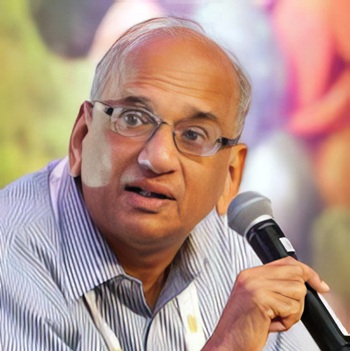
Chandrashekhar is an economist, journalist and policy commentator renowned for his expertise in agriculture, commodity markets and economic policy.
September 16, 2026 at 8:10 AM IST
MP is a major producer of millets and oilseeds (mainly soybean) in the Kharif season, and pulses, mainly chickpeas (chana), and oilseeds (mainly rapeseed/ mustard) in the Rabi season.
In recent years, irrigated land in the state has been increasingly used to grow food grains – wheat and paddy - in which the country is largely in surplus, or self-sufficient. India is the world’s largest producer and exporter of rice, and the second largest producer of wheat.
At the same time, the country faces a shortage of pulses and oilseeds. In fact, we are forced to import them to augment availability. India imports 6-7 million tonnes of pulses, and 15-16 million tonnes of vegetable oils, which entail an enormous outgo of foreign exchange, well over $20 billion a year.
Even as the agriculture minister rued that MP’s irrigated lands were not used for key dryland crops like millets and pulses, he must question who is responsible for this state of affairs, and what can he do now.
The reality is that our food policy is not in sync with current times. In the 1960s, the Green Revolution was a necessity to ensure food security for a growing population. Given the natural endowment of water, Punjab and Haryana became the country’s bread-basket, cultivating rice in the Kharif season, followed by wheat in the Rabi season.
Called ‘grain mono-cropping’, this unbroken, input-intensive rice-wheat-rice cycle has, over the last five decades, resulted in enormous ecological challenges. In Punjab and Haryana, the water table has gone down to alarmingly low levels. Soil health has deteriorated with indiscriminate use of synthetic fertilisers, while crop rotation with, say, legumes is simply absent. This is an ecological disaster waiting to happen.
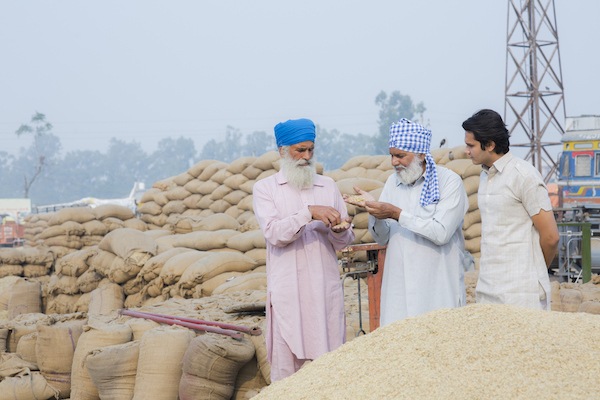
One reason why growers in Punjab and Haryana continue to stick with grain mono-cropping is the open-ended procurement policy of the Government of India, topped with an attractive procurement price. Often, the Food Corporation of India (FCI) is the first, last and only buyer of rice and wheat in Punjab and Haryana.
Availability of a government-supported ready market, and attractive prices over decades have created a sense of entitlement, and discouraging growers of fine cereals from adopting crop rotation and exploring cultivation of oilseeds and pulses. The latter crops do not have an open-ended procurement policy unlike rice and wheat, and therefore growers are unsure of remunerative returns.
Growers in Madhya Pradesh cannot be an exception to the goings-on elsewhere in the country. As they see their counterparts in Punjab and Haryana market the harvested crop with ease, and take home decent amounts of money, why blame MP farmers growers with access to irrigation for growing fine cereals?
At the same time, we export 15-20 million tonnes of rice annually and occasionally a few million tonnes of wheat. By exporting these fine cereals, we are actually exporting water out of India, as these crops are water-guzzlers. It is an indirect and unaccounted cost for the country.
Our grain procurement policy needs a thorough review and tweak to meet our current exigencies. Open-ended procurement must be ended as it has outlived its utility. A ceiling on rice and wheat procurement is necessary, and the needs of various welfare programmes and buffer stocks must be accounted for.
The procurement infrastructure for oilseeds and pulses should be strengthened, especially in areas where fine cereal growers are diversifying into legumes.
On top of this is the government’s import policy itself. Unregulated import of pulses and vegetable oils is actually discouraging domestic growers. Imports need close monitoring and strict regulation. In fact, the government has no clue how much cargo has been contracted for import, arrival period and prices. It has no prior data or advance guidance whatsoever, and that results in kneejerk policy reactions. New Delhi must use tariffs judiciously to encourage or discourage imports.
In the last three decades, multiple expert committees formed to examine the food grain policy including open-ended procurement had recommended a review. I have provided inputs on multiple occasions to these expert committees, but nothing came of it. That’s where ‘strong political will’ to disrupt the existing legacy ecosystem and a new food policy paradigm comes in. It is time that the agriculture minister must not only express regret, but seize the chance to make a difference.
More From BasisPoint