.png)

Batabyal is a Distinguished Professor of economics and the Head of the Sustainability Department at the Rochester Institute of Technology, NY. His research interests span environmental, trade, and development economics.
August 18, 2026 at 4:26 AM IST
India’s employment debate is no longer simply about how many jobs the economy can create. It is equally about the quality of those jobs, the skills they demand, the wages they offer and whether they enable workers to move into more productive activities.
These questions have acquired particular urgency as India marks 79 years of independence. A recent report by Isaac Centre for Public Policy examining changes in the country’s employment structure between 2018 and 2025 offers valuable insights into the implications for skills, wages, structural transformation and the growing influence of artificial intelligence.
The report begins with India’s demographic opportunity. By 2036, nearly two-thirds of the population is expected to be of working age, making employment creation central to realising the country’s demographic dividend.
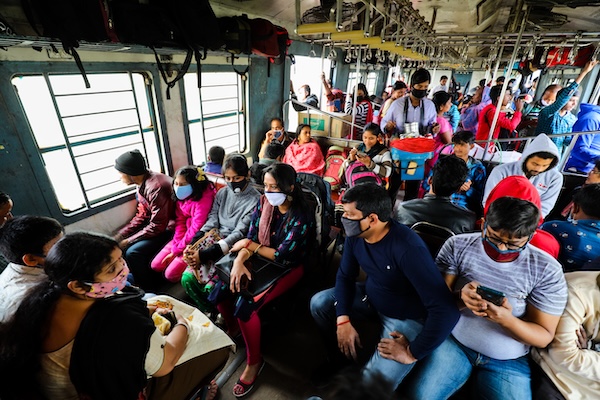
The pertinent question, however, is not merely how many jobs are being created, but what kind of jobs they are. Between 2018 and 2025, the share of the working-age population in employment increased from 47% to 56.2%, representing roughly 104 million additional jobs. Yet more than 40 million of these workers entered agriculture, suggesting that employment growth has not been accompanied by a sufficiently rapid movement into higher-productivity activities.
Services were the strongest source of non-farm employment growth, adding approximately 33 million workers. Manufacturing and construction added about 16 million and 12 million workers, respectively. Neither sector, however, expanded sufficiently to fundamentally transform India’s employment structure.
The composition of this growth is also important. Almost the entire increase in agricultural employment consisted of self-employment. Of the 62 million new non-farm jobs, about 24 million also came through self-employment. As the report cautions, much of this work is characterised by low productivity. An increase in employment, therefore, does not necessarily translate into higher productivity, incomes or living standards.
The report’s central labour-market finding concerns job polarisation. Employment growth has been concentrated at the lower and upper ends of the skill distribution, while medium-skill employment has expanded relatively slowly.
Among wage workers, nearly 20 million additional jobs were created in low-skill occupations, compared with around 8.5–9 million in each of the medium- and high-skill categories. At the high-skill end, business, finance and sales professionals gained about 2.7 million jobs, while software, database and network professionals added approximately 2.4 million.
The result is what the report describes as a “missing middle”, pointing to limited opportunities for upward mobility among workers with secondary and post-secondary education.
Wage patterns reinforce this interpretation. Median real wages for professionals increased by 22.6% between 2018 and 2025, whereas those for technicians and associate professionals fell by about 20%.
The education wage premium also declined. The premium associated with completing Class 12 was nine percentage points lower in 2025 than in 2018–19, while the premium for college and diploma education fell by about four percentage points. These trends may indicate a growing mismatch between formal educational credentials and the skills employers actually demand.
AI Transition
The report also considers how artificial intelligence may affect the future of work in India. It links Indian occupational data to AI-exposure measures developed by Edward Felten and his colleagues and by Tyna Eloundou and her colleagues. It supplements these measures with the Anthropic Economic Index, which provides evidence of actual AI use.
AI exposure is concentrated in high-skill, cognitive occupations, including software and database professionals, numerical clerks, mathematicians and actuaries, and business and finance professionals.
Exposure, however, should not be equated with displacement. The indices measure the extent to which AI can perform tasks associated with an occupation. They do not establish whether AI will replace workers or complement them and raise their productivity.
The actual employment data offer a more nuanced picture. Between 2018 and 2025, employment increased most strongly in the occupations least exposed to AI, but highly exposed occupations also expanded. Worker shares in the bottom 20% of AI-exposed occupations rose by 1.2–1.6 percentage points, compared with about 0.6 percentage points in the top 20%.
Moderately exposed occupations experienced little or no growth. AI therefore appears, at least for now, to be reinforcing the broader polarisation of India’s labour market rather than reversing it. Since AI adoption remains at an early stage, these patterns will require continued monitoring.
The report identifies three policy priorities. First, India must accelerate the movement of workers into productive non-farm employment. Second, it must build the occupational middle while improving productivity in low-skill work. Third, AI adaptability needs to be incorporated into education and labour-market planning.
This will require an occupation-specific approach to AI skills. India also needs a task-occupation-skills data infrastructure comparable to the US O*NET database, but designed around the particular characteristics of the Indian economy and labour market.
India’s employment transition thus presents a paradox. The country is generating many more jobs, but too many remain concentrated in low-productivity work. Meanwhile, the medium-skill occupations that can provide pathways to higher wages and upward mobility are failing to expand rapidly enough.
AI adds another layer of uncertainty. The central policy objective must therefore be not merely more employment, but better, more productive, adaptable and future-ready employment.
More From BasisPoint