.png)

India and the Changing Geometry of Great-Power Relations
India’s strategic autonomy is being tested as the US, China and Russia pursue overlapping interests, forcing New Delhi to balance partnerships without losing room to manoeuvre.

Lt Gen Syed Ata Hasnain is Governor, the State of Bihar, and Former Commander of India's Srinagar-based Chinar Corps.
September 22, 2026 at 2:46 PM IST
International relationships are rarely permanent. Interests endure longer than friendships, alignments change with circumstances and countries which appear indispensable at one moment can discover that the strategic environment around them has altered. India is experiencing just such a phase.
For much of the last two decades, the direction of travel appeared relatively clear. China's rise was transforming Asia. The US increasingly viewed India as an important element of a stable Indo-Pacific. Russia remained India's trusted defence partner even as Moscow moved steadily closer to Beijing. India's economy was expanding and its diplomatic weight was growing. Strategic autonomy allowed New Delhi to develop relations across competing geopolitical camps without formally joining any of them.
Much of that remains true. What has changed is the geometry connecting these relationships.
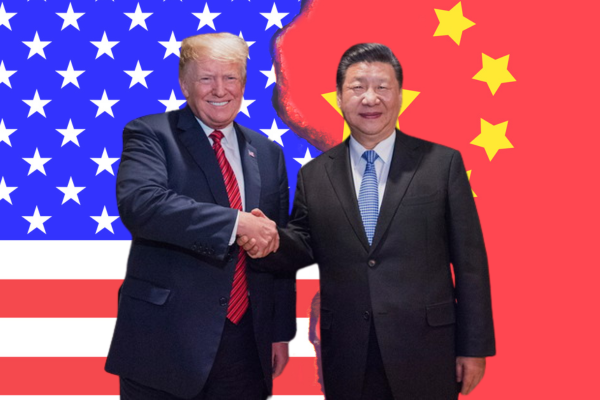
President Xi Jinping's visit to Washington this week provides an interesting illustration. The US identifies China as its principal long-term strategic competitor, yet President Donald Trump is receiving Xi for their second meeting in six months. Trade, artificial intelligence, critical minerals, Taiwan and Iran are among the issues demanding dialogue between them. Competition has therefore not eliminated accommodation.
The Comfort of Convergence
India-US relations underwent an extraordinary transformation after the turn of the century. The civil nuclear agreement broke an old psychological barrier. Defence relations expanded dramatically. Intelligence cooperation deepened. Military exercises became routine. Technology and critical supply chains entered the agenda. Most importantly, the Indo-Pacific created a powerful strategic convergence.
India's geography, military capability and position astride the Indian Ocean gave it obvious importance. The Quad brought India together with the US, Japan and Australia around maritime security, technology, cyber security, infrastructure, humanitarian assistance and a free and open Indo-Pacific.
Yet strategic convergence can sometimes create expectations which international politics cannot fulfil.
India may be an important American strategic partner, but that does not mean Washington will subordinate other American interests to the relationship.
The recent experience over tariffs and Russian oil demonstrates this sharply. New US legislation permits tariffs of up to 100% against countries making significant purchases of Russian energy. India, as a major buyer of Russian crude, is exposed. New Delhi has warned that such measures could damage bilateral relations and has emphasised its responsibility to protect the energy security of 1.4 billion people.
There is genuine Indian discomfort here. After years of being described as a strategic partner in the Indo-Pacific, being subjected to coercive economic pressure inevitably raises questions about what strategic partnership actually means.
There is, however, an alternative way of looking at it.
Every Power Is Becoming Transactional
India itself has long insisted that partnership cannot mean automatic alignment. It cooperates closely with Washington but purchases defence equipment and energy from Russia. It competes with China while sitting alongside Beijing in BRICS and the Shanghai Cooperation Organisation. It maintains relations with Iran while simultaneously enjoying exceptionally close ties with Israel and the Arab Gulf states.
India regards this as strategic autonomy, and rightly so.
But this brings into conflict with interests of other powers who will exercise their autonomy too.
Washington can strengthen the Quad while negotiating with Beijing. It can regard India as important to Indo-Pacific security while disagreeing sharply with New Delhi over Russia. Moscow can preserve its historic relationship with India while drawing increasingly close to China. The Gulf states can maintain security relationships with Washington while expanding economic engagement with Beijing.
The emerging international system is therefore unlikely to resemble the neat bipolar architecture of the Cold War which somehow remains obsessive in our understanding of geopolitics. It is an era of overlapping relationships that the world is witnessing without getting a measure of how to respond.
China Changes the Equation
The changing strategic environment has particular implications for India's China policy. There was always a temptation to assume that worsening US-China relations would automatically enhance India's strategic value for the US. To an extent they did.
But the US does not seek an uncontrolled confrontation with Beijing. China is too powerful militarily, too important economically and too deeply integrated into global supply chains. Even at the height of technological competition, American and Chinese capital and businesses remain extensively connected.
The US will therefore compete with China and negotiate with it simultaneously. India should expect precisely that and work out a way of dealing with this contingency.
Nor should India define its own China relationship entirely through the US. The unresolved boundary, China's military presence along the LAC, its relationship with Pakistan and its growing Indian Ocean presence make China a direct Indian strategic challenge.
Yet China is also India's largest neighbour, a major economic power and an unavoidable participant in virtually every important Asian institution.
Competition will therefore have to coexist with communication. That is not a weakness but the effect of geography.
Russia Complicates the Triangle
Russia makes the geometry still more complicated.
For India, Moscow cannot simply be viewed through the prism of Ukraine. The relationship encompasses decades of defence cooperation, energy, nuclear technology, space and diplomatic support. Geography also matters. A Russia completely dependent upon China is hardly in India's strategic interest.
Yet Moscow's dependence on Beijing has undeniably increased.
India must therefore perform a difficult balancing act; preserve a useful relationship with Russia without allowing that relationship to impose unacceptable economic costs or constrain the expanding partnership with the US and Europe.
The current oil controversy demonstrates how narrow that manoeuvring space can sometimes become. Strategic autonomy is easiest to proclaim when choices carry little cost. Its real test comes when competing partners demand incompatible outcomes; exactly as its happening now.
Strategic Autonomy Needs Power Behind It
That brings us to perhaps the most important lesson. Strategic autonomy cannot rest on diplomatic dexterity alone.
It ultimately depends upon national capability. The larger India's economy becomes, the more indispensable its market. The stronger its manufacturing base, the less vulnerable it becomes to disrupted supply chains. Greater energy diversification reduces external leverage. Technological capability creates bargaining power. Military credibility strengthens diplomacy.
This is why trade disputes should not be viewed simply as irritants in foreign relations. They expose vulnerabilities.
The US remains a vital market for Indian exports. India therefore needs the American economic relationship even while diversifying through Europe, the Gulf, Southeast Asia and other markets.
Similarly, defence indigenisation is not merely an industrial objective. Every critical system produced reliably at home enlarges India's strategic freedom. The same applies to energy, semiconductors, artificial intelligence, critical minerals and resilient supply chains.
Strategic autonomy has an economic foundation.
India's Advantage
India nevertheless enters this period with significant advantages.
It is not seeking territorial revision of the international order. It carries relatively little historical baggage across much of the developing world. It can speak to Washington, Moscow, Brussels, Tehran, Riyadh and, when circumstances permit, Beijing. Its role in the Quad does not prevent its participation in BRICS. Its relationship with the West does not require abandonment of the Global South.
That flexibility has value in a world becoming progressively less binary.
India should therefore avoid interpreting every American disagreement as betrayal, every US-China engagement as dilution of Indian importance, or every Russian embrace of China as the end of an old relationship. That is how the new world functions and it demands our adaptability. Great powers will increasingly pursue several apparently contradictory relationships simultaneously. We will do the same.
The challenge is to ensure that it possesses sufficient economic, technological and military strength to do this from a position of confidence.
More From BasisPoint