.png)



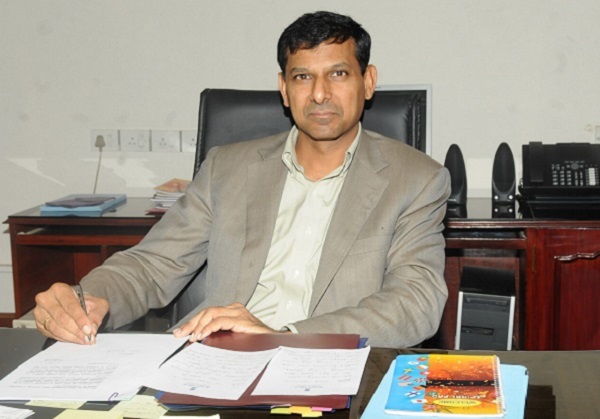
Dr. Mishra is former Executive Director of RBI and the Founder Director of its College of Supervisors. He is currently RBI Chair Professor at Gokhale Institute of Politics and Economics.
November 19, 2026 at 5:54 AM IST
The way banks have managed risk over the past 25 years is becoming increasingly inadequate. This may be difficult for institutions to accept, given how deeply established practices are embedded in their culture and processes. But the pace and complexity of change demand a fundamental rethink. Banks must retool their risk management frameworks and, just as importantly, lead their employees through this transition.
The annual and decadal global risk perception surveys conducted by Protiviti and North Carolina State University's ERM Initiative offer a telling picture of this shift. A comparison of the risks identified in 2021, those projected for 2030 and the current assessment for 2027 reveals how rapidly the landscape is changing. Four risks in the 2030 top ten, technology and AI adoption, regulation and scrutiny, disruptive innovation, and talent and succession, did not feature in the 2021 top ten. One risk climbed from 18th place in 2021 to third in the 2030 projections. Cybersecurity, ranked tenth in the 2023 projections, now tops the 2027 list.
This is not simply a change in rankings. Rapid advances in artificial intelligence, automation, machine learning, hyperscale platforms and high speed data transmission are transforming the financial ecosystem. Customer preferences are shifting, loyalty is becoming more fleeting and established business models are facing growing disruption. Strategic plans can become obsolete before they are fully implemented.
Banks cannot respond to this changing risk profile with frameworks designed for an earlier era. Both the architecture and the practice of risk management must evolve.
From Silos to Strategy
The role of the Chief Risk Officer (CRO) needs to be redefined. Risk management must move beyond assessing individual business lines and their returns towards a holistic view of the institution's balance sheet, strategy and resilience.
This calls for a shift from offensive to defensive risk management. The offensive approach focuses on using risk to generate higher profits and shareholder value. The defensive approach seeks to build an institution prepared for crises, reduce the likelihood of distress and sustain profitability through changing conditions. The former tends to prioritise short term gains; the latter protects long term value.
Risk management confined to business silos, with each unit assessed primarily on its own returns, can create dangerous blind spots. A decision that appears profitable within one division may expose the wider organisation to regulatory penalties, unforeseen liabilities or even the failure of that business. Risk must therefore be assessed across the institution, not merely within individual units.
The CRO must become an active participant in strategic decision making, not a function brought in to approve or challenge decisions after they have been made. The role should be that of a constructive disruptor, willing to question assumptions and act as the devil's advocate when management risks becoming trapped in its own assumptions.
This requires more than technical expertise. CROs must build collaborative relationships with business leaders, possess strong interpersonal skills and remain composed under pressure. They must have direct access to the Board, ensuring that risk concerns reach the highest levels without distortion or delay. They must also be adept at strategic thinking, data analysis and breaking down business plans into their constituent risks. A sound understanding of business processes and core management functions is equally essential.
Beyond the Known
One of the most difficult responsibilities of a CRO is identifying risks that cannot be readily measured or even anticipated. The distinction between known knowns, known unknowns and unknown unknowns, popularised by former US Defence Secretary Donald Rumsfeld, offers a useful framework.
Known knowns are assumptions that have been validated and accepted as facts. Yet even these are not necessarily static. Conditions can change while a project is under way, altering its scope, cost or schedule. Such changes need to be identified, reassessed and monitored rather than treated as exceptions to the original plan.
Known unknowns are factors that cannot be controlled or conclusively validated, but whose potential impact can be anticipated. CROs must learn to recognise early warning signals and act before these risks materialise. This calls for sound judgement, experience and the ability to connect developments that may not appear significant in isolation.
Unknown unknowns are genuine surprises. They are particularly dangerous because institutions may not recognise them until the damage is done. While they cannot always be predicted, their impact can be contained through robust contingency planning, scenario analysis and lessons drawn from past crises. What was once an unforeseen risk should, wherever possible, become part of the institution's future risk assessment.
The challenge is not to claim that every risk can be measured. It is to develop the capacity to question assumptions, identify vulnerabilities and prepare for outcomes that existing models may not capture.
Rewriting the Rulebook
The standard operating framework for risk management also needs an overhaul. Risk appetite must be clearly understood, articulated and codified so that institutions can balance opportunities for growth against the risks they entail. This requires attention to three considerations: the ability to identify and develop new products and strategic opportunities; the capacity to execute them efficiently, with the shortest feasible gestation period and cost; and their alignment with the organisation's values and objectives as defined by the
board and business leadership.
The risk management function itself needs rejuvenation, beginning with a review of its models. Models that are too simplistic fail to capture the relationship between risk and expected returns. Those that are excessively complex can obscure meaningful signals and leave decision makers unable to act. The objective must be a framework that is sufficiently rigorous without becoming incomprehensible, developed with the active participation of business and back office teams.
Risk management must also be adequately resourced. Its personnel should understand business processes, work closely with operational managers and engage proactively with corporate strategy and planning. Risk assessment cannot remain a parallel exercise conducted independently of business decisions. It must be embedded in the way products are developed, operations are run and strategies are executed.
Institutional protocols should encourage the regular exchange of information between risk teams, business units and operations. Risk managers must understand the organisation's broader objectives and financial position while retaining the independence to challenge decisions. The aim is not to dilute the risk function's oversight, but to ensure that commercial judgement and risk assessment inform each other. Sustainable value creation depends on this convergence.
Building Risk Intelligence
Finally, the rigour of risk management must be strengthened across the organisation.
First, banks need to improve their ability to identify and assess interconnected risks. Risks rarely emerge in isolation. A technology failure, for instance, can trigger operational disruption, financial losses, regulatory scrutiny and reputational damage. Frameworks must account for these linkages rather than assess each exposure separately.
Second, risk awareness must become part of the organisation's culture. Every stakeholder should be able to recognise early warning signals and alert the appropriate risk monitors. The objective is to move beyond being merely risk aware to becoming genuinely risk intelligent, with employees understanding both the institution's risk strategy and their role in protecting it.
Third, transparency and accountability must extend across all levels of business activity. The nature and scale of risks underlying decisions, large or small, should be clearly understood. Every employee must take responsibility for the risks inherent in their role, supported by clearly defined accountability mechanisms.
The colour, contours and characteristics of banking risks are changing rapidly. Risk management cannot remain anchored to yesterday's assumptions, models and organisational structures. Banks that continue to treat it as a compliance function or a post facto check on business decisions will struggle to anticipate the next disruption. The CRO must have a strategic voice, risk intelligence must permeate the organisation, and resilience must become a measure of business performance.
The objective is not to eliminate risk, which is neither possible nor desirable in banking. It is to understand it better, prepare for it earlier and ensure that the pursuit of growth does not compromise the institution's long term stability.
This is the first part of a series examining why banks need to rethink their risk management frameworks.
More From BasisPoint