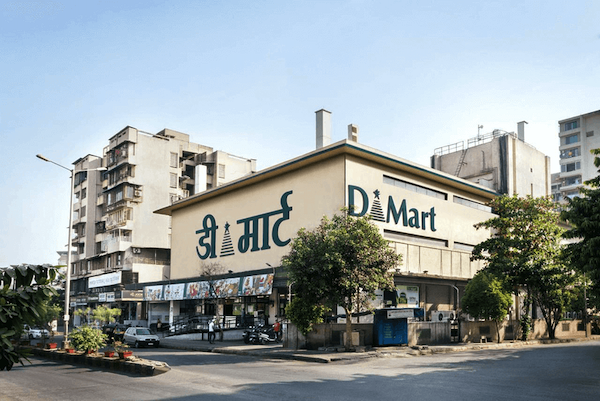
Avenue Supermarts, which runs the DMart retail chain, has chosen not to chase grocery delivery in minutes. Its response to quick commerce is a narrower DMart Ready, delivery within six hours, basket-level price competitiveness and continued store expansion.
This strategy raises a pointed question for investors. Can Avenue Supermarts retain a premium valuation while it ring-fences, rather than participating in, grocery retail’s fastest-changing channel?
DMart believes it need not win every grocery occasion. Its stores are built for the large, planned weekly or monthly shop, where the total bill matters more than immediate fulfilment. Quick commerce platforms have captured the smaller, convenience-led top-up purchase.
The company is defending this divide through price, not speed. It tracks online and offline competitors but measures competitiveness at the total basket level. It has no plan to enter quick commerce.
The strategy makes sense, if one can stay resolute. A retailer built on low costs can undermine its own economics by pursuing a delivery model based on dark stores, high-frequency fulfilment and customer-acquisition spending.
The risk is that shopping habits may change faster than the company expects. If frequent app-led buying begins to replace the large, planned grocery purchase, DMart’s strongest urban stores could face a more fundamental threat.
Metro Problem
QC is not yet a national challenge for DMart. The management says its effect is concentrated in dense metro markets, with little material impact so far in smaller towns.
This makes same-store sales harder to read. DMart expects 2026-27 like-for-like growth to remain close to the previous year’s 8.1%. That is solid, but not an acceleration.
The bearish case for the company is that QC is weakening the most productive part of DMart’s portfolio. Even a localised slowdown can matter disproportionately for growth expectations and valuation.
But it can be argued that mature metro-store growth had already been slowing towards inflation for years, well before the QC boom. Much of the customer overlap has already shifted, and further QC dark-store expansion is increasingly cannibalising rival QC platforms rather than DMart.
But flat growth in mature stores cannot simply be dismissed as an old issue if it becomes entrenched during the period of highest QC intensity.
DMart Ready shows both the discipline and the limitation of the strategy. The business has been cut to 11 cities from 25, exiting low-density markets and focusing on home delivery, relevant assortment, user experience and six-hour fulfilment.
Avenue E-commerce’s revenue grew 17% in 2025-26, but its pre-tax loss widened to ₹3.1 billion from ₹2.5 billion in 2024-25. In the June quarter, implied revenue growth slowed to 5% and EBITDA loss widened.
DMart is not trying to build a national instant-delivery challenger. It is trying to make a value-led online grocery model work before scaling it again.
While the remaining 11-city operation is profitable, that claim needs caution because DMart reports losses for the e-commerce subsidiary overall and does not disclose city-level economics.
Real Catalyst
The more overlooked issue may be operating leverage, not online optionality.
DMart added around 4,000 permanent employees in 2025-26 while building technology, supply-chain and management capacity for a larger network. Combined permanent and contractual employee cost rose from 3.6% of standalone revenue in 2022-23 to 4.2% in 2025-26.
Yet contract staff per store fell to 151 from 177 in FY25. If investment in people and systems has been front-loaded, future store growth could begin to outpace employee-cost growth.
The management is not promising a margin bonanza. It intends to keep gross margin at 14% to 15% and net margin around 5%, returning much of the benefit of scale to consumers through lower prices.
That is central to the model. The company’s advantage rests on keeping its value proposition intact, not maximising near-term margins.
The management’s target of roughly 15% annual store growth, or about 75 stores on a 500-store base, may appear cautious after 85 openings in 2025-26. The company’s land acquired over the past three years could support 80 to 85 annual additions for the next three years.
The first call under the new chief executive did not reveal a new growth algorithm, but reaffirmed the existing one.
The next year will show whether that is enough. DMart must keep metro growth positive, narrow DMart Ready’s losses and convert its investment in people and systems into operating leverage. Its bet is that quick commerce cannot sustain both instant delivery and DMart-like value. Investors are now waiting for proof.
.png)