Every procurement exercise begins with technical questions. Does the product meet specifications? Is it competitively priced? Can it be supplied reliably and securely? Those considerations remain fundamental. But governments today increasingly buy products that millions of people use every day. That means procurement can no longer stop at technical specifications.
A product may perform exactly as intended, clear every quality check and still trigger avoidable controversy if it clashes with social or cultural expectations.
A recent Global Expression of Interest issued by Bharatiya Reserve Bank Note Mudran (BRBNMPL) for polymer banknote substrate illustrates this shift in thinking. Much attention has focused on polymer notes being more durable, cleaner and harder to counterfeit. Hidden among the technical specifications, however, is one requirement that deserves equal attention: bidders must certify that the polymer substrate is free from animal tallow and animal DNA, with laboratory testing to verify compliance before they can proceed.
Learning Abroad
Few government products are as deeply woven into society as currency. Every note changes hands countless times. It is deposited in banks, exchanged in markets, placed in temple hundis, offered in churches, mosques and gurudwaras, gifted during weddings and festivals, and used in acts of charity. Few sovereign products carry such everyday social, cultural and religious significance.
The United Kingdom’s experience is instructive.
The Bank of England learnt this lesson after launching its first polymer £5 note in 2016. Only after the rollout did it emerge that the polymer substrate contained trace amounts of animal tallow used during manufacture. The quantity was negligible and made no difference to the note itself, but that was beside the point. Vegans, vegetarians and followers of several faiths objected. A petition gathered more than 100,000 signatures, while some temples and vegetarian businesses refused to accept the new notes.
By then, however, the Bank had little room to manoeuvre. Switching materials would have meant redesigning production, writing off existing stock and incurring substantial additional costs. It chose to stay the course. It estimated that switching suppliers would cost a significant amount of money, delay production, and create risks to currency supply. The polymer £10, £20 and later £50 notes, therefore, continued to use the same material. The controversy eventually subsided, but only because the Bank stayed the course after concluding that reversing direction would come at too high a cost.
RBNMPL’s EOI addresses the composition issue upfront by requiring bidders to certify that the substrate is free of animal tallow and animal DNA. Rather than confronting such questions after millions of notes enter circulation, it seeks to resolve them before a contract is awarded.
Preventive Design
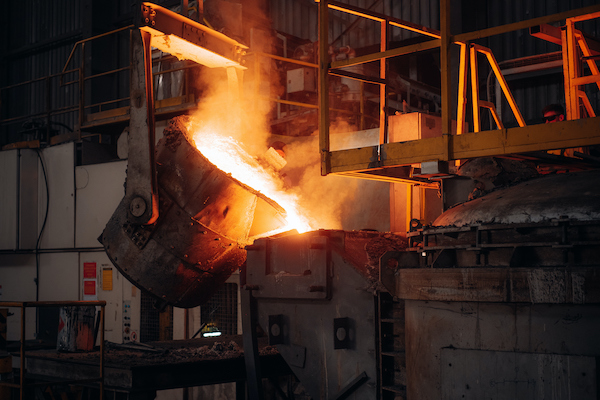
The complication is that tallow is not added to the finished note itself. It is used much earlier in the manufacturing process as a processing aid for the polymer resin. Removing it is therefore not simply a matter of swapping one ingredient for another. Manufacturers have to rework parts of the production process, test alternative materials and ensure the finished substrate performs exactly the same.
This increases complexity and may marginally raise production costs. But addressing those challenges before procurement is completed is far less costly than redesigning an entire currency programme after notes have already entered circulation.
Australian polymer notes also became the subject of scrutiny after the British controversy drew attention to the issue. Professor David Solomon, one of the scientists behind polymer currency, dismissed the concerns, noting that the quantity involved was extremely small. That approach reflected Australia's own social context. India is different. A procurement decision that passes unnoticed in one country can provoke entirely different reactions in another.
That is precisely why procurement cannot rely solely on technical standards. Governments must assess the society in which a product will ultimately be used.
The principle extends well beyond currency. Governments buy everything from medical equipment and digital platforms, to transport systems and classroom technology. Whether those projects succeed depends not only on how well they work, but also on how readily people accept them. Ignoring that second question can turn an otherwise sound procurement into an avoidable public controversy.
Some of the best examples of good governance rarely attract public attention. They are found not in grand policy announcements but in carefully drafted standards and procurement specifications that quietly prevent avoidable disputes.
That is what makes the BRBNMPL tender noteworthy. It suggests that procurement is no longer concerned only with buying the best product at the best price. It is also about anticipating avoidable problems before they become public ones. In the case of something as ubiquitous as currency, that may prove just as important as the technology itself.
*The views expressed are personal.
.png)