.png)

Groupthink is the House View of BasisPoint’s in-house columnists.
March 24, 2026 at 12:45 PM IST
The global economy is once again being shaped by conflict, with crude oil prices firming, capital flows turning selective, and dollar liquidity tightening. For India, these pressures do not yet constitute a crisis, but they do alter the operating environment.
The rupee must absorb a steady external adjustment, bond markets are being asked to digest persistent supply, and monetary policy must navigate the familiar tension between inflation risks and currency stability. In such a setting, policy space becomes narrower, more constrained and contested, and more dependent on how existing instruments are deployed.
It is in this context that two proposals, emerging from BasisPoint Insight’s web pages, merit closer attention than they have received so far. Each originates from a former central banker, each departs from prevailing orthodoxy in important ways, and yet both are attempts to address a common constraint: the growing limits of conventional policy tools in a more volatile global environment.
FX Repos
Monetary policy, even as it retains formal independence, is increasingly conditioned by exchange rate considerations and the pass-through of imported inflation. Fiscal policy, for its part, remains anchored by the arithmetic of borrowing and the market’s capacity to absorb it without demanding higher term premia.
External conditions, shaped by oil prices and foreign portfolio flows, impose their own discipline. What remains, therefore, is the central bank balance sheet, not as an abstract construct, but as a set of instruments that can be deployed to smooth adjustment across markets.
Former Deputy Governor Michael Patra’s proposal operates squarely in the external domain.
His argument that India may need to build foreign exchange reserves to around $1 trillion is not framed as an exercise in accumulation for its own sake, but as a means of ensuring credible intervention capacity in a world where capital flows can reverse sharply.
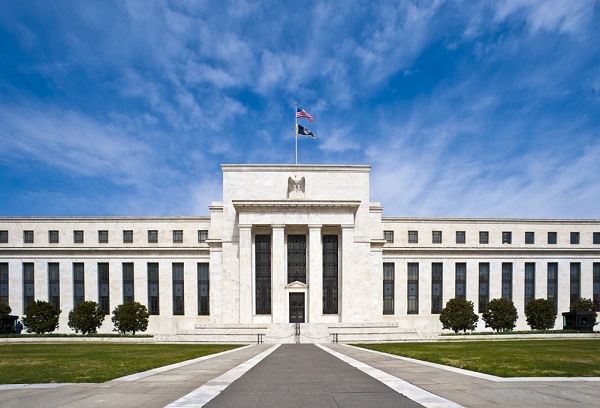
The more consequential element of his proposal, however, lies in activating global dollar liquidity tools, particularly the Federal Reserve’s FIMA repo facility.
At its core, FIMA allows a central bank to temporarily exchange its holdings of US Treasury securities for US dollars through repo transactions with the New York Fed, without undertaking outright sales. This preserves the integrity of its reserve portfolio while providing access to liquidity.
In periods of global dollar stress, central banks are often forced into selling US Treasuries to raise liquidity, which can itself destabilise markets. FIMA was created precisely to avoid such disorderly adjustments, offering instead a collateralised, short-tenor liquidity window, overnight to seven days and rollable, priced off the Fed’s standing repo rate or short-term swap benchmarks.
The Fed assumes responsibility for settlement, collateral management, and clearing, making it a fully institutionalised backstop rather than an ad hoc arrangement.
By converting holdings of US Treasury securities into a contingent source of dollar liquidity, the Reserve Bank of India would be able to supply dollars to domestic markets without resorting to outright asset sales or allowing disorderly exchange rate movements.
The operational flexibility here is equally important. The RBI can deploy these dollars through repos, sell-buy swaps, or forwards, matching the maturity of its FIMA access to eliminate interest rate risk, while routing transactions through platforms such as CCIL to minimise counterparty exposure.
This approach shifts the emphasis from defending any particular level of the rupee to ensuring that dollar liquidity itself does not become a transmission channel for instability.
In effect, it allows the RBI to channel global dollar liquidity into domestic markets in a calibrated and continuous manner, rather than reacting episodically to stress. The signalling value of such access is as important as its usage, as evidence from other central banks suggests that the mere availability of FIMA can compress FX swap basis spreads and reduce sensitivity to shifts in global risk sentiment.
There is also a strategic dimension embedded in this proposal. Regular and credible use of FIMA could position the RBI closer to the core of the global dollar liquidity network, potentially paving the way for a formal swap line with the Federal Reserve over time. In that sense, FIMA is not merely a liquidity tool, but a bridge towards deeper monetary integration with the global system.
In that sense, the proposal extends the logic of reserve adequacy into the realm of active liquidity management.
Capital Use
The starting point is the observation that markets are currently pricing supply rather than fiscal ratios, with elevated government borrowing requirements exerting upward pressure on yields. What would make a difference, in this context, is not the quantum of surplus transfer per se, but its use. A calibrated drawdown from contingency reserves could enable a larger transfer that is explicitly deployed to reduce net market borrowing, particularly at the longer end, where term premia have remained elevated due to persistent supply overhang.
In such a situation, incremental surplus transfers from the RBI may do little to alter market conditions unless they are accompanied by a reduction in net borrowing. The emphasis therefore shifts from accounting optics to market impact, since it is the supply-demand imbalance, rather than fiscal ratios alone, that is currently shaping bond yields. A calibrated drawdown from contingency reserves, deployed specifically to compress the supply of government securities, is therefore presented as a way to ease financial conditions without altering the formal stance of fiscal or monetary policy.
The argument is not that institutional safeguards should be weakened, but that buffers accumulated for stability should be evaluated in light of the stresses that are beginning to emerge. When adjustment occurs through higher bond yields, tighter financial conditions, and weaker market sentiment, the question becomes whether unused capital should remain insulated from policy considerations. In this framing, the proposal is less about fiscal accommodation and more about improving the efficiency of adjustment by shifting the burden away from elevated yields toward a more deliberate balance-sheet response.
The common thread across these two proposals is not their departure from orthodoxy, but their recognition that adjustment is already underway.
In the absence of calibrated intervention, it is being transmitted through markets, whether in the form of currency depreciation, elevated yields, or shifting capital flows. Both approaches seek to influence the channels through which this adjustment occurs, using the RBI’s balance sheet in ways that are more explicit and potentially more effective.
These are not prescriptions that can be adopted without careful calibration, nor do they eliminate the trade-offs that policymakers must navigate. Yet they do compel a reconsideration of how India’s policy framework can respond to a world in which external shocks are more frequent and financial conditions are more tightly interlinked. At a time when the margin for error is narrowing, the more relevant risk may not lie in debating such ideas, but in allowing them to remain outside the policy conversation altogether. If adjustment is already underway, the real question is whether it should be left to markets to absorb through the rupee, bond yields and capital flows, or whether policy should shape that adjustment more deliberately, even if that requires engaging with ideas that sit outside current orthodoxy.
More From BasisPoint