.png)


Chandrashekhar is an economist, journalist and policy commentator renowned for his expertise in agriculture, commodity markets and economic policy.
June 19, 2026 at 9:39 AM IST
Under normal conditions, by mid-June, the southwest monsoon should have advanced into large parts of Maharashtra after covering Peninsular India. This year, the monsoon broke over the Kerala coast three days late, and then its northward progress stalled for several days.
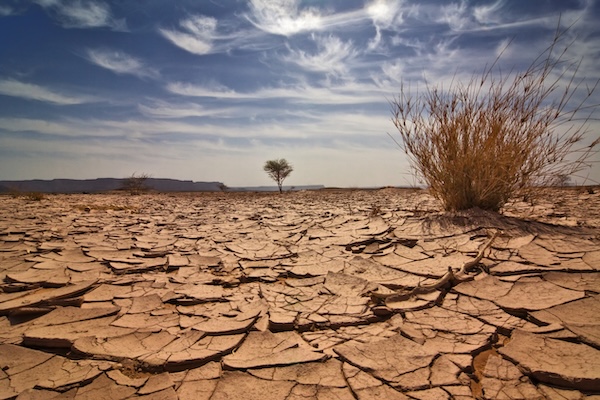
This year is different because the risk of El Niño conditions – a weather phenomenon associated with lower rainfall and dry conditions – poses a threat to monsoon rainfall, threatening to disrupt the country’s production of kharif crops, including paddy, coarse cereals, pulses, oilseeds, and cotton. Tight availability and high fertiliser prices further complicate the situation.
According to the Ministry of Agriculture, as of June 12, the area under crops such as pulses, oilseeds, and cotton is lagging behind last year’s levels. By itself, this lag should not raise an alarm, as kharif planting usually takes place until early to mid-July. This leaves a window of about four weeks.
We do not know for sure how the rains will progress over the next four to six weeks, and beyond that, through September. The worst-case scenario would be a nationwide drought. That makes it critical for policymakers to be ready with instruments to address harvest shortages, augment domestic availability, rein in high food prices, and mitigate the effects of adverse weather, especially on rural incomes.
Water conservation, moisture management, inter-cropping and alternative crop patterns are the usual strategies emphasised by scientists. Beyond these, New Delhi has fiscal, monetary, trade, tariff, and administrative measures at its disposal.
In anticipation of kharif production challenges, some measures are already in place. Sugar exports (raw, white, and refined) are banned until September. Wheat exports generally remain prohibited, but a limited quantity of 2.5 million tonnes has been allowed for export, subject to contract registration and export authorisation.
Duty-free imports of pulses such as pigeon pea (tur/arhar), black matpe (urad), and lentil (masur) are allowed till March 2027, while chickpea (chana/gram) and yellow pea import is allowed with customs duty. Vegetable oil imports remain liberal, subject to the applicable customs duty rate (currently 10% ad valorem on unrefined oils). Recently, customs duty on raw cotton imports was removed till October 31.
While the intention of these steps is to augment availability and rein in high food prices, the complex policy context demands a judicious balance between advancing consumer interests and protecting domestic growers’ interests.
If the situation warrants, New Delhi can initiate additional measures. For instance, the 10% customs duty on unrefined oils may be waived. As an administrative measure, limits on the storage of essential commodities may be imposed on traders and processors. Diversion of food crops for ethanol may be restricted.
A major mitigating factor is the large public stock of rice and wheat. Recently, about 33 million tonnes of wheat were procured by state agencies. Rice stocks stood at 40 million tonnes as of June 1. If the situation warrants, the free ration of 5 kg of rice or wheat per month for about 810 million persons under the Pradhan Mantri Garib Kalyan Anna Yojana may be suitably raised for a limited period to ensure food security.
The Reserve Bank of India will have to monitor the situation closely. Its policy decisions will need to take into account the broader inflationary impact of any weather-related food-price shock. Latest data suggest CPI inflation has risen to 3.9% in May, marginally below the RBI’s medium-term target of 4.0%. The food inflation rose to 4.8% in May from 4.2% a month earlier.
If weather plays spoilsport in kharif planting, the potential for an uptick in food inflation is real, notwithstanding liberal imports. The period from August to October is marked by a series of festivals, during which demand for major food products – grains, pulses, sugar, and edible oil – picks up. So, RBI's repo-rate decisions must take into account food inflation trends and their spillover effects on broader inflation expectations.
Earlier this month, the Monetary Policy Committee of the central bank opted for a neutral policy stance to balance domestic growth with volatile global factors and inflationary pressures. On current reckoning, this neutral stance is likely to continue until global and domestic conditions change.
The next four to six weeks will therefore be critical in determining whether existing safeguards are sufficient or whether policymakers will need to deploy additional fiscal, trade, and administrative measures to contain the impact of a weak monsoon.
More From BasisPoint