.png)


Dr. Srinath Sridharan is a Corporate Advisor & Independent Director on Corporate Boards. He is the author of ‘Family and Dhanda’.
January 11, 2026 at 11:38 AM IST
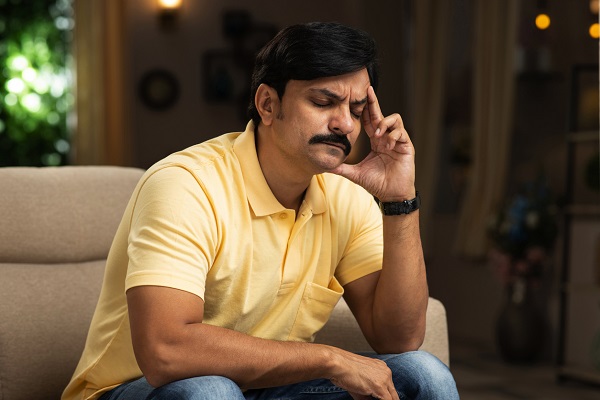
There comes a point in life when nothing goes wrong, and that is precisely when unease begins. You wake up, go through a familiar morning, move through a day that works, return to a home that functions, and realise there is no crisis to fight. Everything is fine. And yet something inside you feels quietly unfinished. Not broken. Just unresolved.
Middle age does this gently. It does not announce itself with drama. It arrives politely. It gives you comfort first. Predictability. Routine. Safety. And then it asks for something in return. It asks you to stop expecting too much. To lower the volume of desire. To accept that wanting more is childish and that peace is found in wanting less. Sometimes this is wisdom. Sometimes it is exhaustion pretending to be wisdom.
You were raised on the idea of becoming. Becoming successful. Becoming important. Becoming someone worth noticing. Nobody ever prepared you for the moment when you become decent enough and the world moves on. Nobody told you that effort does not always lead to distinction. That intelligence does not guarantee recognition. That doing the right things may only buy you a life that works, not one that feels alive.
This fear of being ordinary does not show up loudly. It hides inside comparison. You see people you once stood beside now standing somewhere else. Not necessarily better. Just different. You tell yourself it does not matter. And then you think about it anyway. Quietly. Repeatedly. In moments when nobody is watching.
You start measuring your life not against your values, but against other lives you barely understand. Their holidays. Their promotions. Their confidence. You see the highlights and compare them to your behind the scenes. You know this is unfair. You do it anyway. Middle age is when comparison becomes private and sharp.
This fear settles into relationships too. Couples rarely talk about it, but they feel it. There is an unspoken audit that happens. Are we doing well enough. Do we look settled enough. Are we impressive as a unit. Love slowly becomes maintenance. Stability becomes the goal. Intimacy is postponed for later, which quietly becomes never. Two people who once felt extraordinary to each other become very competent together.
Friendships thin out not because of conflict, but because nobody feels urgent anymore. Everyone is busy becoming better versions of themselves. There is little space for unfinished conversations. You replace closeness with updates. You replace depth with politeness. Ordinary friendships struggle to survive in a world obsessed with progress.
Work carries the heaviest weight of this fear. Careers stop being about growth and start being about proof. Proof that your choices were justified. Proof that your years mattered. Proof that you did not waste time. Titles become insulation against invisibility. Busyness becomes a substitute for meaning. You are no longer asking whether the work nourishes you. You are asking whether it looks respectable enough from the outside.
Men often experience this fear as irrelevance. The anxiety of being replaced, ignored, or no longer needed. Women often experience it as invisibility. Being present everywhere and noticed nowhere. The shape of the fear differs, but the ache is similar. To be ordinary feels like fading while still functioning.
And yet there is something we rarely admit. Ordinary lives are not empty. They are simply quiet. They do not announce their value. They do not seek applause. They hold mornings and routines and small kindnesses that never make it into stories. Ordinary people carry the world without asking to be admired for it.
The people who seem most at peace are rarely the ones chasing distinction. They are not extraordinary in obvious ways. They are present. They know a few people well. They show up consistently. They have accepted that their life may never look impressive to strangers, and discovered that this is a relief.
Perhaps the fear of being ordinary is really the fear of being unseen. And the answer to that fear is not to become exceptional, but to be known. To be known by a few people. To matter in small, human ways. To accept that meaning does not always arrive with recognition.
Middle age is not asking you to be remarkable. It is asking you to decide what kind of ordinary you are willing to be. The kind that feels dull and performative. Or the kind that is honest, lived, and enough.
There is a quiet warmth in letting go of the need to stand out. In allowing yourself to be human without explanation. In discovering that a life does not have to be impressive to be complete.
Maybe the most courageous thing you do in middle age is this. You stop auditioning. You stop proving. You stop measuring your life against imagined alternatives. And in that stillness, you finally arrive where you already are.
Not extraordinary.
Just being You.
More From BasisPoint