.png)

Sarci Sense: Whatever Happened To Knowing The Way?
We have never reached destinations more efficiently. Yet somewhere between landmarks and location pins, we may have stopped truly knowing the cities we live in.
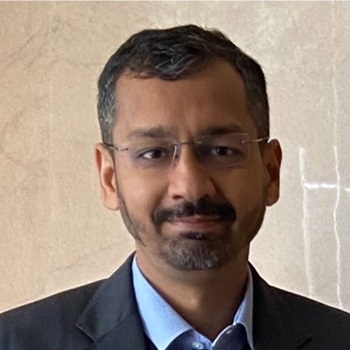
Dr. Srinath Sridharan is a Corporate Advisor & Independent Director on Corporate Boards. He is the author of ‘Family and Dhanda’.
August 1, 2026 at 6:08 AM IST
There was a time when giving directions was considered an accomplishment.
Not addresses. Directions.
“Take the second left after the Hanuman temple.”
“Cross the railway bridge and you’ll see a bakery.”
“Ask anyone for Gupta Medical. Everybody knows it.”
“If you’ve reached the petrol pump, you’ve gone too far.”
Most of our families had someone who gave directions with the confidence of an air traffic controller. Their confidence was completely unrelated to accuracy. Admitting “I don’t know” was never considered an acceptable navigation strategy.
Fathers were particularly gifted. I wonder if many Indian fathers believed Google Maps merely confirmed what he had known since 1987. If the app suggested another route, it was because the app was still learning. No journey was complete without the reassuring declaration, “I know a shorter route.” Sometimes they genuinely did. Sometimes the shortcut became an unexpected tour of three unfamiliar neighbourhoods.
Middle-aged Indians belonged to the last generation that learnt cities this way.
Long before satellites began guiding us turn by turn, we carried maps inside our heads. We remembered flyovers that did not exist when we were children, roads that flooded every monsoon, one-way streets that trapped unsuspecting drivers and traffic signals where patience was measured in multiple movie songs. We knew which tea stall opened before sunrise, where the best samosa was available, which lane looked shorter but never was, which speed breaker had ambitions of becoming a mountain range and which auto-rickshawdriver would confidently insist there was always a better route.
We did not just know those gullies and roads. We knew cities.
Perhaps that is why getting lost was probably an ordinary part of growing up.
You asked strangers for directions. Asking for directions was India’s original crowdsourcing platform. The first person rarely knew. The second confidently disagreed. By the fourth person, a small committee had formed, debating your destination as though they all held equity in it. A traffic policeman pointed one way. A shopkeeper suggested another. A paanwala overruled both with great authority. Somehow, against all probability, you eventually reached your destination.
It took longer than expected.
It also taught you something.
Along the way you discovered a quieter street, a neighbourhood temple, a tiny bookshop, a café you never knew existed or a shortcut you proudly passed on to others for the next twenty years. Getting lost was inconvenient.
It was also educational.
Modern navigation has almost eliminated that experience.
Today nobody says, “It’s opposite the old cinema.”
They say, “I’ll share the location.”
That one sentence has quietly replaced an entire language. The tragedy, of course, is that the cinema itself probably became a shopping mall fifteen years ago.
Landmarks have become location pins. Memory has become a blue arrow. Confidence has become a battery percentage.
The transformation is extraordinary. A generation ago, we noticed buildings, traffic patterns, markets and neighbourhoods because our mind was constantly building an internal map. Every journey quietly became geography class.
Today, many of us arrive without really knowing how we got there. Well, probably this is too loaded a metaphorical statement too.
Ask someone who has just driven across the city which roads they took.
“I was just following Google Maps.”
They know they crossed twelve traffic signals, three flyovers and one toll plaza. They couldn’t identify a single neighbourhood they passed through.
Technology is remarkable.
It is also quietly changing the way we experience places.
Today we rarely wander. We optimize.
The fastest route has become the preferred route. Traffic is calculated before we leave home. Diversions appear before we see them. Delays are predicted to the minute. We have become remarkably efficient at travelling through cities while noticing very little of them.
The irony is difficult to ignore.
This is not an argument against technology. Few sensible people would exchange modern navigation for unfolding paper maps on a rainy evening or stopping every few kilometres to ask for directions. GPS has saved time, fuel, frustration and countless family arguments.
But every technology changes more than the problem it solves.
Navigation apps changed how we build a relationship with those places. They reduced the need to remember, to observe, to ask and occasionally to get gloriously lost. They made travel more efficient, but perhaps they also made it a little less personal.
After all, a city doesn’t truly become yours because you’ve visited every address.
It becomes yours the first time you’ve been gloriously, hopelessly lost in it… and somehow still found your way home.
More From BasisPoint