.png)

Sarci Sense: India Has Discovered Protein. Again.
In India’s desperate search for protein, a generation raised on social media is paying a premium to rediscover what its own kitchens have known for centuries
iStock.com

By Srinath Sridharan
Dr. Srinath Sridharan is a Corporate Advisor & Independent Director on Corporate Boards. He is the author of ‘Family and Dhanda’.
August 15, 2026 at 3:00 AM IST
India has discovered protein. Again. This time, however, it has discovered it with the fervour usually reserved for a new app, a foreign diet or something a celebrity has just declared transformational. Protein orders on quick-commerce platforms have reportedly risen 150% in two years, with demand in smaller cities growing even faster, while protein snacks, yoghurt, milk and shakes are all recording spectacular growth. More revealingly, the appetite is strongest around breakfast. The Indian kitchen, once a place where mothers shouted at children to finish their food, is slowly becoming a laboratory in which young adults inspect every meal for its protein credentials. One can almost hear the dosa being asked to submit its résumé.
There is a serious nutritional correction underneath this comic spectacle. Indians have not historically been exemplary consumers of protein, and greater awareness of what we eat is welcome. But the current enthusiasm is no longer merely about nutrition.
Protein has escaped the nutrition chart and entered culture. It has become a badge of discipline, fitness, youth and self-command, amplified by the peculiar alliance between Western fitness culture and social media, which has persuaded an entire generation that the human body is less a thing to inhabit than a project requiring continuous supervision. Calories are counted, steps are counted, sleep is scored, heart rates are tracked, muscles are photographed from increasingly inventive angles, and now every meal must produce a number that can be entered into the day’s performance report. The body has become a dashboard, and protein is particularly convenient because anxiety can be expressed in grams.
This is where India’s culinary history makes the protein craze rather entertaining. The new protein evangelist, armed with a shaker bottle, a smartwatch and an algorithmically optimised breakfast, can sometimes sound as though the subcontinent spent several thousand years eating carbohydrates until the internet arrived to rescue it.
It did not. Across languages, regions, religions and communities, Indian kitchens evolved around combinations of cereals, pulses, dairy, vegetables, nuts and seeds and, depending on tradition and personal choice, eggs, fish and meat. The ingredients changed with geography, the spices changed with history and the techniques changed with climate, but the underlying intelligence of the Indian kitchen was remarkably sophisticated. Idli with sambar, dal-baati, rajma-chawal, dal dhokli, khichdi, pongal, kadhi, chana, sattu, besan, curd rice, a Bengali meal of dal, vegetables and fish, a Punjabi meal of pulses, dairy and roti, or a Gujarati thali that could keep a nutritionist occupied for an afternoon: these were not random collections of food. They were culinary systems that understood combination, variety and nourishment without requiring a label to announce it.
This is also why the current revival of traditional foods is so deliciously ironic.
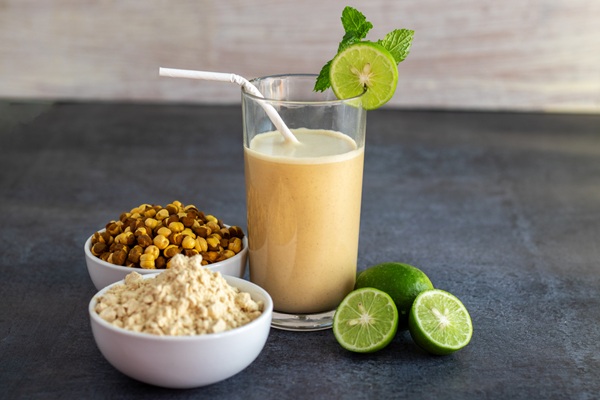
Some of the foods now being rediscovered as “protein-rich” are precisely the foods Indians have consumed for generations: chana, sattu, besan, roasted gram, soya, paneer, eggs and pulses.
Our grandmothers did not discuss amino-acid profiles because they had no reason to. They understood, through practice rather than PowerPoint, that food works in combinations. We have not exactly discovered nutrition. We have discovered the vocabulary with which nutrition can be sold back to us.
The Indian consumer is now able to pay a premium for something familiar after it has been placed in modern packaging, photographed against a beige background and blessed by an influencer.
Commerce has, unsurprisingly, understood this before the consumer has. Protein bread, protein atta, protein yoghurt, protein coffee, protein chips, protein milk, protein wafers and protein ice cream have turned a nutrient into a marketing adjective.
The triumph of the category is that the word itself now carries a health halo. Put “protein” in large letters on a packet and the product begins to look as though it has been to the gym.
One half expects the samosa to return from its next packaging redesign carrying a QR code that reveals its leucine profile and a photograph of itself looking unusually muscular. The joke is harmless until the halo begins to obscure the food. Protein is essential, but adding protein to a highly processed product does not magically turn it into a wholesome food. A nutrient cannot confer sainthood on everything that carries its name.
There is something more consequential happening underneath the comedy. Food was once about appetite, memory, hospitality, season, geography and pleasure. A meal told you where you were and often who you were. It carried the smell of a particular kitchen, the temper of a particular household and the history of a particular region. You ate because you were hungry, because somebody had cooked, because relatives had arrived, because it was raining, because mangoes were in season or because the chutney happened to be spectacular that day.
Increasingly, however, eating has become another exercise in self-management. The meal has macros, targets and consequences. Dinner can resemble an audit, and dessert seems to require a nutritionist’s pre-approval.
There is a wonderful generational irony here. Our parents asked, “Have you eaten?” Their children ask, “How much protein?” The generation that wanted liberation from parental supervision has voluntarily surrendered its plates to influencers, algorithms, nutrition apps and quick-commerce recommendations. The mother who spent years insisting on dal is now competing for attention with an American fitness influencer explaining whey isolate to her son. The old Indian anxiety was whether there would be enough food. The new urban anxiety is whether lunch contained 30 grams of protein. Both are real, but only one has an app.
The protein obsession is therefore not really about protein. It is about a generation increasingly encouraged to treat the body as an enterprise that must constantly be upgraded, measured and displayed. Protein simply happens to be the latest metric through which young people can demonstrate that they are disciplined, informed and improving. There is nothing wrong with wanting a healthier body. But there is something slightly absurd about turning every ordinary act of eating into evidence of personal virtue. At some point, self-care becomes self-surveillance, and wellness becomes another form of anxiety dressed in athleisure.
Perhaps the rebellion we need is therefore a modest one. Eat something without checking its macros. Have dal because it tastes like home. Eat a dosa without asking whether it qualifies as a fitness food. Have dessert because it is delicious, not because an app has calculated that you can afford it.
Protein matters, better nutrition matters and fitness matters. But India should be careful about becoming so impressed by the vocabulary of Western wellness that it forgets the intelligence of its own kitchens.
Our culinary traditions understood that nourishment was not a collection of isolated nutrients but a relationship between foods, habits, seasons and people. They also understood something our optimisation-obsessed age is in danger of forgetting: food is not merely fuel for the body.
It is one of the ways we live.
More From BasisPoint