.png)


Vivek Kaul is a writer and an economic commentator.
May 26, 2026 at 3:19 AM IST
The Bonfire of the Vanities is a 1987 novel written by Tom Wolfe. One of the lead characters in the book is a Wall Street bond trader called Sherman McCoy. McCoy keeps egging himself on by thinking of himself as the “Master of the Universe” – someone who can do no wrong.
The Indian stock market saw a similar phenomenon between early 2020 and late 2024. Fund managers, stock brokers, wealth managers, investment bankers, financial influencers, anchors on business news channels – and just about anyone in and around the business of managing other people’s money – started believing they were Masters of the Universe (MOTU), capable of seeing the future and doing no wrong.
They repeatedly told us that the stock market would only go one way – and that was up, up and further up. When asked: “What if the foreign institutional investors sell and go away?” The MOTU replied thick and fast: “If not India, where else will they go?”
Now, this wasn’t exactly the first time in history that someone whose views were actively sought had said something remarkably stupid. History is full of such characters and situations – especially given that there exists a huge market of people who seek certainty in a life where the only thing certain is uncertainty – and thus want to be actively lied to.
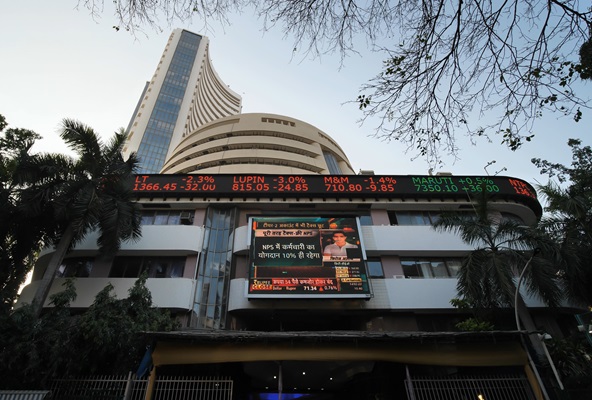
The trouble is that the stock market hasn’t gone anywhere in the last two years. But that hasn’t diminished the confidence of the MOTU to offer solutions. And their big solution right now is that the central government should cut the income tax on capital gains made while selling stocks.
It seems that is the big reason holding the foreign investors back from investing in Indian stocks. And once the government cuts this tax, we will all live happily ever after.
But is it as simple as that? Or is it just a case of the MOTU continuing to project confidence on issues which are way beyond their control. Let’s dig in.
Narrative U-Turn
First, taxes bother everyone. So, they bother the foreign investors too. But how do you explain that despite the taxes, these investors did net invest $37 billion in Indian stocks in 2020-21? They followed it up with another $25.3 billion in 2023-24. Of course, they have been on a selling spree since.
So, it’s not just taxes that have been bothering them. The very high valuations of Indian stocks, where prices rose much faster than corporate earnings, have also been an important factor.
Also, bull markets run on stories. And the current story that foreign investors want to hear is artificial intelligence. Sadly, the Indian stock market is an empty bucket on this front. Further, the bond yields in the US and other parts of the rich world have been going up. In this scenario, foreign investors may prefer the easier option of earning those returns instead of taking the risk of investing in Indian stocks. Then there is the case of India’s huge energy dependence as well.
The MOTU don’t offer these reasons when asked. Of course, there are other countries which have better tax structures for foreign investors. There is no denying that. The trouble is that the MOTU had no problem with this when the stock market was doing well.
Second, the taxes collected by the central government will take a beating this year. In late March, the government cut the excise duty on both petrol and diesel by ₹10 per litre. Depending on which economist you want to believe this is expected to cost the government anywhere from ₹1.3 trillion to ₹1.7 trillion in 2026-27, assuming that the cut stays.
Along with this, the corporate income tax collected is going to take a hit. The oil marketing companies are big corporate tax payers. From April to December 2025, the petroleum sector paid a total corporate income tax of ₹434.21 billion. Add to this dividends of ₹149.48 billion as well.
The oil marketing companies are currently selling petrol and diesel at their pumps at a loss, despite fuel prices being raised four times since the state assembly elections ended. The chances that they will make any profit this year are very low. This will hurt the government.
Further, a weaker rupee, higher inflation and the economic uncertainty that prevails will impact corporate profit margins, and due to that, the amount of income tax companies are able to pay to the government this year.
Third, if the war in West Asia continues, the fertiliser subsidy bill of the government is likely to balloon. Estimates suggest it could be ₹500 billion or more higher than last year.
Fourth, the government will have to take measures in order to support the economy. This money will have to come from somewhere and will put further pressure on government finances.
Fifth, in a scenario where the common man is suffering, the government can’t be seen to be cutting the capital gains tax – a cut which will benefit the rich and the foreigners. It is bad for the WhatsApp narrative, which has become a very important part of the political discourse these days.
Sixth, another story that the MOTU have been spinning over the years is that the government barely makes any money out of taxing capital gains. That isn’t true. In 2020-21, the government made ₹260 billion from these taxes. By 2022-23, the amount had jumped to ₹986.8 billion. This is the latest data available. It is safe to say that the amount in years after that would have been even higher.
Seventh, the government had cut the corporate income tax rate in September 2019 hoping that the corporate sector will invest more in the Indian economy. But results have been disappointing on that front. So, the decision makers will have that in the back of their minds as well.
Given this, there is very little reason for the government to go around cutting this tax, despite what the MOTU might say. Indeed, between 2020 and 2024, the MOTU – punch drunk on the bull market drug – bragged that India no longer needed foreign investors because of domestic resilience, where retail investors were bringing money into Indian stocks both directly and through SIPs.
The irony is that the moment the market stagnated for two years, those same MOTU stopped bragging about domestic resilience and started begging/lobbying for tax cuts.
The real story here isn’t capital gains tax. It is how quickly the Masters of the Universe have abandoned their own narrative. When markets were soaring, India supposedly didn’t need foreign investors. The moment the rally stalled, the same people began demanding tax cuts to lure foreign investors back.
In bull markets, confidence masquerades as wisdom. In difficult markets, the mask comes off, the same confidence masquerades as policy advice, and the fat cats don’t remain fat cats any more. Or as Wolfe writes in The Bonfire of the Vanities: “A Master of the Universe couldn’t be a saint after all… It was unavoidable.”
More From BasisPoint