.png)


Anupam Sonal, a career central banker with 34+ years’ experience in regulation, supervision, customer protection and fintech, is currently a Senior Advisor and Independent Director to banks & NBFCs.
February 16, 2026 at 7:14 AM IST
India’s macroeconomic position today would have appeared aspirational a decade ago. Inflation has been credibly anchored, fiscal metrics are improving along a glide path, public capital expenditure remains strong, and bank balance sheets are the strongest they have been since the early 2000s. Credit growth has resumed without the overhang of hidden stress, and domestic demand has provided resilience, although global conditions remain uneven.
It is precisely this alignment that now presents the deeper challenge.
Economic history suggests that countries rarely stumble because they lack awareness of a crisis. They falter because stability creates a belief in permanence. India has moved from crisis management to prosperity management.
The risks, therefore, change in character.
The policy architecture that repaired the twin balance sheet stress of the previous decade deserves recognition. Asset quality improved materially, capital buffers strengthened, and supervisory scrutiny tightened. The banking system that enters this growth phase is more transparent and more resilient than before. Yet regulatory success alters the nature of vulnerability rather than eliminating it.
The next adverse cycle, if it emerges, is unlikely to resemble the last one, and it may not be defined by undisclosed non-performing assets accumulating quietly.
Instead, fragility would more likely arise, say, from correlated optimism. Thematic lending, sectoral conviction, and strategic positioning can gradually align across institutions, creating concentration not by scale but by similarity. What appears diversified within a single balance sheet can translate into systemic exposure when multiple institutions pursue identical narratives. Concentration in modern finance is often a function of shared assumptions rather than headline numbers. Technology, Artificial Intelligence, and third-party dependence add other deep strains of connectedness.
India’s supervisory framework has historically excelled at repairing damage once stress becomes visible, and that strength was decisive in restoring stability. The harder task now is anticipatory discipline, shaping incentives and risk culture before imbalances crystallise. Strong capital ratios are necessary, but in the current ecosystem, they are not sufficient conditions.
Governance quality, incentive structures, and board-level accountability increasingly determine resilience in a maturing system requiring boards to interrogate growth narratives rather than merely endorse them. Boards must ensure that compensation structures reward risk-adjusted durability over short-term expansion and institutionally protect dissent within risk functions rather than allow it to be culturally sidelined. Without such behavioural transmission, regulatory intent risks remaining procedurally acknowledged yet strategically diluted.
Interpretive Discipline
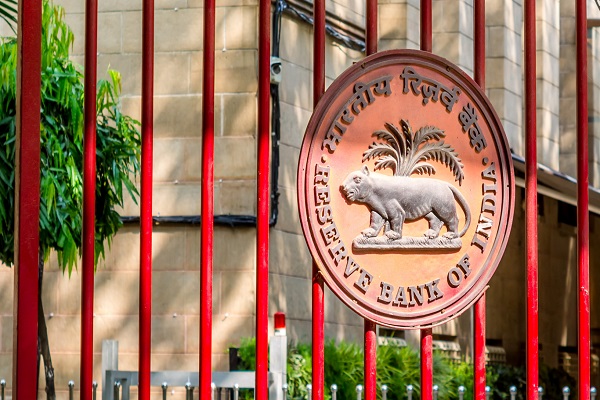
The Reserve Bank of India’s own challenge becomes subtler in such an environment. Having established credibility as an inflation-targeting central bank, it now operates in a narrower tolerance band. During periods of macro stability, markets respond not merely to actions but to interpretation. Calibration is internalised as commitment. A pause can be priced as accommodation, and ambiguity acquires informational weight.
The central question is no longer confined to which instrument is deployed, but how intent is perceived and extrapolated.
This interpretive layer makes prosperity management more demanding than crisis response. In a crisis, the objective is clarity and speed. In benign phases, the objective is steadfastness and foresight. Pre-emptive restraint, whether through macroprudential tightening, liquidity calibration, or supervisory signalling, must often be exercised before excess is widely acknowledged. When growth is healthy and profitability robust, the calls for caution are easily framed as overreach. Yet delay allows correlated behaviour to harden.
The institutional test lies in acting when intervention appears unnecessary, not when it becomes unavoidable. Preventive measures are rarely popular in moments of abundance, yet they define the durability of stability.
Fiscal signalling has also evolved, and the policy increasingly emphasises targeted support rather than blanket insulation. The message is consistent: growth will be enabled, but judgment will not be insured. The socialisation of private risk during phases of exuberance weakens accountability and distorts capital allocation. Durability demands a clearer distribution of responsibility between the state, the regulator, and the market participants. This posturing encompasses not just banks but also extends to investors and markets as well.
Emerging Frontiers
Technological sophistication can amplify opacity and speed simultaneously. Supervision must therefore evolve from checklist compliance towards model governance, data lineage accountability, and scenario interrogation that penetrate algorithmic decision layers rather than merely auditing outputs.
Conduct supervision presents another layer.
Disclosure-centric regulation addresses information asymmetry, yet it does not automatically correct incentive misalignment. Product design, distribution practices, and advisory frameworks can transmit risk and distort outcomes even in the absence of formal rule breaches. Supervisory philosophy must therefore extend beyond whether institutions disclose adequately to whether they allocate risk responsibly. Outcome-based assessment must complement disclosure-based oversight, evaluating how risk migrates across households, intermediaries, and markets.
Long-horizon structural transitions introduce further complexity with climate-linked exposures, infrastructure financing, and large-scale capital reallocation associated with energy transition, creating valuation uncertainty and concentration risk over extended durations. These exposures rarely generate immediate stress as they accumulate gradually, embedded within optimistic assumptions about growth and policy continuity. Integrating such dynamics into mainstream risk assessment requires operational discipline rather than rhetorical commitment.
Stress testing and scenario planning must become embedded within capital allocation frameworks, not appended as sustainability reporting.
At a systemic level, macroprudential governance confronts a recurring asymmetry. Preventive action is most effective when vulnerabilities are nascent. Yet the absence of visible stress weakens the perceived urgency to act. Stability reduces tolerance for restraint, and markets and institutions converge around the narrative that prevailing safeguards are adequate. Economic disruptions are seldom the product of ignorance, as they emerge from a collective conviction that resilience is already assured.
The reluctance to act early is not a technical limitation but an institutional one, shaped by political economy incentives, market expectations, and reputational caution.
India’s next economic test is unlikely to arise from scarcity or acute external shock alone. It is more likely to emerge from the management of success. Governing prosperity demands a different temperament from restoring stability. It requires earlier recognition of correlated behaviour, deeper interrogation of incentive structures, and a willingness to introduce restraint when optimism is abundant.
India’s growth story remains intact. Its institutional foundations are stronger than they have been in years. That strength must not become a substitute for vigilance. Regulatory courage in the next phase will not manifest through dramatic intervention. It will appear through steady, sometimes unpopular, anticipatory judgment exercised before excess becomes visible. The durability of India’s ascent will depend less on the speed of expansion and more on the quality of governance that accompanies it.
Also Read:
Regulation for a No-Pause Financial System in a Fast-Moving Economy
When Disclosure Meets Discipline: Recasting India’s Financial Regulatory Architecture
More From BasisPoint