.png)

India’s Growth Dilemma: When GDP Numbers Meet Lived Reality
India’s 7.8% GDP growth has reignited debate over data, jobs and investment. The real question is whether headline growth is translating into better lives.

Phynix is a seasoned journalist who revels in playful, unconventional narration, blending quirky storytelling with measured, precise editing. Her work embodies a dual mastery of creative flair and steadfast rigor.
September 7, 2026 at 2:10 AM IST
Dear Insighter,
There is something unsettling about watching a nation argue over a number while the people it is supposed to describe are living an entirely different reality.
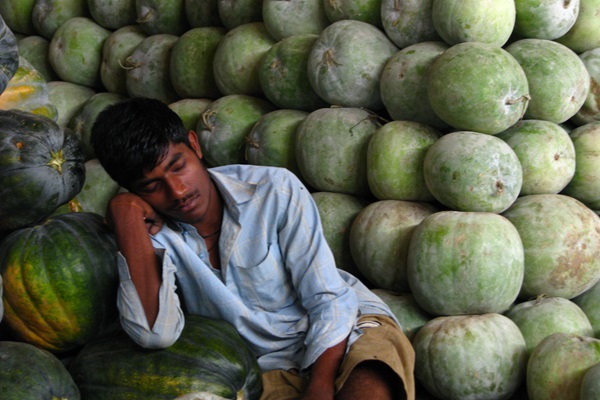
India’s economy grew at 7.8% last quarter. The prime minister called it a "herculean feat". Markets nodded approvingly. Business leaders applauded. And somewhere in a tier-2 city, a 24-year-old commerce graduate with years of competitive exam preparation behind him refreshed his job portal again.
The GDP debate has become India's favourite spectator sport. On one side is the official machinery pointing to 7.8% growth. On the other are experts like Pronab Sen, India’s first Chief Statistician, who argues that the new GDP series is effectively a black box because its underlying price data has not been made public. He is not rejecting double deflation, which is internationally regarded as more rigorous. He is asking why nobody can verify it.
The deflator, simply put, adjusts nominal growth for changes in prices to arrive at real growth. India’s new series uses separate price indices for inputs and outputs. The approach is conceptually sound but data-intensive. The question is whether the underlying data is sufficient to support it.
That matters because GDP is not merely a statistical curiosity. It shapes policy, investment decisions and assessments of living standards. If the number is wrong, or even if it is right but poorly understood, the consequences extend from interest rates to election manifestos.
Arvind Mayaram points out another uncomfortable reality: youth unemployment among 15-29-year-olds has risen from 13.8% to 16.2% over the past year, even as overall unemployment remains around 5.5%. Azim Premji University surveys suggest close to 40% of graduates under 25 are without work.
Private corporate investment, meanwhile, remains near a decade low. Companies are sitting on record profits without a corresponding investment surge. Net FDI has turned negative twice this year. The rupee has fallen past ₹96 to the dollar despite around $700 billion in reserves and repeated RBI intervention. The trade deficit is widening as imports grow faster than exports.
Dhananjay Sinha adds another layer. The acceleration from 6.9% to 7.8% came alongside substantial fiscal and monetary support, including 125 basis points of rate cuts, liquidity infusion estimated at ₹14 trillion-₹15 trillion, and GST and income-tax rationalisation. The harder question is whether the improvement is commensurate with the scale of that intervention and whether it is beginning to generate its own momentum.
The statistical fog thickens when we look at India’s dollar GDP. Rajesh Mahapatra’s arithmetic is simple: nominal GDP grew 10.3% year-on-year in April-June, but the rupee depreciated 9.7% against the dollar. India's dollar GDP therefore fell marginally, from $935 billion a year ago to $932 billion. The currency move more than offset nominal growth, making the $10 trillion economy target by 2030 look increasingly distant.
The FCNR story offers another reminder that headline numbers need context. R. Gurumurthy and Yield Scribe examine the $127 billion attracted through the scheme. It looks like a triumph until one asks what those dollars will cost. The RBI has created a future foreign-currency obligation. As Babuji K reminds us, foreign-currency deposits are not a permanent addition to reserves. They are promises to return principal and interest three to five years later. The real test begins when those dollars come due.
Then there is the youth factor. Amitabh Tiwari’s analysis of the 2027 state elections in Uttar Pradesh, Punjab, Uttarakhand, Goa and Manipur suggests that recent BJP victories in West Bengal and Assam may not translate into similar outcomes. Youth protests over jobs and opportunity have put the ruling establishment on the defensive. Unemployment is the common thread across all five states, even though each has its own local flashpoint.
The financial markets provide another clue. Sanjay Mansabdar points to a speculative boom that has shifted from options trading towards leveraged small-cap investing. Finfluencers are using AI-generated content to promote unknown companies as potential multi-baggers. Margin loans have risen 500% since 2023. Small IPOs are booming and retail investors are chasing returns at valuations that often defy logic.
What does that tell us? Perhaps that people are searching for opportunities wherever they can find them. When the real economy does not provide enough avenues for wealth creation, speculation can become a substitute.
Even jewellery is feeling the pressure. Krishnadevan V’s analysis of GRT’s acquisition of TBZ shows how rising gold prices are changing the economics of the business. A jeweller carrying 100 kg of gold-equivalent inventory needs about ₹1 billion more capital for every ₹10,000 increase in the gold price per 10 grams. The grams remain unchanged. The funding requirement does not.
Vivek Kaul’s piece on Subhash Chandra and the Essel Group’s loan defaults offers a different lesson: how fame and visibility can shape public perceptions of financial wrongdoing.
The judicial system has its own version of the same problem. Shruti Mahajan’s piece on procedural resets examines how two high-stakes cases, SpiceJet and Skoda Auto Volkswagen, were effectively sent back to the starting line after years of litigation. The NCLT imposed costs on SpiceJet for "wasting judicial time", while the Bombay High Court cited "exigency of work" in releasing a case that had been argued for more than a year. For businesses, the cost is measured in time, uncertainty and money.
BL Chandak’s analysis of trade credit in a two-part series highlights another blind spot in economic analysis. Supplier credit accounts for approximately 16-17% of sales, compared with bank working capital of roughly 8-14%. Even large, well-banked manufacturers depend heavily on supplier credit. Official frameworks can therefore capture one layer of the economy while significant activity takes place elsewhere.
India’s credit system is becoming faster without necessarily becoming smarter. Sagari Gupta writes that banks now report borrower-level data four times a month rather than twice, allowing faster detection of missed payments and new debt. But faster information does not automatically mean better understanding. Richard Fargose meanwhile notes that RBI term VRRR auctions designed to absorb surplus liquidity are attracting insufficient participation. Banks prefer overnight parking to longer commitments because uncertainty makes flexibility more valuable than marginal returns.
Sharmila Chavaly raises a compelling question about data centres: why aren’t they paying us? States are offering subsidies while local communities may receive little beyond temporary construction jobs and a limited number of permanent positions, alongside risks around water and ecology.
Dev Chandrasekhar’s piece on GE Shipping examines another corporate choice. Management framed its buyback as an alternative to buying a ship, using the company’s ₹1,886 net asset value per share, a discount of roughly 19%, as the reference point. The broader question is what happens when other boards use similar valuation arguments to justify capital allocation.
Krishnadevan V’s analysis of HDFC Bank’s succession planning raises a governance concern. The board says Sashidhar Jagdishan will step down on October 26 "despite persuasion". Intended to signal confidence, the wording instead risks making the process sound rushed.
Ganga Narayan Rath and Chirayu Sharma’s piece on IFCI offers another cautionary tale. The state-owned lender’s indirect NSE stake could generate a substantial balance-sheet windfall, but that alone cannot revive an institution weakened by decades of bad loans.
Rabi N. Mishra and Komal Gupta’s piece on cooperative governance ties it all together. Having an elected board, statutory audits and prescribed committees is not enough. The more important questions are whether directors have the knowledge to discharge their responsibilities, whether management is accountable, whether material information reaches the board in time, conflicts are managed and emerging risks identified early enough for corrective action.
Arvind Mayaram’s analysis of circular finance and the energy transition offers a more constructive perspective. Indonesia’s experience suggests that the challenge is not simply a shortage of capital, but a shortage of financing structures capable of deploying that capital repeatedly. Circular finance seeks to turn development-generated assets into a continuing source of financing capacity.
The Himalayan disaster described by Lt Gen Syed Ata Hasnain offers a metaphor for the same problem. The glacier collapse in Nepal travelled more than 100 kilometres, generating seismic energy equivalent to a magnitude 5.2 earthquake. We call it a flood because that is what we see at the end. But the event was a cascade: slope failure, ice collapse, debris flow, air blast and flood. The Himalayas are confronting hazards that our vocabulary, and perhaps our disaster preparedness, has yet to fully absorb.
Ashima Goyal offers a hopeful counterpoint. Technology is lowering optimal production scales, creating opportunities for Indian firms in manufacturing, green energy and innovation. Combined with digital public infrastructure, AI can empower individual innovators. As Acemoglu has argued, technology creates sustainable wealth when it is inclusive and generates value for communities.
This is where the growth debate should move. Not towards deciding whether 7.8% is right or wrong, but towards asking whether growth is translating into better lives. Is it creating jobs, raising wages, improving public services and reducing inequality? Is it reaching the 24-year-old commerce graduate with no job prospects?
The BasisPoint Groupthink editorial makes the point well: "The most encouraging outcome of India's latest GDP release may not be the number itself. It is that the economy has returned to the centre of national conversation." The debate has shifted towards jobs, investment, foreign capital, exports, prices and the quality of growth. That is a democratic gain, regardless of where one stands on the headline figure.
The GDP number should neither become a test of patriotism nor be dismissed simply because it does not fully match lived experience. It is a starting point for inquiry, not the end of it.
The next phase of policy should therefore be judged less by the size of the impulse and more by its transmission. Public investment must crowd in private capex. Manufacturing must raise its share of value added. Employment and real wages must begin to confirm the strength visible in aggregate output.
We need to look underneath. At the jobless graduate. The reluctant investor. The depreciating currency. The speculative gambler. The family weighing its spending choices. The voter wondering where the promise of growth went.
And ask the hardest question of all: if the numbers do not match the experience, is the experience wrong, or are the numbers?
Until next time, keep looking beyond the headline.
Phynix
Also Read
- Empowering Women in India Economically Also Improves Their Mental Health by Amitrajeet A. Batabyal: Cash transfers, property rights, and livelihood programmes don't just boost bank balances. They boost well-being, proving that economic empowerment and mental health are two sides of the same coin.
- SCO Signals a Possible Reset in India-China Ties Ahead of BRICS by Rajesh Ramachandran: Modi, Xi, and Putin shaking hands in Bishkek wasn't just a photo-op; it was a signal that the world's most consequential bilateral relationship might be thawing, with BRICS as the next testing ground.
- Too Many Cooks in India's Innovation Kitchen by Rajesh Bansal: India built UPI, a global marvel, but still lacks the institutional machinery to turn lucky breakthroughs into repeatable patterns.
- Warsh's Quiet Fed Shifts Uncertainty to Markets by BasisPoint Groupthink: Kevin Warsh wants the Fed to make fewer promises and keep more discretion, but that freedom comes at a cost.
- The Machines Know What We Want. Shame They Don't Know What We Mean by Kalyani Srinath: Your phone hears you mutter about choley and serves up a recipe, but it can't grasp the nuance.
- Sarci Sense: Why Can We Manage Everything Except the Newspaper Flying Everywhere? by Srinath Sridharan: We colour-code our calendars, track investments like hawks, and remember birthdays from a decade ago—yet somehow, the morning paper ends up scattered across every surface, mocking our carefully curated order.
- The Fed and the Treasury Are in Denial by Katharina Pistor: America's privileged position as the world's reserve-currency issuer may be eroding, but policymakers are behaving as if stable demand for US debt and dollars is forever guaranteed.
- AI's Market Path Will Get Bumpier by Mohamed A. El-Erian: AI promises enormous productivity gains, but the road to those rewards will be rocky.
- US' Whipsaw Trade Policy Is Depressing Foreign Direct Investment by Jonathan D. Ostry: Tariffs are bad for investment, but policy uncertainty is three times worse. Trump's on-again, off-again trade war isn't just confusing; it's actively repelling the capital America claims to want.
- Are The Walls Closing in on Bessent? by Paola Subacchi: Scott Bessent's futile efforts to keep a lid on Treasury yields suggest a familiar truth: the dollar is America's currency, but everyone else's problem.
Beyond this Newsletter
The BasisPoint app brings you our latest insights, analysis and updates as soon as they are published.
Download the BasisPoint app from Google Play or Apple’s App Store and stay connected to the ideas shaping India’s economy, policy and markets.
You can also follow us on WhatsApp Channel:
https://whatsapp.com/channel/0029Vb6wYey3wtb36FzRg52S
More From BasisPoint