.png)

Govt for High Level Banking Panel, The Real Question Is Why Now
When a system is stable, profitable, and already reforming, a new committee raises more questions than it answers.
Mint Owl tracks markets and policy with a steady eye, offering clear analysis on the choices shaping India’s economy and financial system.
February 1, 2026 at 2:42 PM IST
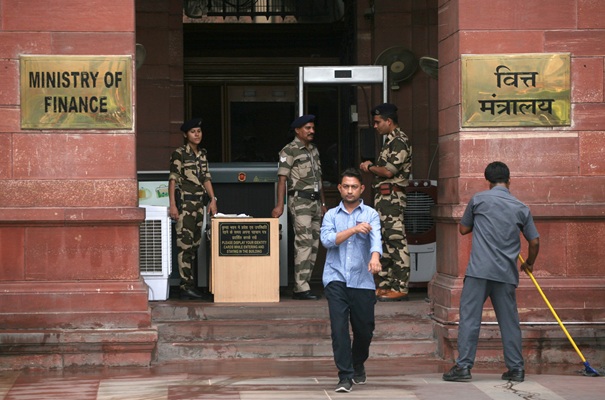
Finance Minister Nirmala Sitharaman’s Union Budget for 2026-27 produced its share of expected applause and predictable criticism, but one announcement stood out for its ambiguity rather than its ambition: the decision to set up a “High Level Committee on Banking for Viksit Bharat”.
At first glance, the market’s conjecture followed a familiar script. Was this a precursor to further consolidation among public sector banks, a push towards deeper disinvestment, or a backdoor opening for higher foreign shareholding, perhaps even full foreign ownership in private banks? Yet none of these possibilities actually requires the cover of a high-level committee.
The government has demonstrated that it can execute politically sensitive banking decisions through existing policy and administrative channels. Public sector bank mergers were pushed through despite union resistance, the divestment of IDBI Bank was set in motion without ceremony, and foreign institutions have been allowed to assume control of stressed or strategically important private lenders. These were substantive policy actions, not outcomes of prolonged committee processes.
Nor is the banking system currently facing pressures that demand immediate structural intervention. Balance sheets are stronger than they have been in recent years, asset quality has improved sharply, and profitability has recovered. The sector has displayed relative stability in an otherwise volatile global financial environment.
On the regulatory side, the Reserve Bank of India has already been engaged in a process of regulatory consolidation and supervisory refinement. Legacy circulars have been consolidated, obsolete norms pruned, and supervision updated in line with evolving market practices. The central bank has also adjusted its regulatory approach, deploying non-traditional liquidity and regulatory tools and allowing banks to venture into areas such as acquisition financing that were previously approached with greater caution.
This context makes the stated rationale for the committee, aligning the banking sector with India’s next phase of growth while safeguarding stability, inclusion and consumer protection, less clearly differentiated from existing policy objectives. These goals already sit within the current policy and regulatory framework.
The absence of detail only adds to the uncertainty. There is no clarity on the committee’s terms of reference, its composition, or how it will interface with the RBI on matters that fall within the central bank’s statutory remit. Whether the regulator will have a decisive voice, or a consultative presence, remains unanswered.
The timing also merits attention. The government has only recently created a Payments Regulatory Board, introducing a new institutional arrangement in an area previously overseen by the RBI. Seen in that light, the banking committee could be viewed not only as a reform initiative, but also as part of a broader trend towards additional governance layers.
For years, debates over the appropriate balance between government oversight and regulatory autonomy have surfaced periodically in India’s policy discourse, often without translating into concrete institutional change. In more settled phases, these discussions tended to remain largely academic. At a time when the banking system is on a stronger footing, and the policy framework is evolving incrementally rather than through crisis-driven reform, the decision to constitute another high-level panel naturally invites closer scrutiny of its intended role and scope.
This may well turn out to be an innocuous exercise, a forum for blue-sky thinking with little immediate policy consequence. Yet history suggests that committees matter not only for what they recommend, but for what they signal. In an environment where stability has been gradually rebuilt, the real test will be whether this panel reinforces the existing institutional architecture, or contributes to its gradual reshaping. That distinction will be worth watching far more closely than any headline reform it may eventually propose.
More From BasisPoint