.png)


Venkat Thiagarajan is a currency market veteran.
July 13, 2026 at 4:01 AM IST
Alan Greenspan once remarked, perhaps in jest: “Since I’ve become a central banker, I’ve learned to mumble with great incoherence. If I seem unduly clear to you, you must have misunderstood what I said.”
Times moved on. Clarity became a virtue, not a vice, and forward guidance became an important weapon in the central banker’s armoury. Market responses to Fed communication became an important part of the monetary policy transmission mechanism.
The Federal Reserve’s conventional communication channels have been threefold: the FOMC statement and the Chair’s press conference; the meeting minutes, which provide deeper context and reveal the range of views within the Committee; and speeches by Fed officials, which shape the narrative between meetings. Together, they balance official decisions, detailed transparency and real-time signalling.
The balance has shifted over time. Under Greenspan, statements were cryptic, and Fed speak was famously opaque. Bernanke and Yellen leaned heavily on forward guidance in statements and speeches. Powell retained it as part of the toolkit, but in a more restrained form.
Markets even developed a taxonomy for forward guidance:
-
Odyssean guidance as a binding commitment to a path
-
Delphic guidance as a forecast-based description of likely policy
-
Calendar-based guidance tied to dates
-
Contingent guidance tied to economic benchmarks
-
Negative guidance signals what the central bank will not do.
Promises to Outcomes
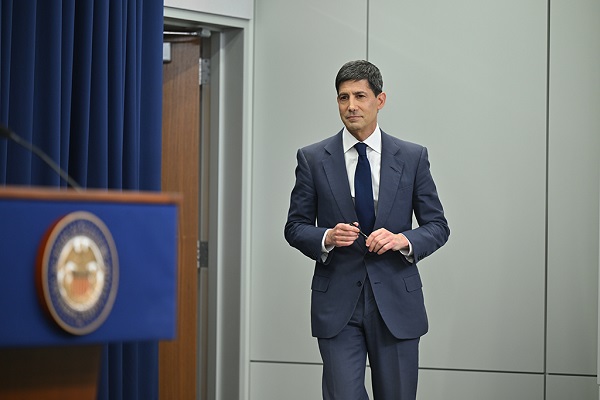
Now the Fed under Warsh is departing from its reliance on signalling and expectation management, shifting the focus toward outcomes rather than promises. Forward guidance and communication are being deliberately de-emphasised, while the reaction function—policy decisions driven by real-time data—takes precedence.
This redefined mix, minimising statements and Fed speak, elevates the minutes as a primary communication channel. Warsh issued a pared-down, 130-word policy statement stripped of forward-guidance language and declined to provide his own rate projection. The choice reflected his conviction that the Fed should react to incoming data rather than commit to a preset path.
The minutes have not always carried this much weight. Publishing began in the mid-1960s with a five-year lag, making them historical records rather than tools for guiding markets. The lag shortened to about six weeks in 1993 and to three weeks in 2004, where it remains. From 2011, the minutes became more detailed as communication grew into a policy instrument in the zero-interest-rate era. Their value lies in the granular view they offer of voting members and regional bank presidents—insight that goes well beyond a press statement.
Even so, minutes have traditionally had little market impact. Their balanced language often borders on bland, and statements and press conferences have usually shaped expectations before publication. This release broke that pattern. With Warsh’s influence evident, the document was stripped of the usual forward-guidance cues and became far more consequential for markets.
June Minutes
When the Chair intentionally refrains from articulating his own stance, the minutes become the primary record of the policy debate. Markets are then more sensitive: pricing can shift abruptly if the internal discussion proves more fractured than anticipated.
Since June, Warsh has appeared publicly just once, at a European Central Bank gathering in Portugal. Investors are watching for clues about his policy preferences, but he has stayed quiet. That purposeful restraint increases the weight of the July 8 release: the 14-page summary is unusually brief and sharply divided.
The first market signal is the scenario split. In one, inflationary pressures dissipate, and inflation returns toward 2%, making it appropriate to hold or eventually lower the federal funds rate. In the other, inflation remains elevated because of strong AI-related demand, the Middle East conflict or tariffs, and some policy firming is warranted. The minutes, therefore, do not offer a promised path; they reveal the conditions under which the path changes.
The second signal is that inflation risks are rising. Policymakers saw price pressures becoming more broad-based, with substantial increases across transportation, airfares, petrochemical products and agricultural inputs. They also warned that elevated commodity prices and supply disruptions could persist longer than anticipated. The AI buildout is itself becoming an inflation input, sustaining pressure on technology-product and electricity prices.
The third is the depth of the Committee’s division. The minutes confirmed the “family fight” Warsh had previewed at the post-meeting press conference. The split was also visible in the June dot plot: nine of 18 officials pencilled in at least one hike before year-end, reversing March’s cut-leaning median.
A few participants saw a case for raising rates but supported holding “at this meeting”. It suggests the divisions could widen in July if the Middle East conflict flares again, particularly because several participants did not view the current policy stance as restrictive.
Market Implication
The June lesson is that a single meeting can now deliver far more news than markets have grown accustomed to. In the past, the Committee’s thinking reached investors in fragments. Now it arrives concentrated in the meeting itself.
July 29 will be the next test. With no updated projections, the news will come through the statement and the Chair’s press conference. The question is whether meetings continue to produce readings as consequential as June’s, or whether markets adapt to the way this Committee weighs the data.
As long as the Committee remains divided, rate-hike probabilities may gravitate toward 50% ahead of each meeting. Forward guidance sought to anchor expectations by describing where policy was going. The Warsh Fed is asking markets to price how policy will respond. The Fed is talking less. Each meeting may now say more.
More From BasisPoint