.png)


Groupthink is the House View of BasisPoint’s in-house columnists.
August 18, 2026 at 1:39 PM IST
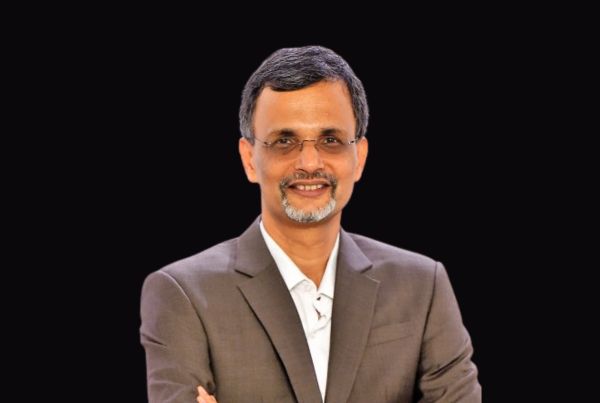
V Anantha Nageswaran appears increasingly willing to temper the optimism of a technocrat with the professional scepticism expected of a Chief Economic Adviser.
That should not be remarkable. Yet, in a policy culture where every shock is recast as an opportunity, every vulnerability as resilience, and every numerical target as an achievement waiting to happen, useful doubt can begin to sound discordant.
Nageswaran’s latest intervention makes the shift unusually clear. Writing with Department of Economic Affairs consultant Akash Poojari, and expressly stating that the views were personal, he argued that E10 petrol should be restored alongside E20 for vehicles that were not designed for the higher ethanol blend. He also called for a serious examination of the food-versus-fuel trade-off involved in producing more ethanol.
Only weeks earlier, the government had said there was no proposal to restore E0 or E10. It defended E20 as scientifically validated and superior, and argued that maintaining parallel fuel supply chains would add operational complexity and cost.
Nageswaran did not reject E20 or its claimed benefits. His argument was that aggregate gains did not settle the transition question for owners of older vehicles. The shift had moved faster than parts of the existing fleet could comfortably accommodate, some adaptation costs had received insufficient attention, and consumer choice should be restored while compatibility and retrofit arrangements caught up.
This was not the customary caveat attached to an otherwise enthusiastic defence of policy. A serving senior official was publicly proposing an option that the government had recently ruled out.
It is tempting to call this the conscience of the office becoming audible. A less loaded description is that the Chief Economic Adviser is reclaiming the adviser’s licence to doubt.
Policy Candour
In May, he said managing the current account, financing it credibly, and preventing further currency depreciation were the central macroeconomic imperatives of 2026–27. He described India’s energy exposure as structural and the West Asia conflict as a “live balance-of-payments stress test” affecting inflation, the current account, and the exchange rate.
That was less soothing than the prevailing official register. As this column noted at the time, reassurance had centred on diversified remittance channels, adequate buffers, orderly currency adjustment, and the absence of any need for exceptional mobilisation. Nageswaran chose to name the pressure rather than manage the language around it.
He was not claiming that India faced an imminent crisis. He was acknowledging that strong fundamentals did not make external vulnerability inconsequential. Reserves are a defence against vulnerability, not proof that vulnerability has disappeared.
The Economic Survey had already flagged weakening foreign direct and portfolio investment flows and acknowledged India’s dependence on foreign capital to finance the portion of its merchandise trade deficit not covered by services exports and remittances. When capital flows weakened, rupee stability became harder to preserve.
That sits awkwardly beside the familiar proposition that the currency is merely failing to reflect India’s excellent fundamentals. Macroeconomic virtue does not automatically produce external stability, particularly when the financing environment is becoming more fragmented and politically contingent.
Nageswaran has been equally unwilling to accept corporate India’s preferred explanation for weak private investment. In May, he pointed out that profits among the top 500 listed companies had grown by 30.8% annually after the pandemic, while private capital formation remained disappointing.
He suggested that some companies and second- or third-generation entrepreneurs had accumulated profits and probably established family offices rather than investing in productive assets. Industry, he said, found it easier to point at the government than to reverse the gaze upon itself.
That cuts through another piece of convenient groupthink. For years, repaired corporate balance sheets and high profitability have been cited as precursors to an imminent private investment cycle. Nageswaran’s point was that the capacity to invest had recovered, but the appetite had not. Demand uncertainty could not indefinitely excuse the failure to create the investment, employment, and wages that would themselves strengthen demand.
He has also questioned the celebration of India’s financial-market expansion. In November, he warned against treating market-capitalisation ratios and derivatives volumes as measures of sophistication. Such activity, he argued, could divert household savings from productive investment. Initial public offerings were increasingly becoming exit routes for early investors rather than mechanisms for raising long-term capital.
Here again, the CEA challenged a favoured success metric. A larger market is not necessarily a deeper market. More trading is not necessarily more finance. An expanding financial sector that recycles existing wealth, facilitates promoter exits, and encourages household speculation cannot automatically be presented as evidence of productive financial development.
Artificial intelligence is where the argument about techno-optimism becomes literal. Official platforms tend to present AI as a source of innovation, productivity, entrepreneurship, and higher-value employment. Nageswaran has warned that it could reduce routine cognitive work and shrink entry-level hiring.
India still needs around eight million new jobs or livelihoods each year, and its economic potential, he said, was “not a given”. Removing the lower rungs of the employment ladder before workers have acquired experience would not be a minor adjustment. Productivity gains may eventually create new occupations, but “eventually” is not a labour-market policy.
Nageswaran has not turned hostile to technology. He has challenged the assumption that technological adoption and social benefit arrive on the same timetable. A technology can raise aggregate productivity while displacing particular workers, weakening entry-level recruitment, concentrating returns, and widening inequality during the transition.
Even where he endorses official ambition, he increasingly supplies the conditions that slogans omit. Becoming a $30 trillion economy by 2047 would require around 12% annual growth in dollar terms, together with sustained gains in frontier research, technological capability, and economy-wide productivity.
Becoming richer would also mean less if rising obesity, sedentary lifestyles, and car-centric urban design left India “unhealthier before it becomes richer”. Human capital is not a residual benefit produced after infrastructure, technology, and manufacturing have been built. It is part of the productive apparatus itself.
Useful Doubts
None of this places Nageswaran outside the government’s broad economic consensus. He continues to defend India’s growth record, fiscal consolidation, macroeconomic fundamentals, and reform programme. His warnings are frequently balanced by reassurance, and some form part of the Economic Survey itself.
But that is precisely why the pattern is significant. He is recovering the proper function of economic advice within government.
Professional scepticism does not require contradiction for its own sake. It requires an adviser to identify the cost hidden behind an aggregate benefit, the vulnerability concealed by a strong headline number, and the constituency bearing the burden of an apparently efficient policy.
A government has ministers to defend its decisions. It needs economists to test them. The CEA’s job is not merely to attach decimal points to political aspirations or provide sophisticated explanations for why every announced policy will eventually succeed.
It is to ask what could go wrong, who may be paying for it, whether the evidence supports the chosen course, and whether the assumptions behind the policy still hold.
The E10 recommendation is therefore an important test. The government can treat it as an inconvenient personal opinion, reiterate the logistical case for E20, and move on. Or it can examine whether consumer choice, transitional protection for older vehicles, a retrofit programme, and a transparent accounting of the food-versus-fuel trade-off would improve the policy.
The same test applies elsewhere. Will warnings about weak private investment affect the incentives and expectations imposed on large companies? Will concern about speculative finance alter how market deepening is measured? Will the employment risks from AI influence industrial, education, and labour policy? Will candour about the current account and the rupee translate into stronger external buffers?
Otherwise, candour risks becoming performative, acknowledged in speeches but absent from policy. The establishment can then claim that a danger was recognised without having to respond to it.
India does not lack intelligent policymakers. It suffers more often from excessive convergence among them. When every senior official says growth is resilient, inflation manageable, the currency orderly, capital flows adequate, buffers ample, technology benign, and reform irreversible, the policy establishment loses its capacity to detect error early.
The point is not that Nageswaran must be right on every issue. Maintaining a parallel E10 supply chain may impose logistical costs. Artificial intelligence may eventually create more employment than it displaces. Capital flows may revive, private investment may accelerate, and external pressures may recede.
The welcome development is that a serving adviser is increasingly willing to put the other side of the argument into the public domain before events settle it for him.
More officials should do the same. India does not need obligatory pessimism, but it could use far less obligatory optimism. A confident state should be able to accommodate economists who qualify its achievements, regulators who question fashionable metrics, and central bankers who acknowledge risks before markets make those risks impossible to finesse.
Resilience is strongest when it survives scrutiny, not when it is repeated from every podium.
More From BasisPoint