.png)

Canada Walks Away From US Trade Talks, and Lessons for India
New Delhi should seek clear, binding and durable tariff concessions before making commitments on agriculture, digital regulation, critical minerals or government procurement.

Ajay Srivastava, founder of Global Trade Research Initiative, is an ex-Indian Trade Service officer with expertise in WTO and FTA negotiations.
August 23, 2026 at 3:06 PM IST
Canada suspended trade negotiations with the US on August 21, 2026, and recalled its negotiating team after concluding that Washington was offering limited tariff relief in return for concessions that could weaken Canadian manufacturing and restrict its sovereignty.
Ottawa said it would impose “dollar-for-dollar” retaliatory tariffs from September 8. The decision ended negotiations that began on February 1, 2025, following the first wave of new US tariffs.
The negotiations were unusual because the two countries have had free trade for more than three decades—first through the North American Free Trade Agreement, effective from 1994, and then through the US–Mexico–Canada Agreement, which replaced NAFTA in 2020. The USMCA remains operational and permits most qualifying North American goods to trade duty-free.
A new deal became necessary because Washington imposed additional tariffs outside the USMCA framework and on top of normal WTO, or most-favoured-nation, duties.
These included Section 232 national-security tariffs of as much as 50% on Canadian steel, aluminum, copper and related products; 25% duties on vehicles and parts; and separate tariffs on lumber and wood products.
The US also imposed a 10% Section 301 tariff on a broad range of Canadian goods, citing inadequate Canadian enforcement of its ban on forced-labour imports. It subsequently invoked Section 338 to impose 50% duties on selected Canadian exports, including wine, cement, hockey equipment and other consumer products. Some of these tariffs applied even when the goods satisfied USMCA origin requirements.
These “WTO-violative” tariffs weakened the commercial certainty promised by the USMCA. Canada entered the bilateral negotiations seeking exemptions, substantial tariff reductions and protection against further unilateral action ahead of the USMCA’s 2026 joint review.
Washington, however, offered only partial relief and kept adding new demands.
- It proposed reducing the 50% steel and aluminum tariffs to 25%, but subject to restrictive quotas, including an annual ceiling of about four million metric tons for Canadian steel. Ottawa viewed this as replacing one barrier with two: a tariff and a quantitative limit.
- The US offered to lower the tariff on Canadian-built vehicles from 25% to 15%, but declined to extend similar treatment to medium- and heavy-duty trucks. This would have disadvantaged Canadian production of Ford F-350, F-450 and F-550 trucks and General Motors’ Silverado. Washington also sought tighter North American content rules and additional supply-chain restrictions.
- The US offered temporary protection from wider Section 338 tariffs and proposed delaying 50% duties on about $20 billion of Canadian consumer and agricultural exports. That relief was reportedly conditional on strict import limits, concessions affecting Canada’s supply-management system for dairy and other farm products, and the removal of provincial restrictions on American alcohol sales.
- The decisive dispute concerned demands extending beyond conventional trade policy. Washington sought restrictions on Canada’s ability to negotiate independent trade agreements, preferential access to Canadian critical minerals, and changes to policies protecting Canadian culture and the French language, including online-broadcasting rules promoting Canadian and French-language content.
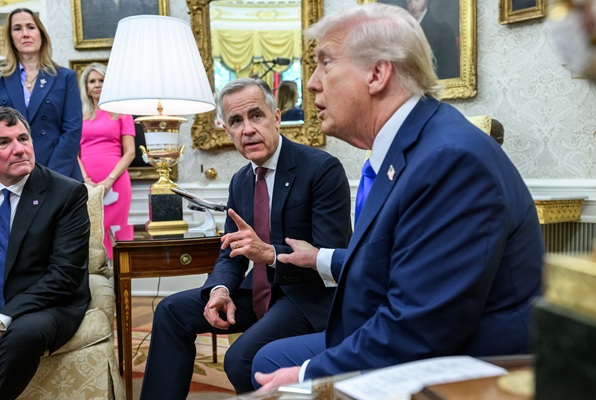
Prime Minister Mark Carney said the new last-minute terms were “uneconomic” and “unfair,” adding that Washington had asked too much and offered too little. Ottawa concluded that the proposed agreement would leave major U.S. tariffs in place while limiting Canada’s control over its trade relationships, strategic resources, agricultural system and cultural policies.
Canada will now impose matching duties on selected US products, focusing on steel, dairy products, household appliances, agricultural machinery, pulp and paper, and electronics. Carney acknowledged that retaliation would raise domestic prices and reduce consumer choice, but argued that accepting an unequal agreement would cause greater long-term damage to Canadian industry and sovereignty.
For India, which is also negotiating a trade deal with Washington, Canada’s experience is a warning. New Delhi should seek clear, binding and durable tariff concessions before making commitments on agriculture, digital regulation, critical minerals or government procurement. An agreement that merely reduces some US tariffs while leaving Washington free to impose fresh duties under Sections 232, 301 or other domestic laws would offer little certainty. India should protect its regulatory and strategic autonomy and refrain from offering unilateral concessions outside the negotiating table. It should concede only where the benefits are balanced, enforceable and protected against future unilateral tariff action.
More From BasisPoint