.png)

Big Mac at 40 Explains What Currencies Really Buy
The burger made PPP tangible. Forty years on, it still shows why a cheap currency need not be mispriced or poised for a rebound.

July 31, 2026 at 11:45 AM IST
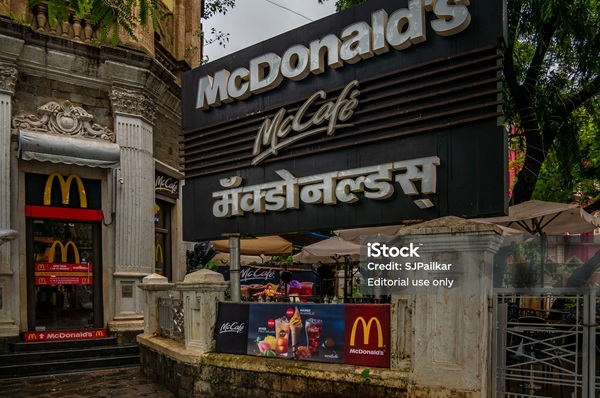
A McDonald’s burger cost ₹227 in India in January 2026. Its American equivalent cost $6.12. At the exchange rate used for The Economist’s latest Big Mac Index, ₹90.295 to the dollar, the Indian burger was worth just $2.51.
That comparison produced a startling conclusion: the rupee was undervalued by 58.9% against the dollar. Dividing ₹227 by $6.12 gives an implied exchange rate of about ₹37 to the dollar, far removed from both the rate prevailing in January and any plausible near-term forecast.
No serious currency analyst would therefore interpret ₹37 as a trading target. The calculation is useful for a different reason. It exposes the distinction between what a currency can buy within its own economy and what it commands in the foreign exchange market.
That distinction has kept the Big Mac Index alive for 40 years.
Conceived by Economist journalist Pam Woodall and first published in September 1986, the index was intended as a light-hearted illustration of purchasing power parity, or PPP. Its longevity reflects the difficulty of explaining an abstract exchange-rate theory and the elegance with which a globally recognisable burger reduces it to arithmetic.
The Big Mac is broadly standardised, widely sold and locally produced. Its price combines internationally traded ingredients with domestic wages, rent, electricity, transport, taxes and marketing costs. It therefore offers a small window into both the exchange rate and the price structure of an economy.
India requires a qualification.
McDonald’s does not sell the beef Big Mac in the country, and the index uses the chicken-based Maharaja Mac as its closest available substitute. That makes the comparison less exact, but it does not invalidate the larger lesson.
Parity principle
PPP begins with the law of one price. If an identical, freely traded product sells for less in one country than another after conversion into a common currency, traders should buy it in the cheaper market and sell it in the dearer one. That arbitrage should eventually eliminate the price difference.
Absolute PPP extends this principle from one product to an entire basket of goods and services. If a basket costs ₹9,000 in India and $100 in the United States, the PPP exchange rate would be ₹90 to the dollar. At that rate, the basket has the same price in both countries.
The Big Mac Index compresses that basket into one burger. The local price is divided by the American price to derive a burger-based exchange rate. This is then compared with the market rate to estimate whether a currency is overvalued or undervalued.
There is also a less demanding version called relative PPP. It does not require price levels to be identical. Instead, it says exchange-rate movements should eventually reflect differences in inflation. If Indian prices rise by 6% while American prices rise by 2%, relative PPP would suggest that the rupee should, other things being equal, depreciate by roughly 4% over time.
That qualification, “over time”, carries much of the weight. Exchange rates can depart from PPP for years. Interest-rate expectations, capital flows, commodity prices, political risk, fiscal policy, central-bank intervention and demand for safe assets can dominate inflation differentials over any horizon relevant to traders or companies.
PPP is consequently more useful as a long-term anchor than as a forecasting model. Research on real exchange rates has frequently found that deviations from parity correct only slowly, with estimated half-lives commonly running into several years. A currency can look cheap for a long time and become cheaper before any convergence begins.
PPP also performs another function that is more important than identifying supposedly mispriced currencies. The World Bank, International Monetary Fund and OECD use comprehensive PPP calculations to compare the real size of economies and living standards across countries.
Market exchange rates indicate how much a country’s output is worth in international financial transactions. PPP rates ask how much that output can purchase domestically. An “international dollar” under PPP is designed to buy the same volume of goods and services in another economy that one dollar buys in the United States.
This is why India’s economy appears substantially larger when measured at PPP than when its GDP is converted into dollars at the market exchange rate. Domestic services, housing, food and labour are generally cheaper than in the United States. PPP captures that additional local purchasing power. It does not mean India has an equivalent ability to purchase imported oil, service dollar debt or acquire foreign technology. Those transactions occur at market exchange rates.
Income effect
The raw Big Mac comparison assumes that the same burger should cost the same everywhere. Yet a large part of its price consists of items that cannot be traded across borders. A restaurant cannot import lower rents from Mumbai into Zurich or move Indian service-sector wages to New York.
This is where the Balassa-Samuelson effect becomes important. Richer economies generally have higher productivity in industries producing tradable goods. Those industries can pay higher wages. Because workers can move between sectors, wages also rise in restaurants, retail, housing and other non-tradable services, even where productivity gains are smaller.
Services and other locally produced goods consequently tend to cost more in rich countries. Poorer economies normally have lower overall price levels. A raw PPP comparison will therefore label many emerging-market currencies as undervalued almost by construction.
The Economist’s GDP-adjusted index attempts to correct for this by estimating how much a burger should cost given a country’s income per person. On this measure, the rupee’s estimated undervaluation in January 2026 narrowed from 58.9% to 44.8%. The discount remained large, but the adjustment acknowledged that an Indian burger should ordinarily be cheaper than an American one.
Other complications remain. Taxes, tariffs, commercial rents, local competition, supply chains, profit margins and consumer preferences differ. McDonald’s may be everyday food in one country and a relatively premium product in another. Even the supposedly identical basket is not identical, as India’s Maharaja Mac demonstrates.
Affordability is also different from a dollar price. A $2.51 burger in India may be cheaper for a visitor earning dollars but not necessarily for a worker earning local wages. To assess living standards, the relevant question is not merely how many dollars the burger costs, but how much work a local consumer must perform to buy it.
The Big Mac Index has endured because it demonstrates both the attraction and the limitation of PPP. It shows that market exchange rates can give a distorted picture of domestic purchasing power. It also shows why differences in productivity, income and local costs prevent price levels from equalising neatly.
At 40, the index should still be read as an explainer, not a valuation model. Its message for the rupee is not that the currency must return to ₹37 to the dollar. It is that ₹90 in India buys more domestically than one dollar buys in the United States, while the exchange rate reflects financial and external forces that a burger price cannot capture.
That distinction is the central lesson of PPP. The Big Mac made it digestible.
More From BasisPoint