.png)

RBI’s Quiet Hawkishness Behind a Compelled Rate Cut
A dovish rate cut on the surface masks a quiet hawkishness, as the RBI calibrates policy with a cautious eye on reflating a low-inflation economy.
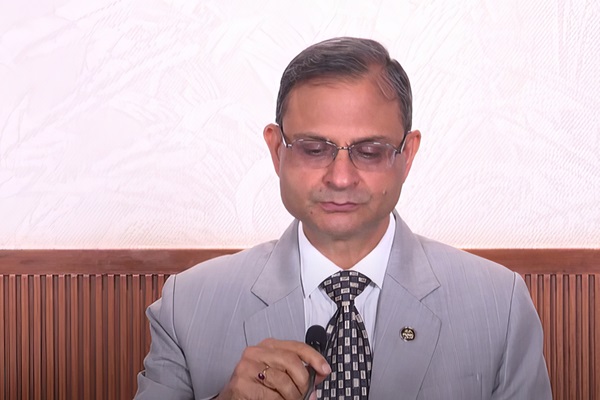
Gurumurthy, ex-central banker and a Wharton alum, managed the rupee and forex reserves, government debt and played a key role in drafting India's Financial Stability Reports.
December 5, 2025 at 11:37 AM IST
The Reserve Bank of India’s latest monetary policy decision delivered a 25-basis-point rate cut, a move broadly anticipated by markets, given the extremely low inflation numbers. Yet the real story lay in the tone and subtext of the Governor’s policy statement as well as his post-policy remarks, which revealed a central bank attempting to balance conflicting economic signals: unusually low inflation, a low nominal GDP growth, and a real economy that continues to post strong numbers despite global headwinds.
One of the more striking comments from the Governor came in response to a question on the current inflation trajectory. He remarked that inflation is now “too low,” even as he reiterated the Monetary Policy Committee’s formal 4% target. The statement hinted at a preference for slightly higher price momentum — a subtle acknowledgement that the present near-zero inflation environment is complicating the policy mix by pushing real interest rates uncomfortably high while narrowing the wedge between real and nominal growth numbers to almost zero. With nominal GDP growth softening, questions are naturally emerging about whether negligible inflation and high real rates are starting to weigh on consumption, borrowing and overall economic sentiment.
At the same time, the RBI is clearly reluctant to signal a shift toward an easing cycle. The decision to maintain a neutral stance - neither biasing toward further cuts nor toward tightening - was deliberate. Combined with the continued use of variable rate reverse repo (VRRR) auctions, the stance reflects the central bank’s effort to keep short-term rates firm even as it trims the policy rate. In other words, the RBI is attempting to safeguard monetary discipline at the short end of the yield curve, preserving a hawkish undertone despite being compelled to cut rates. From this perspective, the recent weakness in the rupee appears incidental rather than a policy objective.
Also Read: Malhotra Keeps Rate Cuts in Play, but Will He Move Again?
The Governor’s detailed explanation of the distinction between durable liquidity (managed through open market operations, or OMOs) and transient liquidity (handled via LAF operations like VRRR) added another dimension. While his clarification was textbook, it served a purpose: signalling that the RBI may simultaneously inject durable liquidity through OMOs while withdrawing short-term liquidity through VRRRs. This dual-track approach suggests a form of yield-curve management - keeping the long end soft through OMOs while preventing an undue decline in short-end rates. This becomes imperative given the steepening of the yield curve and possible pressures on reducing government borrowing costs through shortening the maturity profile which has its own problems. Whether this strategy will prove effective, especially given mixed results in recent years, remains an open question.
Macroeconomic data complicates the policy backdrop. The economy expanded at over 8% in the last quarter and is expected to clock more than 7% growth for the full year, despite a challenging external environment. Against this backdrop, a legitimate question emerges: should government borrowing not be pared back slightly? When asked whether low nominal GDP influenced the rate cut decision, to everyone’s surprise the Governor said the MPC does not consider nominal growth. His broader point might have been that nominal GDP is shaped by underlying price behaviour - a domain that monetary policy can influence only indirectly. But fiscal outcomes are tied to nominal numbers. Direct tax collections have risen about 7% year-on-year, while indirect tax data remains clouded by the recent GST rate cuts. A 10-year yield of around 6.5% carries very different implications when nominal growth is in double digits versus when it languishes in the high single digits. The case for fiscal consolidation, at both the Centre and state levels, is looming large.
Also Read: Goodbye Inflation, See You in Next Cycle
The June policy meeting, where the RBI front-loaded larger cuts and injected liquidity more aggressively than markets expected, ultimately failed to shift the macro-financial environment decisively. This time, the central bank appears more constrained. With inflation at rock-bottom levels amidst high real GDP growth with real interest rate seemingly pretty high, the pressure to cut rates is real. Yet loosening financial conditions too much risks undermining stability, confusing rate signals and inviting currency volatility.
Also Read: Policy Reflects Growth Concerns
What has emerged, therefore, is a carefully calibrated policy - dovish at face value but underpinned by a quiet hawkishness with a subtle wish for reflating the economy. In an environment marked by low inflation, strong real growth and subdued nominal momentum, the RBI seems intent on easing only to the extent necessary while preserving the integrity of its broader framework. The balancing act is delicate, and the months ahead will test the central bank’s ability to navigate these conflicting pulls.
More From BasisPoint