.png)


Venkat Thiagarajan is a currency market veteran.
January 31, 2026 at 3:57 PM IST
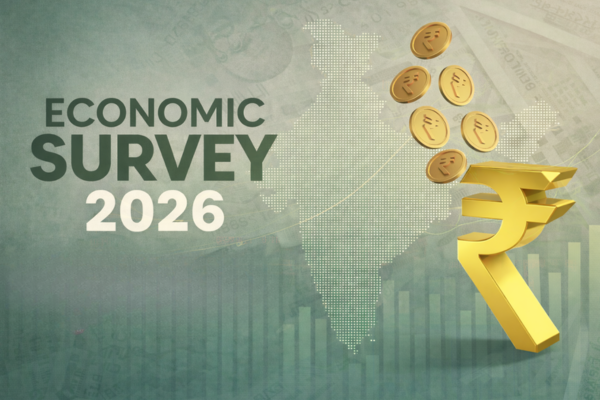
“The report of my death was an exaggeration,” Mark Twain once remarked, a line that feels oddly apt for today’s debate on global order. The Economic Survey, presented on the eve of the Union Budget, is meant to act as an analytical bridge between global developments and domestic policy choices. It offers policymakers a structured reading of risks before resources are allocated and priorities set. This year’s Survey, however, moved beyond diagnosis and into probabilistic forecasting of the global future, raising a more fundamental question: is uncertainty being governed, or merely feared?
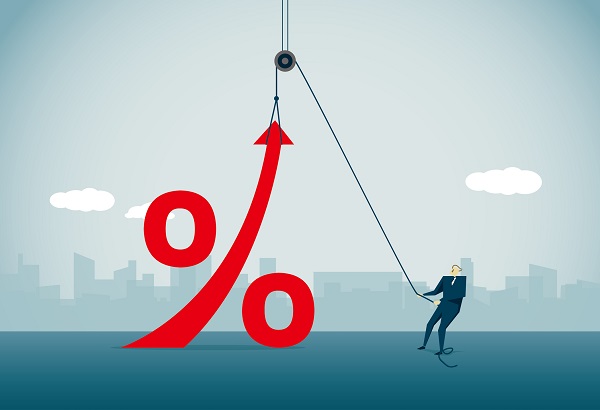
The Survey outlined three possible global scenarios for 2026, assigning a 40%–45% probability to a continuation of present conditions, an equally high probability to a disorderly multipolar breakdown, and a smaller 10%–20% probability to a cascading systemic shock. Scenario analysis is not new. It has long been used to organise thinking under uncertainty, particularly in corporate strategy and financial markets. The difficulty lies in importing this framework wholesale into public policymaking, where the objectives, incentives, and responsibilities are materially different.
In markets, scenario analysis is inherently reactive. Trading desks exist to price risk, hedge exposure, and respond to events as they unfold. Public policy, by contrast, draws its strength from proactive governance, institutional continuity, and the capacity to shape outcomes over time. When probabilistic scenarios become the dominant way of engaging with the future, policymaking risks sliding into mitigation and risk avoidance. That approach may be defensible during crises, but it is thin gruel as a philosophy of long-term economic progress.
Policy Paralysis
One enduring objection to quantifying subjective beliefs is that it creates a false sense of precision. Translating judgement into numbers does not necessarily improve clarity. Instead, it often magnifies behavioural biases. High-probability downside scenarios can entrench pessimism, making policymakers more receptive to delay, incrementalism, and the perpetual search for additional information. What emerges is not prudence, but drift.
The Survey’s assessment of a disorderly multipolar breakdown illustrates this risk.Assigning such a high probability to this outcome elevates a fashionable narrative about the twilight of the existing world order into a central planning assumption. That narrative resurfaces regularly, often during periods of geopolitical stress or economic transition. History suggests it rarely materialises in the dramatic form its proponents anticipate.
Since the Second World War, global powers have operated within a rules-based system that, while imperfect, has provided enough stability and mutual benefit to sustain its legitimacy. Such orders do not collapse overnight. After the Cold War, predictions of global chaos proliferated. Analysts warned of environmental collapse, state failure, and lawless zones engulfing large parts of the world. Later, after the September 11 attacks, terrorism was framed as an existential threat to Western civilisation. These forecasts of systemic breakdown proved overstated.
The present moment is no exception. The United States has exited several international agreements and institutions in recent years, including the Paris climate accord and the UN Human Rights Council. Yet there has been no corresponding rush by other countries to abandon the global system. Rival orders organised around rigid spheres of influence have not cohered. Despite tensions, the basic rules governing trade, finance, diplomacy, and international law continue to hold.
False Precision
On a global level, while some countries challenge Western dominance, no one has yet chosen to challenge the international system itself. No major power is proposing the dismantling of the United Nations, the abandonment of international law, or the wholesale suspension of trade rules. For good reason, it is in nobody’s interest to inhabit such a world. Economic integration has not collapsed, and protectionism, though more visible, has not risen in a uniform or systemic manner.
Even the inward turn by traditional champions of liberalisation represents selective retrenchment rather than wholesale rejection. The more plausible outlook is continuity with disruption, not disorderly breakdown. That distinction matters for policy. Treating uncertainty as impending collapse encourages defensive fiscal choices, excessive caution on reforms, and an emphasis on buffering rather than building. Public policy cannot be run like a hedge book.
Disorder itself is not synonymous with decline. Long stretches without great wars have delivered prosperity, innovation, and rising living standards. History shows that gains and losses under any global arrangement are rarely straightforward. Efforts to preserve a particular order carry their own costs in the form of instability and conflict. Every configuration involves trade-offs, and no outcome offers costless security.
The deeper risk lies in allowing pessimistic scenarios to define ambition. When the future is framed primarily as something to be avoided, policymaking becomes an exercise in insurance rather than authorship. Uncertainty should sharpen judgement, not paralyse it. The Economic Survey’s role is to inform policy choices, not to anchor them to probabilistic gloom.
Progress has seldom emerged from consensus forecasts or neatly weighted scenarios. It has come from decisions taken under imperfect information, guided by conviction rather than fear. The future will remain uncertain. The task of policy is not to hedge against it, but to shape it.
More From BasisPoint