.png)

When a Co-operative Still Carries the Bank Tag
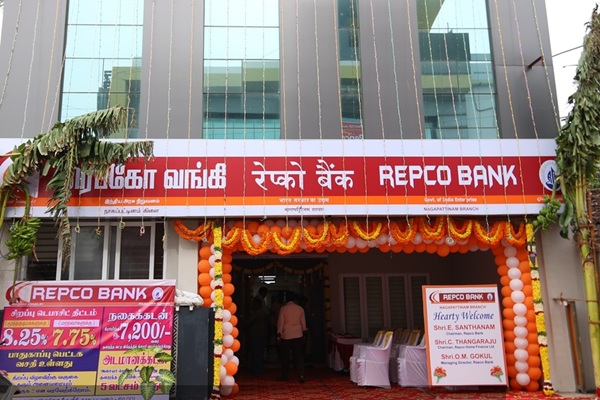
REPCO Bank has long been allowed to use the word “bank” even though it is legally a multi-state co-operative society rather than a bank. The arrangement reflects a legacy exception that now sits uneasily with the RBI’s broader regulatory stance.

T. Bijoy Idicheriah is a senior central banking journalist and communications strategist with extensive experience analysing monetary policy, financial regulation and banking governance. He previously served as a consultant to the Reserve Bank of India.
March 21, 2026 at 5:01 AM IST
India’s financial system contains a few institutions that do not fit neatly into conventional categories. Few illustrate that better than REPCO Bank, an entity that carries the word “bank” in its name even though it is not, in legal terms, a bank.
Repatriates Co-operative Finance and Development Bank Ltd was established in 1969 to meet the financial needs of repatriates from Sri Lanka and Burma. It emerged from a specific historical context and was designed for a narrowly defined constituency.
What makes the institution unusual is not its origin but its status today.
REPCO Bank is a multi-state credit co-operative society promoted by the central government along with the governments of Tamil Nadu, Telangana, Andhra Pradesh, Karnataka and Kerala. Yet, on a special request from the government, the RBI has allowed it to use the word “bank” since 1972.
That exception stands out because the RBI has otherwise taken a consistently strict view on the use of banking nomenclature. It has repeatedly acted against entities that misuse the words “bank” or “banker”, and over time, many traditional financiers have had to alter their names to comply with banking law and regulatory guidance.
REPCO Bank, therefore, occupies a category of its own: an institution that is not a bank, but is allowed to present itself as one.
The ownership structure adds another layer to the anomaly.
Based on REPCO Bank’s share capital data, the central government holds 50.08% of the institution, while the governments of Tamil Nadu, Andhra Pradesh, Telangana, Kerala and Karnataka together hold a further 6.39%. In aggregate, central and state governments account for 56.47% of the shareholding.
In substance, that makes REPCO Bank a government-controlled entity. Its website states that it falls under the Freedom Fighters & Rehabilitation Division of the Union Ministry of Home Affairs, and its board includes senior IAS officers from the Centre and participating states.
The institution is not insignificant.
In 2024–25, it reported a profit after tax of ₹1.4 billion, a net worth of ₹9.48 billion and total business of ₹211.46 billion. Deposits stood at ₹110.11 billion and advances at ₹101.35 billion. Gross non-performing assets were 6.13% and net NPAs 2.13%.
Even so, the legal position remains clear. REPCO Bank’s website says there is no legal guarantee for deposits placed with it.
That does not necessarily settle the matter in the minds of depositors. When an institution is majority-owned by the central and state governments and operates under a legacy public-policy mandate, an implicit perception of sovereign backing is difficult to avoid, whether or not such backing exists in law.
The question becomes more complicated because REPCO Bank is not merely a stand-alone co-operative. It also owns 37.13% of REPCO Home Finance Ltd and 68.15% of REPCO Micro Finance Ltd. Once a government-linked financial institution begins promoting other financial entities, public expectations about support and accountability can extend beyond the parent itself.
The regulatory ambiguity is sharpened further by REPCO Bank’s own ambitions. In 2022, it applied for a universal banking licence. Earlier, in 2015, REPCO Micro Finance had applied for a small finance bank licence. The RBI said REPCO Bank was “not found suitable” for an in-principle universal bank licence.
That creates an awkward contradiction. An entity that is considered unsuitable for a banking licence continues to operate with the word “bank” in its name under a legacy dispensation.
The issue is not merely one of nomenclature.
Institutional ambiguity can affect depositor perception, governance expectations and strategic direction. REPCO Bank today appears to straddle several categories at once: a co-operative institution, a government-controlled financial intermediary and an entity with aspirations to become a full-fledged bank.
At some point, that hybrid position may become harder to defend.
If the intention is for REPCO Bank to remain a specialised co-operative institution serving a legacy mandate, then its structure and public presentation may need to reflect that more clearly. If, on the other hand, the objective is to build it into a broader financial institution, then corporatisation and a regulatory framework consistent with that ambition may become difficult to avoid.
Until then, REPCO Bank will remain one of the more unusual institutions in Indian finance: an entity in which legal form, public perception and regulatory treatment do not fully align.
Ultimately, it will fall to the RBI and the government to decide how long that accommodation should continue. End
(This article is part of Unusual Banks, a series on institutions in India’s financial system that do not fit neatly into conventional categories.)
More From BasisPoint