It is a cyclical moment in central banking: the “Maestro” is gone, but his playbook has been dusted off for the AI age. The emerging “Warsh Doctrine” carries two unmistakable echoes of the Alan Greenspan era.
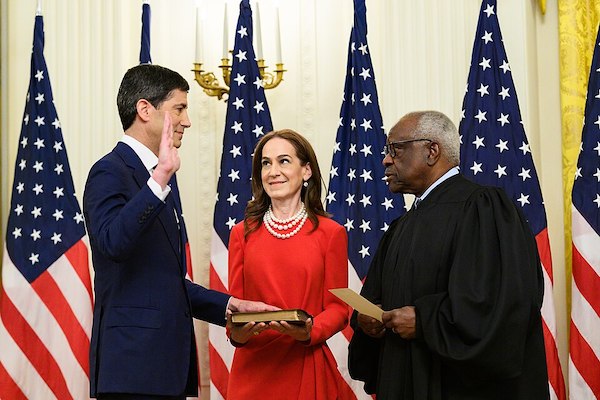
“I’ve known five of my predecessors in this job, some of them quite well. But Chairman Greenspan was the first to tell me and show me what this role demands,” Kevin Warsh said during his swearing-in ceremony in the East Room. “Like Alan, I intend to fill the role of chairman with energy and purpose, just the way Chairman Greenspan did.”
A central bank wrapped in mystique is one that escapes scrutiny—an arrangement that always suits central bankers well but harms everyone else. The Fed, too, was once far more opaque, particularly in the pre-Greenspan era.
Greenspan ushered in several changes that made the Fed more transparent.
He began the practice of issuing statements after Fed meetings to announce interest-rate decisions. The Fed also began publicly releasing meeting minutes and, after a five-year delay, full transcripts—though those moves came in response to pressure from Congress.
Yet the defining feature of the Greenspan era was not the advance signalling of monetary policy. Rather, it was a focus on finely calibrating interest rates in response to evolving economic data.
This philosophy helped establish quarter-point rate adjustments as the de facto standard during the 1990s. The Fed responded to signs of overheating with modest rate increases and eased the pace of tightening when growth slowed. Financial markets likewise concentrated more on inflation, employment and productivity data than on policymakers’ projections.
Warsh’s distance from both the dot plot and forward guidance reflects the same logic. The more firmly the Fed forecasts become the market’s benchmark, the narrower policymakers’ options become.
Greenspan prided himself on being noncommittal, and Warsh is similarly reluctant to say too much. At his opening press conference, Warsh said that, at least at the outset, it was better for the Fed to react to markets than for markets to react to an overly chatty Fed.
Those and other reforms Warsh wants to pursue are organised around an idea Greenspan would likely endorse: the central bank should not posture as the only player in town. It should keep its role as narrow as possible and let households, businesses and investors sort out the rest.
The second echo concerns productivity.
In the mid-1990s, Greenspan recognised that rising productivity would help ease inflation and argued against rate increases that were gathering support among his colleagues.
Warsh says a similar dynamic may now be developing because of artificial intelligence. He has assigned a study of productivity to one of his five task forces.
Greenspan’s ability to “dazzle and puzzle” by extracting insight from often obscure pieces of data was one reason so many macro watchers tried to stay ahead of the markets at all times.
His enduring legacy is immortalised in the phrase “irrational exuberance”—a timeless warning that will continue to echo through global markets.
If Greenspan’s legacy was discretion in the face of uncertainty, Warsh appears intent on reviving that tradition—this time with artificial intelligence, rather than the internet, reshaping the economic landscape.
.png)