.png)


Groupthink is the House View of BasisPoint’s in-house columnists.
June 19, 2026 at 8:57 AM IST
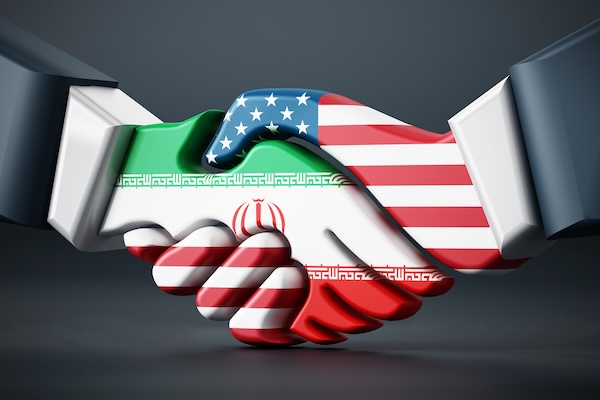
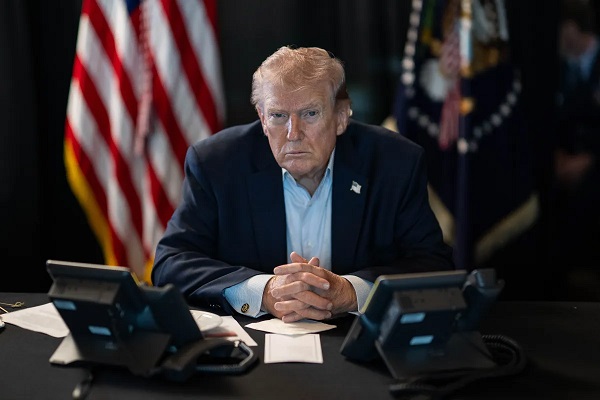
Donald Trump entered the war demanding Iran’s “unconditional surrender”. He has emerged with an interim peace agreement, sanctions relief for Tehran and most of Washington’s original objectives unresolved.
That is not the victory the White House will advertise. Nor is it necessarily capitulation. This is what cutting losses looks like.
States should continue wars only while the probable gains justify the additional blood, money, and strategic risk. By that measure, America’s position had become increasingly difficult to defend. The conflict had disrupted energy supplies, strained military resources and imposed costs on American consumers without producing regime change, eliminating Iran’s missile capacity or conclusively dismantling its nuclear programme.
Trump’s domestic political calculations are inseparable from his diplomacy.
Republicans face an election season in which voters are more likely to judge the administration by fuel prices, inflation and economic confidence than by battlefield communiqués from West Asia.
Trump’s emphasis on falling oil prices and rising markets is therefore revealing. He is trying to convert a foreign-policy liability into economic relief at home. The motive may be political, but it is not irrational. Democracies are supposed to make governments answer for the costs of war.
The weakness of the agreement is that Washington appears to have paid heavily to recover conditions it largely possessed before the fighting: traffic through the Strait of Hormuz, an Iranian commitment not to build a nuclear weapon and another round of negotiations over inspections and enrichment.
Iran, meanwhile, gains immediate economic relief and the prospect of more. The terms are hardly evidence of decisive American military success.
But sunk costs are not an argument for incurring fresh ones. Nor can credibility require a country to persist with a failing policy merely to avoid acknowledging failure. Strategic maturity lies not in never making mistakes, but in recognising when the original objective is no longer worth the price.
The more consequential shift may be in US-Israel relations.
Vice-President JD Vance’s public criticism of Israeli objections to the agreement exposed a boundary that Washington usually prefers to leave unstated: American weapons, money and diplomatic protection may underpin Israeli security, but Israel does not determine American strategy.
The alliance is not ending, and Israel will remain a privileged US partner. But privilege is not a veto.
Israeli escalation or Iranian maximalism could still wreck the agreement. Washington must prevent both sides from acquiring the power to drag it back into a war that no longer serves its interests.
This is not yet durable peace, and it is certainly not triumph. It is an attempt to stop a bad strategic position from becoming worse.
Great powers are not diminished merely because they abandon an unsuccessful course. They are diminished when pride prevents correction. Trump’s agreement is an admission wrapped in victory rhetoric. The admission may ultimately prove more valuable than the rhetoric.
More From BasisPoint