.png)

Sarci-Sense: Why We Leave Parties Early After 40
In urban India, middle-aged adults still attend weddings, dinners and house parties, but quietly plan when to leave. Early exits have become a practical way to manage time, energy and social expectations without offending anyone.


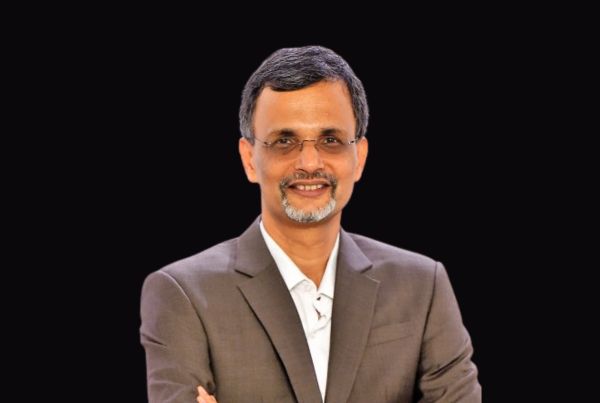
Dr. Srinath Sridharan is a Corporate Advisor & Independent Director on Corporate Boards. He is the author of ‘Family and Dhanda’.
May 9, 2026 at 5:18 AM IST
There is a small but consistent change in how many middle-aged Indians handle social events, and it is visible if you pay attention. We still accept invitations, we still show up, we still greet people properly, but we no longer stay till the end. Somewhere between getting ready at home and stepping into the venue, a plan has already formed in our minds about when we will leave.
In our younger years, this kind of thinking would have felt unnecessary. Social events were open-ended, and leaving early carried a mild sense of missing out. There was always a belief that something better might happen later, that the real conversations would begin once the crowd settled, or that staying longer somehow made the evening more meaningful. So we stayed, often longer than we needed to, even when the energy had already shifted.
Middle age changes that equation in a very practical way. Time is no longer flexible, and more importantly, energy is no longer unlimited. A late evening is not just about that evening. It affects the next morning, the next workday, and sometimes even the mood with which the rest of the week unfolds. Socialising now sits alongside work commitments, family responsibilities, health considerations and the simple need to rest. It has to fit into life rather than take it over.
This is where a quiet system begins to develop. You arrive slightly later than the stated time because you know most Indian events rarely begin when they say they will. You make sure to greet the host early because that is the central social obligation. You spend time with the people who matter to you instead of trying to circulate across the entire room. You eat at a reasonable time rather than waiting endlessly for the “main service.” And then, once you have done what you came to do, you begin to prepare to leave.
The exit itself has become a skill that most people around you understand without needing explanation. You do not make an announcement, you do not create attention, and you do not over-explain. You find the host if possible, thank them, mention that you have an early morning, and step out. If the host is busy, a message later is considered sufficient. Phrases like “early day tomorrow” or “long day today” have become socially accepted signals that require no further questioning, because almost everyone is operating with the same logic.
This shift is particularly interesting in the Indian context, where presence at social events has traditionally been linked to respect and closeness. Staying till the end once carried meaning, as if the duration of attendance reflected the depth of the relationship. That expectation has quietly adjusted. Today, showing up is what matters most. How long you stay is no longer the primary measure of commitment.
Part of this change comes from the way middle-aged life is structured. Work tends to be more demanding, responsibilities at home are more layered, and there is a greater awareness of personal health and energy. Weekends are no longer empty spaces waiting to be filled with plans. They are already occupied with errands, family time and, increasingly, the need to recover from the week that has passed. In that context, social events cannot take unlimited time without affecting everything else.
There is also a more subtle shift in how we experience socialising. Earlier, there was a need to meet everyone, to be part of every conversation, and to stay engaged till the very end. Now, there is less pressure to perform socially. You no longer feel the need to be visible throughout the evening. Being present for a part of it, and being genuinely present in that part, feels sufficient.
This change does not reduce social life; it refines it. You still meet people, you still attend events, and you still value relationships, but you are clearer about how much time and energy you want to invest in each interaction. A shorter, meaningful engagement begins to feel more valuable than a longer, exhausting one.
The moment of leaving reflects this clarity. When you step out, there is no sense of guilt or missing out. There is a feeling that the evening has reached its natural end for you. You have met the people you wanted to meet, had the conversations you wanted to have, and fulfilled the social purpose of being there. Staying longer would not necessarily improve the experience; it might even dilute it.
This, in many ways, is what middle age changes across different parts of life. It reduces the idea that more is always better and replaces it with a more practical understanding of what is enough. You begin to recognise the point beyond which additional time or effort does not add value, whether it is in work, relationships or social engagements.
There will, of course, always be exceptions. There are evenings with close friends or family where time stretches naturally and the idea of leaving early simply does not arise. In those moments, you are not watching the clock, not calculating the exit, not managing your energy. You are simply there. But what makes those evenings stand out is precisely that they are chosen, not obligatory. They are rare enough to feel easy, and meaningful enough to not require management.
For everything else, there is a quieter, more deliberate approach. You attend, you participate, and you leave at the right time, not because you are less social, but because you have become more aware of how social life fits into the rest of your life. Middle age does not reduce your presence; it refines it. It teaches you that showing up matters, but staying endlessly does not, and that knowing when to leave is not a withdrawal from the moment, but a sign that you have understood it well enough.
More From BasisPoint