.png)


Vivek Kaul is a writer and an economic commentator.
April 30, 2026 at 3:52 AM IST
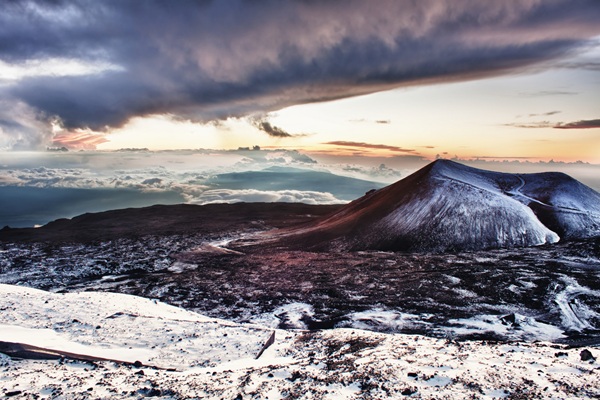
In school textbooks of yore, we were told that Mount Everest is the highest mountain on earth. By some estimates, Mauna Kea in Hawaii, United States, is the highest mountain in the world, though its peak is 4,207 metres above sea level, whereas that of Everest is 8,849 metres.
Nonetheless, Mauna Kea rises 9,330 metres from under the Pacific Ocean. Given this, a large chunk of the mountain is underwater, and can’t be seen. And what can’t be seen isn’t taken into account, making Everest the tallest mountain on earth.
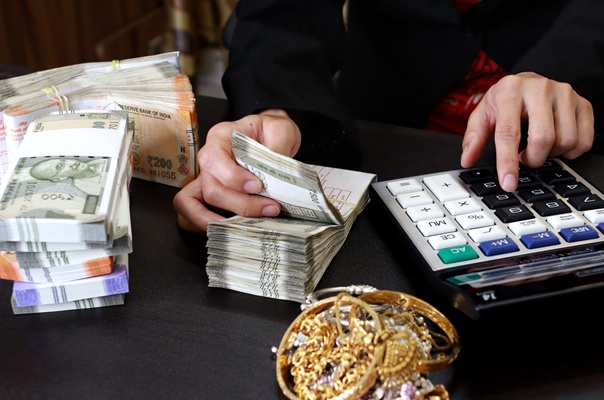
Something similar is happening with much of the opinion and analysis being published on the rupee’s fall against the US dollar: it focuses only on what’s clearly visible.
First, in 2025-26, India imported around 81% of the oil and gas that it consumed. A depreciating rupee makes these purchases expensive, hurting the economy, given that energy from oil and gas drives a lot of economic activity.
Second, the higher price of oil and gas due to the war in West Asia and the continued blocking of the Strait of Hormuz, along with the depreciating rupee, will lead to higher inflation, and if this persists, higher inflationary expectations.
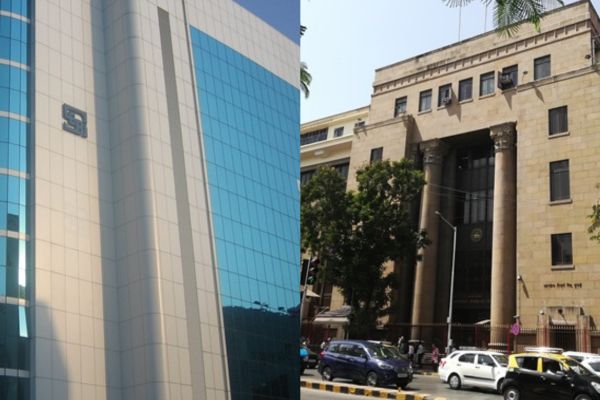
Third, the Reserve Bank of India’s defence of the rupee has gone beyond merely selling dollars. The central bank has attracted criticism for its decision to bar banks from offering rupee non-deliverable forward contracts to clients – thereby making it harder for traders to short the currency.
The argument is that, like any other market, the demand and supply of the rupee should be allowed to operate freely, letting the currency fall and find its own level.
Further, a weaker rupee will benefit the exporters, making them more competitive (it’s never as simple as that, but that’s another argument for another day.)
Also, a weaker rupee will make imports more expensive, discourage consumption and help keep the trade deficit under control.
Commentators have also questioned the message the Reserve Bank of India is sending to foreign investors. Could these measures make them hesitant to invest, fearing they may not be able to exit later? There may be some concern on this front.
Nonetheless, as RBI Governor Sanjay Malhotra clarified at the post–monetary policy press conference on April 8, 2026, “these are not measures which are going to remain there forever,” and the central bank remains “committed to… the internationalisation of the rupee”.
This is not to say that the analysis and criticism lack merit, but, much like old textbooks that call Mount Everest the tallest mountain because only what is above sea level is visible, the current debate overlooks a large, unseen part of the picture – much like Mauna Kea.
First, as a retired RBI governor told this writer sometime in the late 2000s, doing nothing is not a strategy that the RBI can follow. In times of crises, it has to be seen to be doing something. Of course, one cost of this is the depletion of foreign exchange reserves. India, unlike the Federal Reserve of the United States, cannot create dollars out of thin air. So, the RBI can’t get obsessed with defending a particular level of the rupee against the dollar.
Second, the rupee is as much a political issue as it is an economic one. Hence, allowing it to keep depreciating without major intervention is not a strategy that the RBI can follow.
This may not be very obvious to the practitioners of the dismal science who remain obsessed with math, but economics started off as “political economy,” with early thinkers like Adam Smith, David Ricardo and Karl Marx all writing under the banner of political economy, where economics, politics and moral philosophy were tightly intertwined.
Third, the continued depreciation of the rupee will have an impact on the fiscal deficit of the government.
Up until now, the retail prices of petrol and diesel haven’t been raised. Sujata Sharma, joint secretary in the oil ministry, recently pointed out that the fuel retailers are losing ₹20 per litre on petrol and ₹100 per litre on diesel. She also said on Tuesday that the government had no plans to raise fuel prices after the assembly elections in states ended.
These losses are currently being shared by the oil marketing companies and the government. Of course, how long the government resists passing on the price increase to the consumers remains to be seen.
Further, if the situation in West Asia persists, the price of petrol and diesel is likely to be gradually increased and passed on to consumers. But a similar increase won’t be possible in case of subsidised fertiliser prices. That’s too much of a political hot potato.
Recent data shows that from April 2025 to January 2026, India imported a little over a third of urea and diammonium phosphate, which are two kinds of fertilisers, that it consumed. What makes the situation even more complicated is that natural gas is used as a feedstock in fertiliser production.
The rising prices of these commodities, along with the depreciation of the rupee, will lead to a higher bill for the government. In this scenario, defending the rupee becomes even more important.
Fourth, a lack of major intervention can create self-fulfilling expectations, where the rupee keeps falling simply because it is already falling. One consequence is that foreign portfolio investors – who have already net sold Indian stocks worth ₹1.75 trillion in March and April – may hasten their exit, as their performance is judged in dollar terms. A weaker rupee eats into these returns, and may lead to further selling, adding pressure on the currency.
To conclude, yes, there are problems with the RBI trying to defend the rupee the way it is, but focusing only on the visible costs misses the larger, hidden fiscal burden and other costs – much like mistaking Everest for the tallest peak.
Indeed, decisions made by central banks are rarely purely strategic. By choosing the slightly messy tactical path, the RBI is acknowledging that while the costs of intervention are visible, the costs of doing nothing are hidden and perhaps far more dangerous.
More From BasisPoint