.png)


Chandrashekhar is an economist, journalist and policy commentator renowned for his expertise in agriculture, commodity markets and economic policy.
April 12, 2026 at 7:09 AM IST
In the ongoing geopolitical instability and geo-economic uncertainty centred in the Persian Gulf region, the stakes for the world, from an energy perspective, have seldom been higher.
The military conflict in the Persian Gulf region, which has led to the virtual closure of the critical Strait of Hormuz, has thrown the established supply chain of energy commodities out of gear. There is palpable apprehension that production outages and damage to key storage infrastructure will exert a far-reaching impact on global energy markets in the coming months.
Doubtless, the two-week cease-fire is not just temporary, but uneasy and fragile; and a resumption of hostilities is not ruled out. Trade flows are most unlikely to normalise anytime soon to pre-crisis levels. In other words, global energy markets must brace for uncertain times.
What then happens to the path to decarbonisation the world has been talking about in recent years, and to the ambitious net-zero targets that have been set?
It is clear that the era of ‘cheap and stable’ fossil energy is behind us. Two questions arise: with elevated prices, to what extent will energy demand fall? And will the Iran war accelerate energy transition efforts or delay them?
In commodity markets, it is axiomatic that when prices rise, demand will fall, unless the commodity in question is ‘essential’ and no substitute is available. Since early March, crude oil prices have been relentlessly moving northward. Brent breached the psychological $100-a-barrel mark. Similarly, LNG spot prices have seen significant upward movement, with no major relief on the horizon.
Countries, especially emerging economies dependent on energy imports, are already beginning to ration supplies. Continued high energy prices would result in demand destruction for oil and gas, as consumers look for cheaper alternatives like coal and wood fuel. As these are early days, it is difficult to quantify the extent of demand destruction at this time.
The ongoing supply uncertainty is pushing countries not just towards energy security but also towards achieving ‘energy independence’. An ideal path to energy independence is, of course, the pursuit of renewable energy—solar, wind, nuclear power, and, to an extent, biofuels.
At the same time, building renewable infrastructure—solar panels and wind turbines—is material-intensive, particularly metal-intensive. The industrial metals market is currently impacted by high energy costs and supply dislocations. No wonder prices of copper, aluminium, and other metals are at elevated levels. The energy transition is not going to be quick, but it will certainly come with high capital costs.
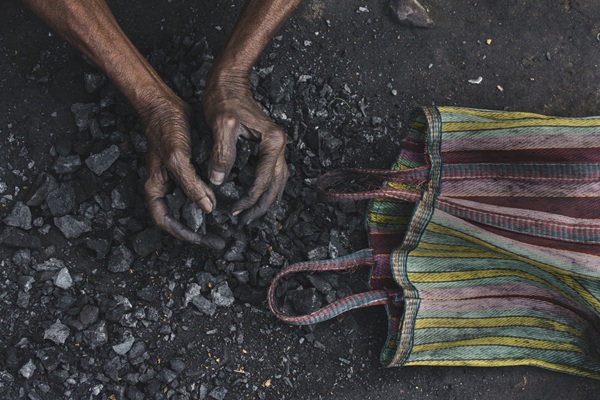
Coal, often termed a ‘dirty fuel’, is beginning to gain ground. Some nations have restarted coal plants or extended the life of old infrastructure to prevent blackouts. With massive reserves, coal production in India has been rising steadily over the last five years and now stands at a record 1,048 million tonnes.
At the same time, coal imports have expanded to 250–260 million tonnes. Industries such as cement and captive power plants require coal with specific quality parameters, such as low ash content, higher calorific value, or specific sulphur levels, which may not be fully available from domestic sources. Dependence on imports of coking coal and high-grade non-coking coal may continue, according to the government.
Simply put, decisions taken today for building energy infrastructure will have long-term implications and will define the energy landscape in the coming decade. High-cost renewable energy infrastructure will be reflected in consumer energy costs in the coming years.
Without doubt, there is an extraordinary opportunity to accelerate movement towards renewables and decarbonisation; but that would not be inexpensive.
More From BasisPoint