.png)

Why MBZ’s Two-Hour Dash to New Delhi Matters
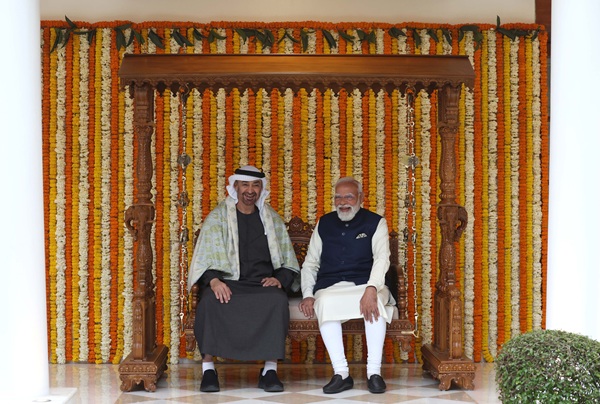
When the President of the United Arab Emirates lands in New Delhi for barely two hours, it is not a courtesy call or a routine stopover. It is a signal.
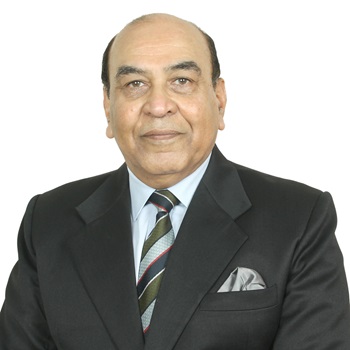
Lt Gen Syed Ata Hasnain is a former Commander of India’s Kashmir Corps and Chancellor of the Central University of Kashmir.
January 19, 2026 at 5:42 PM IST
In geopolitics, some of the most valuable assessments are made early, when information is sparse and clarity elusive. Such judgements are often built on a blend of experience, pattern recognition, and informed hunches, stitched together with whatever facts are available at the time. While inevitably provisional, these early readings frequently prove invaluable, offering insight into the direction of play before events harden into established narratives. It is in this spirit that Sheikh Mohammed bin Zayed Al Nahyan’s (MBZ) brief, two-hour visit on January 19, 2026, to New Delhi deserves closer attention.
In diplomacy, duration often matters less than intent. When the President of the United Arab Emirates lands in New Delhi for barely two hours, it is not a courtesy call or a routine stopover. It is a signal. In a world unsettled by geopolitical flux—ranging from West Asia’s internal recalibration to great-power unpredictability—such a sharply calibrated visit warrants careful reading.
At first glance, the visit could be dismissed as symbolic reaffirmation. Yet the context suggests otherwise. Personal, leader-level engagement, even brief, is often preferred when issues require confidence-building, alignment of perceptions, or quiet reassurance, rather than prolonged negotiation.
A Mature Strategic Partnership
This is not a relationship in need of repair or reassurance. Its maturity is precisely what makes MBZ’s sudden visit noteworthy. Established partnerships are invoked swiftly when clarity or confidence at the highest political level becomes necessary.
West Asia in Flux: The Saudi–UAE Undercurrent
Saudi Arabia’s Vision 2030 seeks to transform the Kingdom into the region’s primary economic and technological hub. The UAE, however, has already achieved much of this transformation. Abu Dhabi and Dubai today sit at the intersection of global finance, logistics, energy transition, and advanced technology. This has created unease in Riyadh, where perceptions of Emirati overreach are more pronounced than before.
Compounding this is Saudi Arabia’s own strategic introspection. The uncertain trajectory of the NEOM project, volatility in global energy markets, and the challenge of transitioning from hydrocarbons to trade and technology have affected Saudi confidence. In such circumstances, the UAE’s rapid ascent—built on agility, openness, and economic diversification—stands in sharp relief.
India, in this evolving equation, emerges as a stabilising external anchor; one which can also be depended upon for realist advice.
Why India, and Why Now ?
MBZ’s decision to engage Prime Minister Narendra Modi personally, even for a short duration, suggests the need for leader-level alignment rather than bureaucratic follow-up. Such interactions are typically used to exchange confidential assessments, align views on rapidly evolving trends, and reinforce mutual confidence at times of uncertainty.
This becomes especially relevant when traditional external guarantors appear less predictable and regional hierarchies are being subtly rebalanced.
Not a Crisis, but Strategic Calibration
The engagement may reflect Emirati concerns over long-term regional stability, Iran-related uncertainties, shifting Gulf power equations, and the evolving posture of external powers, including the US and China. In such deliberations, India’s perspective carries weight precisely because it is measured and non-aligned.
Projection as Much as Consultation
At a time when new security architectures and alignments are being discussed elsewhere in the Islamic world, Abu Dhabi’s message is subtle but clear. The UAE is not seeking reassurance through blocs or ideological groupings. It is investing in stable, diversified partnerships, with India firmly among them.
Three early conclusions can be drawn.
First, the visit underlines India’s rising strategic centrality in West Asian thinking; something I have personally emphasised several times in my assessments. When uncertainty grows, partners turn to those they trust.
Second, it reflects the UAE’s desire to retain strategic autonomy amid Gulf competition and global unpredictability. India is the best bet for that, offering reassurance without entanglement.
Third, it signals continuity. Despite global flux, the India–UAE relationship remains a constant—robust enough to be activated quickly and discreetly.
The significance of MBZ’s two-hour visit lies less in what was said publicly and more in the fact that it took place at all. Such engagements are not ceremonial; they are about alignment at moments of transition.
In geopolitics, the shortest visits often carry the longest implications. This one suggests that amid regional recalibration, the UAE sees India not merely as a friend, but as a strategic sounding board in uncertain times.
That, in itself, speaks volumes about how far India’s West Asia policy has evolved—and how attentively it is now being read.
More From BasisPoint