.png)

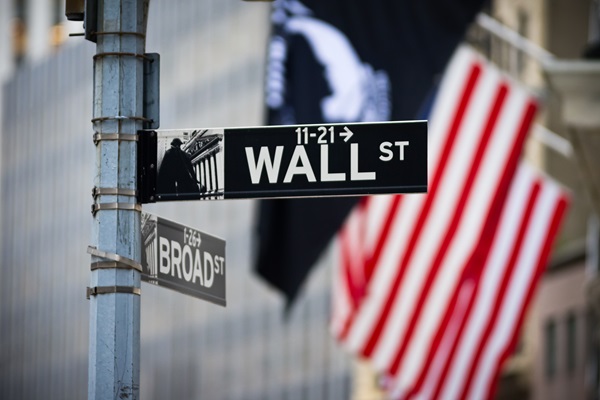

As summer begins, a detached observer of global affairs might conclude that financial markets are facing darker days. A major, energy-disrupting conflict in the Middle East has now entered its fourth month, and the cascading effects of inflationary pressures and insufficient growth in several advanced economies are still working their way through the global system, with a recognized yet unpredictable lag.
But glance at your average broker’s computer screen and you will see a starkly different reality—a dissonance that strains most conventional models. By the start of June, the S&P 500 had recorded nine consecutive weeks of gains. Major indices across the United States and Asia have not merely shrugged off the geopolitical turmoil; they have climbed to one new record after another.
This remarkable decoupling reflects a singular, powerful narrative that is more than compensating for the strengthening headwinds facing the global economy: the promise of AI. The market is understandably enthralled by visions of a looming productivity miracle, betting that the efficiencies and growth unlocked by AI will be sufficient to outpace the gathering forces of stagflation, debt, deficits, and economic inequality.
But to anticipate what lies ahead, it helps to supplement the AI-driven narrative with a simple yet essential reminder: the willingness to spend and the ability to spend are two different things. This critical distinction applies universally across households, corporations, governments, and investors.
So far, all key actors’ remarkably resilient willingness to spend has been matched by a sufficient, though increasingly engineered, ability to do so. But this willingness has not been funded just by current income or organic cash flow. It has also been facilitated by a massive drawdown of buffers—financial, strategic, and psychological—and an accelerating reliance on leverage (debt). The longer that the war-induced disruption to energy markets and supply chains persists, the less likely that this capacity can keep pace with the willingness to spend.
But why has the willingness to spend been so resilient? The reasons differ across groups. For households, the post-pandemic era has been marked by a psychological aversion to cutting back on “experiences” and consumption. In the corporate sector, CEOs are driven by an existential imperative to invest heavily in AI or risk obsolescence, with FOMO (fear of missing out) apparently becoming an important capital-allocation metric.
As for governments, pressure from polarized electorates, together with higher defense spending, has made it very difficult to reduce deficits, even with interest bills ballooning as low-cost debt is refinanced at a significantly higher cost. And, finally, investors, conditioned by a decade of “central-bank puts” and repeated gains, have embraced “always buy-the-dip” (regardless of the cause) as a core tenet of portfolio management.
Given these dynamics, it is safe—though discomfiting—to assume that the willingness to spend will remain strong, bordering on the irresponsible. The key question for the global economy and markets, then, is whether the ability to spend will keep up. The evidence suggests that there is a limit.
Energy consumption provides the most immediate signal. To maintain economic activity despite disrupted shipping through the Strait of Hormuz, many countries have drawn down energy inventories, including the US Strategic Petroleum Reserve. Such buffers are, by definition, finite. When they reach their lower bound, real consumption must adjust to the higher prices dictated by an impaired supply chain (should the strait remain effectively closed). The result is “demand destruction.”
Similarly, the resilience of US consumers—often an engine of global growth—appears to rest on shaky foundations. Recent monthly data indicate that consumption has been maintained partly through dissaving and borrowing. Yet credit-card delinquencies and auto-loan defaults are now rising rapidly, suggesting that the ability to spend is already stretched for lower-income households. Equally, corporations have significantly increased borrowing to fund capital expenditures, while also still inclined to buy back their shares. Like governments, they seem intent on continuing to do so despite higher market rates.
Investors have shown a remarkable willingness to fund all this, treating rising interest rates not as a headwind but as proof of economic resilience. Capital markets’ appetite for new debt remains robust, even on the eve of some of the largest projected initial public offerings in history—the equities of SpaceX, Anthropic, and OpenAI. But the liquidity buffers that have underpinned this optimism are eroding. Asset-allocation surveys, such as those recently conducted by Bank of America, show that global fund managers’ cash balances have fallen to extraordinarily low levels, implying that the system is already virtually “all-in” on stocks.
Given the complexities of the global economy and market-liquidity dynamics, no one can predict with certainty how close we are to the moment when the ability to spend can no longer keep up with the willingness to do so. This is frustrating. But as an analytical matter, we can be quite certain that the longer the energy-disrupting war in the Middle East continues, the closer we will get to the moment of truth. And without an end to the conflict, we will be approaching that point at an accelerating rate.