.png)


T.K. Arun, ex-Economic Times editor, is a columnist known for incisive analysis of economic and policy matters.
December 17, 2025 at 1:33 PM IST
When a sudden rent increase forces a thriving commercial establishment — that has a century-old legacy and is a hallmark of a historic locality — to shut shop, is there any sensible alternative to the mournful death of a chunk of the city’s living tradition?
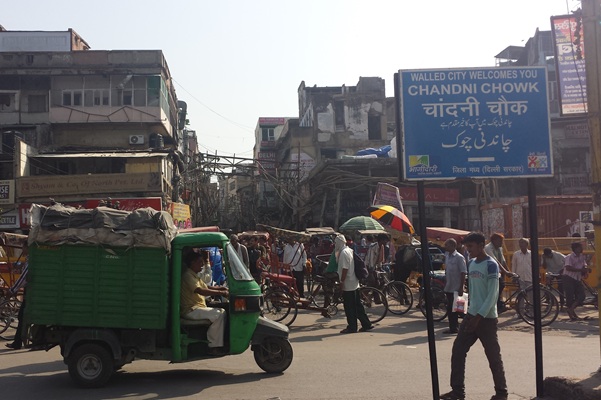
Annapurna Bhandar of Chandini Chowk, seller of Bengali sweets in the Capital since 1929, lost a legal battle against its landlord seeking repossession, after it rejected a demand for a whopping, but justified, rise in the monthly rent for its premises. It faces closure. Is it just a commercial matter between the landlord and the tenant, or are there externalities that justify, or even compel, intervention by the larger community?
Change and evolution are integral parts of history. Yet, there is good reason to not let time erase all signs of the past. This is true not just of grand structures (a shopping mall in place of the Great Pyramid of Giza, anyone?) but also of small shops and establishments that have become emblematic of a place, lend it character, contributing to the uniqueness of the larger urban formation.
Think of Paramount, the sherbet place on College Street, Kolkata, where revolutionaries mixed grand plans with fruit juice, Atlantis Books in Santorini, Moulin Rouge in Paris or Karalkada, the place for Kerala kasavu in Thiruvananthapuram. Could these places be permitted to die, because the rents turn too high? Or imagine Crawford market with only McDonald’s, Westside and BMW showrooms in sight.
Historical legacy is an externality for a commercial establishment that has been in operation for a long time. Its prices have to compete with the prices at which comparable goods and services sell in rival establishments in less historic locations. The trade carried out by the commercial venture should pay for its operations such as inputs, inventory and labour.
Rents are a different matter. Those who patronise a legacy establishment might be willing to pay a small premium for the feel of history at the shop. But such premia might not add up to justify the differential between the rent paid by rivals in less exalted places and the current rent in the site of history. Should the historical place of commerce wind up because it cannot afford to pay the commercial rent?
If the historical legacy of the place is of value to the larger community for the service it renders of generating that historical halo for the locality as a whole, the community should be willing to pay for it.
Sometimes, it might be possible to parlay the historic value as tourism revenue. At times, the motivation might solely be to preserve a place’s cultural integrity and authenticity for their own sake. Strangely enough, there might be a few things of value to which you cannot attach a price tag.
San Fransico, Paris and London all have schemes to help historical places continue to operate, with support from the city government.
In San Fransico, an establishment must enter a designated registry and prove legacy of 30 years and unique contribution. Then it qualifies for rent stabilisation grants, either to the landlord or to itself.
In Paris, the government intervenes in the property market through a society. It can buy up the property and let it, at a below-market rate, to the endangered business or a successor that carries on with the business to be protected. Zoning sometimes prevents alteration of business premises, for example, barring a book store from being converted into a chain store.
The Mayorality of London has a specific office for culture at risk. If a neighbourhood community nominates an establishment as an asset of community value, the planning process kicks in to prevent the premises being sold for six months, during which the community can buy up the property, with or without assistance from the public purse, and let it to the threatened business.
Indian cities need to develop such schemes, to preserve their historical character and prevent the homogenization of cityscapes. Corporate Social Responsibility could be invited to pitch in, as well, without being permitted to label their contribution so loudly as to hijack historical legacy.
More From BasisPoint