.png)



Arup Mitra is Professor of Economics at South Asian University, New Delhi
March 19, 2026 at 6:18 AM IST
As West Bengal heads toward another election cycle, the more relevant question is not political continuity but economic outcomes. The state has had what many regions lack: long stretches of political stability. The Left Front governed for over three decades, followed by the Trinamool Congress since 2011. Stability was not the constraint. Strategy may have been.
In economic theory, political stability is often seen as a prerequisite for sustained growth. West Bengal had that advantage twice over. The real test, however, lies in whether this translated into durable economic transformation, particularly in employment generation. Growth, after all, is meaningful only when it creates livelihoods at scale.
Historically, industrialisation has been the backbone of such transformation. From post-war Europe to East Asia, the pattern is clear. Industry anchors productivity, creates linkages, and absorbs labour. West Bengal once occupied that space. Until the 1980s, it stood alongside Gujarat, Maharashtra and Tamil Nadu as one of India’s industrial centres. The contrast with today is stark.
Industrialisation does not always translate into employment, particularly when it is capital-intensive. The objective, therefore, is not just industrialisation of output, but industrialisation of the workforce. Even so, value-added industrialisation, despite its limitations, remains preferable to deindustrialisation. Investment linkages, both backward and forward, can generate indirect livelihood opportunities even when direct employment creation is limited.
Labour laws are often cited as a deterrent to employment-intensive industrial growth. Even if one accepts that argument, it does not explain the broader collapse of industrial activity. The state had early advantages. These included infrastructure, an industrial base, and human capital. Yet closures outpaced creation, and policy responses failed to reverse the trend.
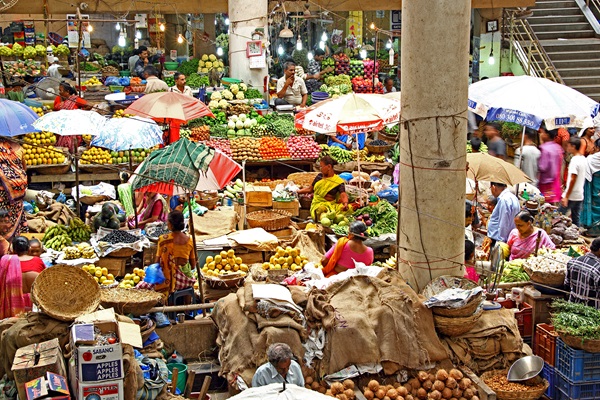
When a region is developed with an industrial objective and then diverges from that path, it leads to underutilisation of capacity and sunk investments. Transitioning to a services-led growth model is not straightforward. It requires large-scale reinvestment, institutional restructuring, and strategic reorientation. In the absence of this, the economy risks drifting towards low-productivity activities, resembling a fragmented, bazaar-like system with limited momentum for sustainable, job-oriented growth. This pattern is increasingly visible in West Bengal.
The debate between industry-led and services-led growth is well established. In practice, both are necessary. The real concern arises when neither high-productivity industry nor high-productivity services emerges as the growth engine. In such a scenario, large-scale employment generation becomes structurally difficult.
The question of substituting symbolic investments for productive capacity also deserves attention. Historically, temple construction had economic spillovers, including employment generation. In the modern context, however, such investments cannot anchor growth. Their costs are high, and their returns, by most measurable standards, are limited. At best, they can complement an already productive economy, not substitute for it.
The deeper issue may lie in the quality of policy advice. West Bengal’s trajectory suggests a persistent gap between available economic insight and policy execution. This is particularly striking for a state long associated with intellectual engagement in economics. Ideological rigidity, political incentives, and institutional constraints may all have played a role in limiting corrective feedback.
The result is a paradox. A state with political stability, intellectual capital, and an early industrial base now struggles to define a coherent growth model. The rhetoric of “unprecedented growth” and “profitable jobs” continues, but the underlying drivers remain unclear.
Stability, in itself, does not guarantee progress. Without a clear economic direction, it can just as easily sustain decline.
More From BasisPoint