.png)

Warsh Makes September Live but Keeps the Playbook Closed
Jackson Hole gave markets a firmer inflation standard and raised hike odds, but Warsh’s quieter Fed still leaves its reaction function under-specified.
August 29, 2026 at 6:47 AM IST
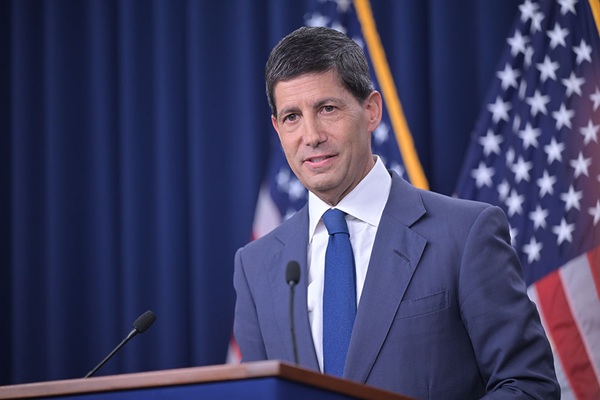
Kevin Warsh used Jackson Hole to do what his July press conference had not: give markets a standard against which to assess the next Federal Reserve decision.
The Fed, he said, must be confident that underlying inflation is moving towards 2% clearly and at sufficient speed. Otherwise, it has “work to do”. Warsh described this as a commitment to a discipline rather than to a particular decision, preserving the possibility of an increase in September without formally signalling one.
The economic diagnosis made the direction of that discipline difficult to miss. Warsh judged the labour market to be consistent with full employment, consumer spending healthy and business investment strong. Credit markets showed few signs of restraint, while broad financial conditions could not be described as restrictive. Against that backdrop, headline Personal Consumption Expenditures inflation was 3.7%, its six-month pace was 4.1%, and more than half of the PCE basket had risen by over 3% during the previous year.
Markets heard a tightening signal. The probability assigned to a September increase rose to 55.7% from 35.4%. The two-year Treasury yield increased almost 13 basis points to 4.36%, outpacing the increase in longer maturities. The dollar rose 0.6%, while the S&P 500 and Nasdaq ended lower.
That response differed from the uncomfortable steepening that followed the July hold. This time, the largest adjustment occurred at the policy-sensitive front of the curve, indicating that investors had principally revised the expected Fed rate path rather than merely demanded a larger long-term inflation premium.
Jackson Hole therefore repaired part of the Fed’s communication deficit. It did not eliminate it. Warsh identified the direction in which the evidence must move. He did not calibrate what constitutes sufficient speed, how many inflation readings would establish a trend, or how the Committee would balance weaker employment against persistent prices.
September is live.
Jackson Hole: A Standard Without a Rate Path
Warsh’s address was as much about how the Fed should communicate as about where rates should go.
He argued that regular forward guidance had outlived its usefulness outside crises. Policy projections can create quasi-commitments, constrain the Committee when circumstances change and encourage investors to trade the Fed rather than independently assess the economy. His alternative is a quieter central bank, one that communicates principles and diagnoses while retaining freedom over individual decisions.
Those principles were clear. The 2% PCE inflation objective is fixed. Price stability is not self-executing. Short-term interest rates are the Fed’s predominant instrument. Trends matter more than isolated data points, money and financial conditions remain relevant, and the central bank should be judged by outcomes rather than the volume of its guidance.
Warsh also directly confronted the demand for an explicit reaction function. He rejected a mechanical rule or published path on the grounds that the supply side of the economy cannot be observed precisely and that the relevant influences change with geopolitics, technology and global supply chains.
The criticism after July was that the Fed had asked markets to play the ball without showing where the lines of its reaction function were drawn. Jackson Hole partly answered that objection. Warsh placed inflation ahead of employment in the current conjuncture and established that insufficient disinflation would require action.
But “clearly” and “at sufficient speed” remain qualitative tests. They tell markets what Warsh wants to see, not how he will determine that he has seen it.
Inflation can remain above target while its underlying trend improves. A weak payroll report can signal a turning labour market or merely reflect slower labour-force growth. High equity prices and narrow credit spreads can reflect loose financial conditions or expectations of stronger productivity.
Warsh wants market signals to reach the Fed as unfiltered as possible and has warned against a hall-of-mirrors problem in which markets trade the Fed’s guidance while the Fed reads market prices as independent information.
Yet market prices cannot be fully separated from monetary communication. Treasury yields also incorporate expectations of Fed action, fiscal and debt-supply risks, term premia and geopolitical uncertainty. A rise in yields driven by confidence that the Fed will act reinforces monetary transmission. A rise driven by doubt over the eventual response imposes a credibility charge.
Friday’s front-end-led sell-off was the more constructive version. It showed that markets interpreted Warsh’s standard as increasing the probability of near-term policy action. But market pricing is not a substitute for a Committee decision, particularly when three July dissenters already believe the threshold for a hike has been crossed.
Warsh has reduced ambiguity about the Fed’s current priority. He has not removed uncertainty about the point at which that priority becomes a vote.
Washington: The Data Support His Diagnosis
The week’s US data strengthened the case that the Fed is dealing with persistent inflation rather than an economy already constrained by excessive monetary restraint.
The PCE price index rose 0.2% in July and 3.7% from a year earlier. Core PCE also increased 0.2% during the month and 3.3% annually. Real consumer spending was virtually unchanged, but the inflation readings remained well above the Fed’s target despite relatively benign monthly increases.
Second-quarter GDP growth was left at an annualised 1.5%, an unimpressive headline. The underlying demand figures were considerably stronger. Real final sales to private domestic purchasers increased 4.2%, while corporate profits rose by more than $400 billion. The quarterly PCE price index increased at a 5.3% annualised rate and the core measure at 3.6%.
The combination is close to the economy Warsh described: moderate headline growth, robust private demand, strong investment and inflation that is neither accelerating sharply nor converging convincingly towards 2%.
The August employment report and the next CPI and producer-price readings now carry an unusually direct implication. Unless they establish clearer disinflation or material labour-market weakness, Warsh’s own standard points towards additional restraint.
Beyond Rates: Central Banks Go On-Chain
The official Jackson Hole theme was financial innovation, payments and policy. Friday’s discussions showed that the question facing central banks is no longer merely how to regulate tokenised finance, but whether they must become part of its operating infrastructure.
Darrell Duffie argued that stablecoins and tokenised commercial-bank deposits are unsuitable as settlement assets for multi-trillion-dollar core markets such as government-securities finance and clearing-house payments. Large-scale tokenised finance requires safe cash settlement, continuous programmability and interoperability with existing infrastructure. Without central-bank involvement, migration to digital ledgers could fragment liquidity and increase settlement risk.
ECB Executive Board member Isabel Schnabel took the argument further. Central banks, she said, should themselves “go on-chain”. Tokenised central-bank reserves could allow policy operations, collateral management and liquidity provision to be conducted through programmable ledgers and smart contracts. The ECB is pursuing that direction through its Pontes and Appia projects.
The policy significance extends beyond technological efficiency. Central banks derive part of their monetary authority from supplying the ultimate settlement asset. If wholesale markets move onto private ledgers while central-bank money remains outside them, the monetary anchor and the effectiveness of liquidity operations could weaken.
Bringing reserves on-chain would preserve the singleness of money and allow liquidity to be provided at the speed of tokenised markets. It would also raise difficult questions about access to central-bank balance sheets, governance of shared ledgers, operational concentration, confidentiality and liability when automated contracts fail.
Asia: Hikes Become Action
While Jackson Hole debated the conditions for future tightening, South Korea and the Philippines acted.
The Bank of Korea raised its rate by 25 basis points to 3.00%, its second consecutive increase. The Board cited stronger-than-expected growth, inflation likely to remain above target for a considerable period and continuing financial-stability risks.
The Bangko Sentral ng Pilipinas increased its target reverse-repurchase rate by 25 basis points to 5.00%, its third successive move and a cumulative 75 basis points of tightening since April. The decision reflected a pre-emptive response to inflation risks from weather disruptions and possible wage pressures.
Thailand provided the regional contrast. The Bank of Thailand unanimously retained its rate at 1.00%. Technology and AI-related demand are supporting exports and investment, but overall growth remains low and uneven, SME lending is contracting and inflation expectations remain anchored despite an expected near-term increase in prices.
The divergence is rational. Korea has strong growth, above-target inflation and financial-stability concerns. The Philippines sees sufficient inflation risk to justify advance action. Thailand has weaker domestic transmission and more evidence that the price shock remains temporary.
There is no single Asian cycle. The common feature is a lower tolerance for allowing supply pressure to become embedded.
Policy Themes
A reaction function need not be a rate forecast. Warsh is right that published paths can become false commitments. But useful flexibility requires a sufficiently visible decision framework. Jackson Hole moved the Fed closer to that balance without fully reaching it.
The direction of market tightening matters. Friday’s increase in short-term yields showed that investors raised their expectation of Fed action. That is different from a long-end sell-off caused principally by fiscal or credibility concerns.
The central-bank perimeter is expanding. Tokenisation is turning payment infrastructure into a monetary-policy issue. Central banks may have to place money and operating tools onto programmable platforms to preserve settlement finality and policy transmission.
The Signal
Jackson Hole did not amount to forward guidance in the conventional sense. Warsh did not promise a September increase or describe a rate path.
He nevertheless shifted the burden of proof.
With inflation broad and above target, employment close to full, private demand strong and financial conditions not restrictive, the Fed will need to see convincing improvement to justify another hold under the standard Warsh has now established.
The remaining weakness is calibration. Markets know that insufficient disinflation means more work. They do not yet know precisely what improvement Warsh would consider sufficient.
That uncertainty is deliberate. It is also a test of his quieter-Fed doctrine. If the August data remain firm and the Fed does not act, Warsh will have to explain why his Jackson Hole standard did not apply. If the data soften and the Committee holds, the framework will have demonstrated flexibility without becoming empty.
Jackson Hole gave markets a clearer policy bias. September will determine whether it also gave them a reliable reaction function.
Sources: Federal Reserve Board; Federal Reserve Bank of Kansas City; US Bureau of Economic Analysis; US Bureau of Labor Statistics; European Central Bank; Bank of Korea; Bangko Sentral ng Pilipinas; Bank of Thailand; Bank of Canada; Reuters.
More From BasisPoint