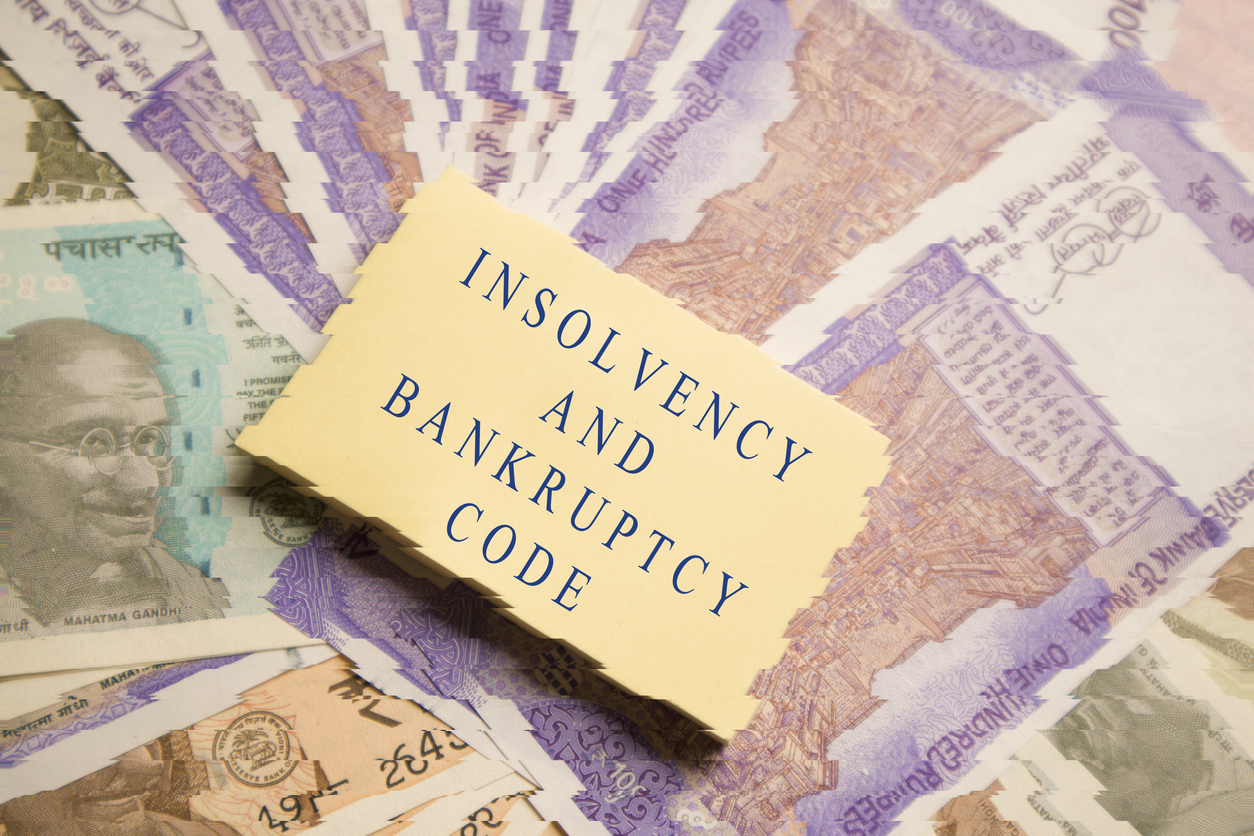
.png)

War, Woes and Worries: The MPC's Policy Perplexity
As the Middle East conflict roils oil markets and rattles capital flows, India's Monetary Policy Committee faces a near-impossible balancing act.

Rajendra Paramanik is Assistant Professor at Indian Institute of Technology, Patna.
Unninarayanan Kurup is an IES based in New Delhi.
April 4, 2026 at 10:34 AM IST
It has been a month since the conflict escalated in the West Asia, and the macroeconomic warning signals are already flashing. Disruptions to the movement of oil, gas and other critical inputs through the Strait of Hormuz have begun to ripple outward, and what they mean for India's current policy landscape warrants closer attention.
As India's Monetary Policy Committee meets next week to decide the trajectory of interest rates, it finds itself at a crossroads, grappling with a confluence of shocks: a cost-push shock driven by rising oil prices, financial shocks stemming from capital outflows, and uncertainty-induced confidence shocks. This moment reflects the breakdown of the "divine coincidence" — described by Oliver Blanchard and Jordi Gali[1] — where stabilising inflation no longer aligns with stabilising the welfare-relevant output gap.
Before turning to the MPC's policy choices, it is useful to examine the channels through which this crisis is transmitting into India's macroeconomic fundamentals.
The first is the inflation channel, operating through a classic terms-of-trade shock. Fertiliser markets are already under strain, with more than a third of global seaborne fertiliser trade passing through the Strait of Hormuz. Compounding this, major Gulf energy players such as QatarEnergy and Kuwait Petroleum Corporation have either invoked force majeure clauses or curtailed production due to infrastructure disruptions. The result is a deterioration in India's terms of trade, with import prices rising relative to export prices — particularly significant given India's import-dependent energy basket.
The effects extend beyond immediate price pressures. Such shocks risk feeding into inflation expectations, a key concern for policymakers. For MPC members, the central question is whether these expectations remain anchored or begin to drift upward, triggering second-round effects. This assessment is complicated by structural features of the Indian economy. The high weight of food in the CPI basket, combined with the supply-driven nature of the shock, limits the effectiveness of conventional rate hikes. Tightening monetary policy may do little to ease supply constraints, even as it dampens demand.
Transmission Channels
Closely linked is the exchange rate channel. Interest rate differentials influence capital flows, and in periods of global uncertainty, the "safe haven" effect tends to strengthen the US dollar. This has already exerted depreciation pressure on the rupee, as investors shift capital away from emerging markets towards perceived safe assets. For the MPC, this creates a further trade-off. Raising interest rates could help stabilise the currency and contain imported inflation, but may come at the cost of domestic growth, reinforcing the inherent policy dilemma.
Finally, financial market conditions form an important transmission channel. Heightened volatility in bond markets has direct implications for borrowing costs across the economy. Recent trends — including the rise in US 10-year yields alongside a strengthening dollar index — reflect global flight-to-safety dynamics and a weakening outlook for energy-importing economies, as noted by the Ministry of Finance[2]. In such an environment, a simultaneous tightening of policy rates and liquidity conditions could result in a "double tightening" of financial conditions, amplifying the impact on growth.
Against this backdrop, MPC members face a consequential decision on interest rates: one shaped not only by global uncertainty but by how each individual member perceives and weighs that uncertainty. The literature has well established that heterogeneity in committee composition influences policy decisions (Bordo, M., & Istrefi, K. (2023)[3]. Heterogeneity stemming from educational background and experience in the policy domain gives rise to differing perceptions; how members weigh associated risks will be directly reflected in the stance they adopt.
Policymakers must be equally cautious about how they communicate their decisions to market watchers. Heterogeneity of views, if articulated judiciously, can provide markets with a richer pool of information and help stabilise expectations.[4] In times of heightened uncertainty, there is always scope for policy misinterpretation. Ambiguity in the evidence offered in support of RBI's decision could negate the very effect the pronouncement intended to create.
While the typical ‘hawks’ may lean towards a rate hike to curb inflationary pressure and doves towards a more cautious stance, it will be interesting to see how these dynamics play out within the Committee. Whether it is the hawkish or dovish position that prevails — or whether we see more "swingers" realigning their preferences to the needs of the hour — will shape the roadmap for the Indian economy.
As Pierre Wunsch, Governor of the National Bank of Belgium, has noted, central bankers must navigate uncertain times by remaining agile and avoiding pre-commitments to predetermined policies.[5]
As the curtain draws near, the audience waits in anticipation.
Rounak Sil, an independent researcher from Bengaluru also contributed to the article.
[1] Blanchard, Olivier; Galí, Jordi (2007). "Real Wage Rigidities and the New Keynesian Model" (PDF). Journal of Money, Credit and Banking. 39 (1): 35–65.
[2]https://dea.gov.in/files/monthly_economic_report_documents/File_MER%20March%202026%20%281%29.pdf
[3] Bordo, M., & Istrefi, K. (2023). Perceived FOMC: The making of hawks, doves and swingers. Journal of Monetary Economics, 136, 125-143.
[4]https://economictimes.indiatimes.com/opinion/et-commentary/policy-needs diversity/articleshow/113860470.cms
[5] Guest lecture by Pierre Wunsch, Governor, National Bank of Belgium titled “Beyond hawks and doves: trying to get it right in an uncertain world” 8 May 2024 – Frankfurt (https://www.bis.org/review/r240806d.pdf)
More From BasisPoint