.png)

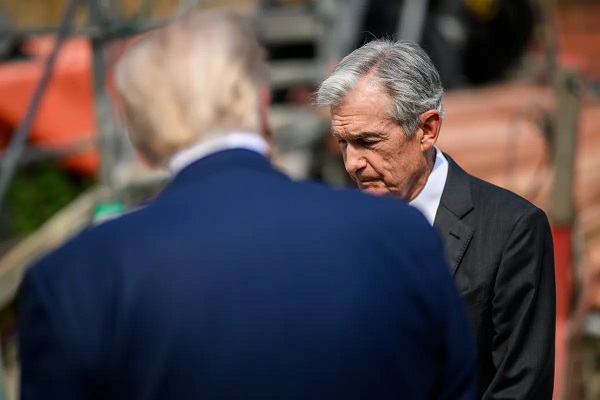
US President Donald Trump has three goals for the Federal Reserve: He wants a new chair; he wants the current chair, Jerome Powell, off the Fed’s powerful interest-rate-setting committee when his term ends on May 15; and he wants lower long-term interest rates. But Trump’s own vindictiveness and lack of discipline are thwarting all three goals.
While Trump has nominated former Fed Governor Kevin Warsh to succeed Powell, the prediction markets Kalshi and Polymarket indicate that Warsh’s odds of being confirmed by May 15 are falling rapidly. At the time of writing, traders on Kalshi placed the likelihood at 38%, down from well over 50% earlier in the week.
Trump has only himself to blame. His loyalists at the US Department of Justice have launched a criminal investigation of Powell over renovations to the Fed’s headquarters. This investigation is a thin fig leaf for Trump’s real goal: bending the central bank to his will. Trump has weaponized the threat of criminal prosecution in order to pressure Powell and his colleagues to lower interest rates. The criminal probe is wholly manufactured—there is no evidence of criminal wrongdoing.
This is the stuff of banana republics. And the US Senate—which must confirm Warsh as chair—is having none of it. Right after the investigation was opened in January, Senator Thom Tillis, a Republican member of the Senate Banking Committee, said that he “will oppose the confirmation of any nominee for the Fed—including the upcoming Fed Chair vacancy—until this legal matter is fully resolved.” He has reiterated this stance many times since, including as recently as April 14.
Republicans hold a 13-11 majority on the Senate Banking Committee, so Tillis alone can stall Warsh’s confirmation. But several other Republican senators have expressed concerns about the investigation. In January, Lisa Murkowski agreed with Tillis, while John Kennedy, who sits on the Banking Committee, said: “We need this [criminal probe] like we need a hole in the head.” John Thune, the Senate majority leader, called for the matter to “be resolved quickly.”
But the matter has escalated. On April 14, federal prosecutors showed up unannounced at the Fed’s construction site—an unusual and aggressive move. They were turned away, and the Fed’s outside counsel asked the Department of Justice to refrain from any similar actions without the Fed’s lawyers being present.
Trump then raised the temperature further. On April 15, he defended the investigation in a Fox Business interview. Moreover, when asked if the criminal investigation could delay Warsh’s confirmation and keep Powell in the job for longer, Trump replied: “Then I’ll have to fire him.” Powell, citing long-standing precedent, has stated his intention to serve as chair pro tempore until his successor is confirmed.
Trump has already attempted to fire a Fed governor—the first time a president has taken such a step. But the US Supreme Court justices appeared skeptical during oral arguments that Fed Governor Lisa Cook’s alleged mortgage fraud was sufficient grounds for termination. It is doubtful that Trump would fare better with the Court if he tries to fire Powell. Moreover, such a move would run counter to Trump’s stated aim: the resulting legal battle would likely keep Powell in the job for longer and delay Warsh’s confirmation.
Trump wants Powell off the Federal Open Market Committee as well. As of March, Powell, whose seat as a Fed governor expires in 2028, had not decided whether he would continue to serve as a governor after his term as chair ends next month. But he was clear about one thing: “I have no intention of leaving the board until the investigation is well and truly over with transparency and finality.”
The choice facing Trump is simple: If he drops the criminal investigation, then the Senate would swiftly confirm Warsh, and Powell would be out as chair and likely would resign from the Board of Governors. But if Trump doubles down on the probe, Powell will remain in his post indefinitely. If you are the president, this decision is duck soup.
Trump’s threats against Powell could also lead to higher interest rates—precisely the opposite of the president’s goal. Inflationary pressure would increase if investors came to believe—rightly or wrongly—that Trump’s tactics have succeeded in influencing the Fed’s decisions. This could increase long-term rates, as investors would expect the erosion of the Fed’s independence to lead to higher future inflation and fuel concerns about the stability and integrity of US institutions.
Warsh will be a terrific Fed chair, bringing many skills and attributes to the post. Much of his reform agenda is laudable and necessary. But to ensure his timely confirmation, Republican senators must pressure Trump to drop the threats and the probe. They must convince the president to get out of his own way.