.png)


Dr Hemachandra Padhan is an Assistant Professor, General Management and Economics, IIM Sambalpur.*
December 30, 2025 at 7:11 AM IST
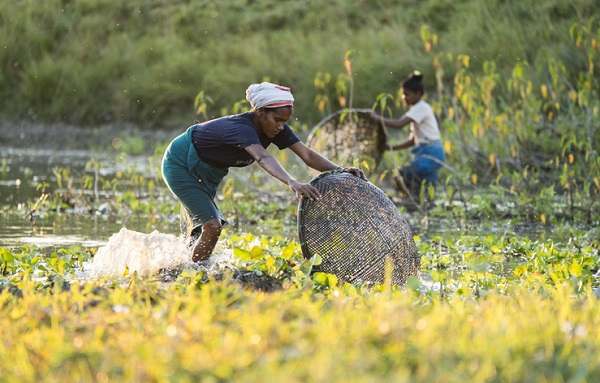
As India approaches the centenary of its independence in 2047, the question of inclusive growth has become central to national discourse. But step away from policy papers and you find a simpler truth: in thousands of tribal hamlets, women are already working, trading and producing, yet barely getting by. Among the most overlooked yet vital contributors to this vision are tribal women entrepreneurs. Spread across forested, hilly and remote regions, tribal women have long engaged in economic activity, from agriculture and forest produce to handicrafts, food processing and local services. This is not new enterprise. It is survival, stitched into daily life. However, their efforts remain largely informal, underpaid and structurally constrained, locking them into a persistent income gap. The coming decades present both an opportunity and a challenge: can this quiet grind be turned into dignified, dependable livelihoods?
Current Landscape
Future Paths
In a status quo scenario, incremental improvements continue. SHG coverage expands, digital payments become more common, and a few entrepreneurs reach niche markets. But progress remains uneven. Most tribal women stay informal, with thin margins and little security. Life improves at the edges, but the centre holds firm. The income gap narrows only marginally.
In a transformational inclusion scenario, the ecosystem is reshaped. Credit is designed around seasonal incomes, backed by insurance and pensions. Roads, power and internet finally reach the last mile. Training moves beyond basics to branding, quality and enterprise management. Land and forest rights are enforced, giving women real economic security. Government buyers and private firms source directly from women-led groups. Here, enterprise becomes more than a side activity. It becomes a pathway out of poverty. A critical mass of women builds stable, growth-oriented businesses, sharply compressing income disparities.
A third path reflects climate reality. As heat, erratic rains and forest stress intensify, livelihoods shift to climate-smart farming, sustainable forest value chains, renewable energy services and eco-tourism. Tribal women, with generations of ecological knowledge, sit at the centre of this transition. With investment in adaptation and risk cover, incomes become more resilient. Without it, climate shocks deepen vulnerability and erase hard-won gains. In this future, climate is not a backdrop. It is the main character.
Five levers will decide which path prevails. First, finance must go beyond microcredit to include mentoring, flexible repayment and risk protection. A loan without support is often a burden, not a bridge. Second, markets matter: fair value chains, cooperatives and digital platforms can improve price realisation and cut out middlemen. Third, skills must focus on running a business, not just making a product. Fourth, infrastructure, from roads and storage to power and internet, will decide whether effort turns into income. Finally, legal security around land, forests and inheritance is essential. Without rights, enterprise rests on shaky ground.
2047 Vision
Tribal women’s entrepreneurship can be a powerful tool for closing income gaps by 2047. But potential alone will not deliver outcomes. It demands sustained, culturally sensitive action that weaves together finance, markets, skills and rights. If India gets this right, these women will not just be beneficiaries of growth. They will be its authors.
More From BasisPoint