.png)

Phynix is a seasoned journalist who revels in playful, unconventional narration, blending quirky storytelling with measured, precise editing. Her work embodies a dual mastery of creative flair and steadfast rigor.
April 10, 2026 at 5:14 AM IST
Dear Insighter,
Do you ever fall into those YouTube rabbit holes where someone dissects a film frame by frame and suddenly what felt straightforward becomes impossibly intricate? You watch Inception again and realise Cobb’s wedding ring only appears in dream sequences, or that the first letters of the characters quietly spell out something you missed entirely. Or you revisit The Shining and notice Kubrick’s obsessive placement of objects, like that yellow Volkswagen Beetle which was less a prop and more a petty argument with Stephen King. Even television does this, with Breaking Bad planting details seasons before they matter, or Game of Thrones bleeding colour and motif into scenes long before the violence arrives.
The best stories do not hide things randomly. They layer them and reward a second look.
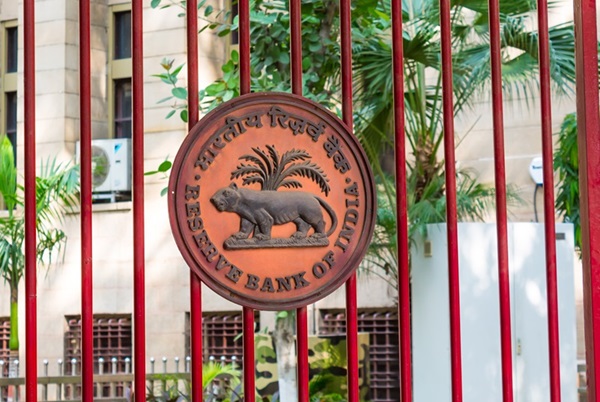
That is exactly what the RBI’s latest policy feels like.
On the surface, the April Monetary Policy Committee meeting looked like a simple hold. Rates unchanged at 5.25%, stance retained, projections nudged. It is the kind of policy you would file under “as expected” and move on. But slow the frame down and there’s a completely different film playing underneath.
As BasisPoint Groupthink observes, the April statement marks a clear break from recent meetings, not in rate action but in operating doctrine. What had been a coherent, disinflation-led, growth-supportive policy arc since August has been overtaken by a supply shock the RBI did not engineer and cannot fully neutralise.
Here’s the hidden scene. From August to February, every MPC meeting built on the last. Inflation was falling faster than expected. Rate cuts in December felt earned. The system was in sequence. And then war disrupted the Strait of Hormuz, pushed crude above $100 a barrel, and reoriented global shipping costs.
The new projections say the quiet part plainly. GDP growth revised down to 6.9% for 2026–27 from 7.6% in the prior year. CPI inflation ticking up to 4.6%. But as Kalyan Ram notes, what has changed is not just the numbers; it is the framing. Policy is no longer organised around sequential normalisation, but around uncertainty itself. The central bank is not guiding markets towards a path; it is playing a Risk Management role.
Mridul Saggar invokes Brainard conservatism, the idea that when you enter a dark room, you take small steps. One does not know if the RBI governor checked Trump’s timeline at 5:30 AM on April 8 to find that Iran had been given a two-week reprieve, but the ceasefire that preceded the policy announcement by hours gave the MPC breathing room to stay put. As Saggar writes, relief can produce real effects through financial accelerators if the truce holds.
But holding should not be confused with resolution. Dhiraj Nim lays out why the pause is a comma, not a full stop. Energy prices remain structurally central to India’s inflation and external balance. The ceasefire eased near-term volatility; it does nothing for deeper risks along the Strait of Hormuz. Even under the RBI’s baseline, crude at $85 and dollar-rupee at 94, CPI traces what Nim calls an “A-shaped” path, peaking above 5% by late 2026 before a modest pullback. The RBI’s stress scenario places inflation at 5% under $95 crude. Markets have noticed: the one-year OIS had climbed nearly 90 basis points above pre-crisis levels before easing, yet still prices in two to three hikes through 2026–27.
The internal tension in the RBI's own communication hasn't escaped Dhananjay Sinha, who notes that the central bank has clearly mapped five transmission channels through which this supply shock converts into demand destruction: a wider current account deficit, margin compression, tighter financial conditions, weaker remittances and exports, and higher borrowing costs from global spillovers. Yet the growth projection of 6.9% does not fully reflect them.
Meanwhile, the rupee has been running its own subplot. Madhavankutty G invokes Black Wednesday as a reminder that there are moments when speculators can hold central banks to ransom. The breach of 95 triggered one of the most forceful FX interventions in at least two decades. But as Yield Scribe argues, the deeper shift is conceptual. With the RBI resetting its dollar-rupee assumption from 88 to 94 and oil from $70 to $85, policy is no longer anchored primarily on growth and inflation, but on external stability and the constraints the rupee now imposes.
As Accrued Interest writes, the intervention worked in the immediate term. But the manner of it has left a residue. India’s engagement with global capital rests on predictability. Abrupt barriers between onshore and offshore markets, even if temporary, do not simply correct positions; they raise questions about what the framework looks like next time.
That fluidity extends to the policy stance itself. As Aastha Gudwani notes, a great deal changed between April 6 and April 8. The Governor’s emphasis on uncertainty, and the first-ever explicit core CPI forecast at 4.4%, signal a central bank trying to manage expectations as much as outcomes, while quietly indicating that policy flexibility, not direction, is now the primary tool.
That brings us to a story that got lost in the noise: the RBI’s plan to issue fresh guidelines on bank boards. T. Bijoy Idicheriah connects this directly to the exit of HDFC Bank’s part-time non-executive chairman, Atanu Chakraborty, whose resignation triggered a sharp reaction. Governor Malhotra moved quickly to reassure markets, and the new guidelines draw a clear line: boards guide, management executes.
Idicheriah wrote, pre-policy, that in a crisis shaped as much by narrative as by numbers, silence is not neutrality; it is a gap. The RBI’s COVID-era playbook showed that presence itself lowers the cost of intervention. BasisPoint Groupthink made the same point ahead of this meeting: markets aren't just looking for reassurance, they are actually probing the RBI's reaction function.
The second thread is about the limits of any single instrument. Gaura Sen Gupta argues: when the shock is supply-driven and core inflation remains well behaved, with core-core at 3.3%, rate hikes do not solve the problem. Upasna Bhardwaj adds that any knee-jerk tightening would be counterproductive, with the RBI’s own core CPI forecast of 4.4% suggesting underlying pressures remain contained. While a prolonged pause with repo at 5.25% is expected through 2026-27, the bias has shifted. What once hinted at easing now suggests the next move is more likely a hike than a cut, argue Team-QuantEco’s Shubhada Rao, Vivek Kumar, and Yuvika Singhal.
That’s the film-within-a-film problem. On screen: a hold, neutral stance, calm language. Beneath it: a central bank that has exited the growth cycle, reset its rupee and oil assumptions, introduced downside scenarios, shifted to optionality, and delivered an aggressive FX intervention. The Easter egg, as Abheek Barua frames it, is in the governor's own language: "the initial supply shock can potentially transform into a demand shock over the medium term."
The first read tells you what happened, the second tells you what actually changed.
Yours, in the subtext.
More From BasisPoint