.png)

Chandrashekhar is an economist, journalist and policy commentator renowned for his expertise in agriculture, commodity markets and economic policy.
December 9, 2025 at 4:08 AM IST
For a country aspiring to reach a $5-trillion GDP and already the world’s fastest-growing major economy, India’s nutrition status leaves much to be desired. The country is not food-insecure, but it is certainly not nutrition-secure. Its policies have yet to fully recognise the critical nexus between food, nutrition, and health.
It is widely recognised that under-nutrition exerts long-term adverse effects on human health, labour productivity and general well-being. Perpetual under-nutrition results in low resistance to infections and increased morbidity. Higher healthcare costs and reduced labour productivity are a potently negative combination.
Various determinants of malnutrition include household food insecurity; illiteracy and lack of awareness especially among women; access to health services, availability of safe drinking water, sanitation and environmental conditions; and purchasing power.
Additionally, early age at marriage (girls); teenage pregnancies that often result in low birth weight of newborns; poor breast-feeding practices; inadequate complementary feeding; ignorance about nutritional needs of infants and young children, and repeated infections further aggravate malnutrition.
The implications for our country are serious, given the age profile of the population. Roughly, a fourth of the population is less than 14 years of age, while two-thirds are between 15 and 64 years of age. The size of the elderly population (60+) is set to rise in the coming decade. With every passing year, a large number of youngsters are expected to enter the working age stream.
Under the 15th Finance Commission, various components like Anganwadi services, Poshan Abhiyaan, and Scheme for Adolescent Girls have been subsumed under the umbrella Mission Saksham Anganwadi and Poshan 2.0, or Mission Poshan 2.0, to address the challenge of malnutrition.
It is a centrally-sponsored mission where the responsibility for implementation of various activities lies with the States and Union Territories. This mission is a universal self-selecting umbrella scheme where there are no entry barriers for any beneficiary to register and receive services.
Under this mission, supplementary nutrition is provided to children, pregnant women, lactating mothers and adolescent girls to beat the intergenerational cycle of malnutrition by adopting a life cycle approach.
According to the Union Ministry of Women and Child Development, supplementary nutrition is provided in accordance with the nutrition norms contained in Schedule-II of the National Food Security Act. These norms were revised in January 2023 as the old norms were largely calorie-specific. The revised norms are said to be more comprehensive and balanced in terms of both quantity and quality of supplementary nutrition based on the principles of diet diversity that provides for quality protein, healthy fats and micronutrients.
Although various rounds of the National Family Health Survey conducted by Ministry of Health & Family Welfare since 1992-93 have shown improvement in malnutrition indicators in children across India, the present status is far from comforting.
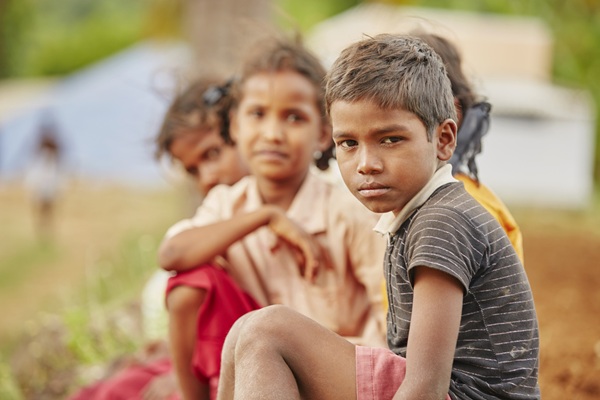
According to last available NFHS-5 (2019-21), 35.5% of children under the age of five suffered stunting; 32.1% were underweight and 19.3% faced wasting—low weight for height.
The projected population of all children up to 5 years in India for 2021 is about 137.5 million according to Population Projections for India and States 2011-2036, National Commission on Population and Ministry of Health & Family Welfare.
However, only 73.6 million children up to 5 years were enrolled in Anganwadis and registered on Poshan Tracker of the Ministry of Women & Child Development as per the June 2025 data. Seventy million of these children were measured on growth parameters of height and weight. About 37% of them are found to be stunted, 15.93% underweight and 5.46% wasted.
Malnutrition indicators of children of 0-5 years in the country show stark inter-state variations. Incidence of wasting and underweight is far higher in states such as Bihar, Chhattisgarh, Gujarat, Jharkhand, Madhya Pradesh, Rajasthan and Uttar Pradesh while the southern States, although not exactly in pink of health, are generally doing relatively better.
It is necessary to highlight the tragic irony of Madhya Pradesh, a protein-energy malnutrition hotspot. Despite being the country’s largest producer of two high protein crops — soybean and chickpea — the State’s nutrition status is a cause for concern.
Both soybean and chana are protein rich legumes. As compared with the cost of animal protein, vegetable protein from legumes is a lot more economical. What has prevented the MP government all these years from utilising the natural endowment to address protein deficiency in the state remains a mystery.
More From BasisPoint