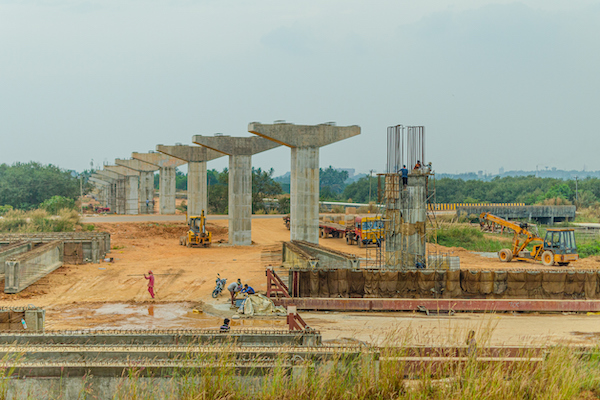
A 2021 study of the factors behind delays in construction projects across multiple countries found that most could be classified into four primary categories: supply management, workforce management, project management and management of climatic conditions. Together, they account for nearly 70% of project delays.
The implications extend far beyond missed deadlines. Delays trigger cost escalations, litigation, loss of profit and diminished service quality, ultimately affecting the broader economy. In developing countries, particularly, the effects can be more intense as delays often exacerbate budget problems and resource shortages.
The delays have identifiable causes that fit into these four primary factors, including poor procurement planning, inadequate labour productivity, weak project oversight and adverse weather conditions. Addressing them requires granular analysis of projects: tracking which sectors are most affected, which projects are slipping, and what corrective measures have been attempted or need to be tried. This is where data availability and data that lends itself to analysis become critical.
In India, however, such an analysis of infrastructure projects is becoming increasingly difficult to conduct, thanks to what can only be described as a bureaucratic masterclass in target management. Over the past year, the government has made significant changes to how infrastructure project progress is reported, changes that, whether by design or default, have obscured rather than illuminated the true scale of the problem.
The headline numbers are still there: total projects, total costs and total overruns. What has disappeared is the crucial distinction between “ongoing” and “delayed”. The actionable details are vanishing.
The scale itself is daunting. As of April 2026, the Ministry of Statistics and Programme Implementation (MoSPI) reported that 1,981 ongoing central sector infrastructure projects, each valued at ₹1.5 billion or more, had experienced a cumulative cost overrun of ₹5.65 trillion, approximately $60.4 billion.
Total revised costs had ballooned to ₹42.78 trillion, about $457.5 billion, from original estimates of ₹37.12 trillion, about $397 billion. The transport and logistics sector dominates this portfolio, accounting for 1,459 projects valued at ₹23.34 trillion, roughly $249.6 billion. Yet these alarming figures are now harder than ever to scrutinise.
Earlier, the ministry’s monthly Flash Reports would explicitly state how many projects were delayed. This changed with the launch of PAIMANA in September 2025, replacing the older Online Computerised Monitoring System.
Under PAIMANA, the language has changed: projects running behind schedule were reclassified from “delayed” to merely “ongoing”. The word “delay” has disappeared. While PAIMANA offers advanced analytics and integration with other government portals, this semantic shift is more than cosmetic. It makes it nearly impossible to determine at a glance how many projects are running behind schedule. This represents a classic case of obscuring rather than illuminating, and it undermines public accountability.
In an episode of Yes Minister, Sir Humphrey Appleby, the archetypal Whitehall mandarin, observes that the guaranteed way to meet a government target is to announce it retrospectively, after it has already been achieved. It is hard to avoid concluding that this logic can now be applied to the very definition of “delay” too.
The importance of the change can be seen in the context of the two departments responsible for the maximum number of delayed projects: Railways and Roads. In the case of Railways, the opacity is near-total. In the case of Roads, however, a different story emerges, one that shows what is possible when data is actually analysed.
Railways
The Ministry of Railways, which manages the largest infrastructure portfolio, has made similar changes in the presentation of its project data. In April 2025, the iconic annual “Pink Book”, the definitive consolidated compendium of railway projects and their budgetary allocations, was quietly discontinued.
This is not a trivial change. The Pink Book had served for decades as a master plan, providing project-wise allocations and progress updates across the entire network.
Instead, the Railways now publishes separate zone-wise “List of Works” documents for each zonal railway. To get a national picture, one must consult multiple documents, making the task extremely difficult for any analyst. While PAIMANA tracked 260 railway projects valued at ₹8.69 trillion, approximately $92.9 billion, as of April 2026, the new system makes it difficult to specifically isolate the number of delayed railway projects.
Roads
While the government has retreated from transparency, independent analysis offers a glimpse into the scale of the problem in the roads sector, where ratings agencies, drawing on project-level data, have been able to piece together a worrying picture.
As of April 2026, the Ministry of Road Transport and Highways led in project count, with 1,137 projects valued at ₹10.81 trillion, about $115.6 billion. One study of 129 highway projects awarded between 2021 and 2025, worth more than ₹1.40 trillion, or $15 billion, found that among projects still under construction, close to 65%, representing more than ₹600 billion, or $6.4 billion, were running more than six months behind schedule. This was up from around 55% in September 2024.
Another analysis of a sample of 72 under-construction projects found around 55% behind schedule, with delays averaging about 11 months. A recent report noted that nearly 79 projects faced delays of more than three years.
These delays translate directly into economic costs. Delays in preparing the detailed project report alone have caused construction costs for some highway stretches to increase nearly threefold over four years. The path to completion is now also threatened by global headwinds, with the West Asia conflict driving up input costs for bitumen, steel and fuel by 5–8%.
What makes this data remarkable is that it comes not from government sources but from private analysts sifting through project documents, interpreting data and stitching together a coherent picture. If ratings agencies can do this, why can the government not present it clearly and systematically?
The opacity appears to arise not from an absence of data but from an absence of willingness to present it in a usable form.
The increasing opacity in project information is counterproductive. Even if the government has some unstated good intentions in removing the word “delay” from official reports and making analysis difficult, such moves do not make delays disappear. They only make the task of identifying and fixing their causes much harder, while also suggesting that addressing delays is of diminished priority to the government.
The solution is not to discard PAIMANA, as its real-time, integrated approach has merit, but to restore transparency in reporting. A simple addition to the Flash Report would suffice: a single line showing the “number of ongoing projects that are behind schedule”. Similarly, the Railways could publish a consolidated, searchable digital version of the Pink Book while maintaining zone-wise documents.
For a nation aspiring to become a developed economy by 2047, although this too increasingly appears to be a moving target, opacity in infrastructure data reporting is a luxury we cannot afford.
Without clear, accessible data on delays, we cannot identify bottlenecks, allocate resources efficiently or hold implementing agencies accountable. The 2021 study reminded us that delays have identifiable causes: supply, workforce, project management and climate. But if we cannot see where they are happening, we cannot fix them. The first step towards solving a problem is the willingness to see it clearly.
.png)