.png)

June 18, 2026 at 2:44 AM IST
The Federal Reserve left the federal funds target range unchanged at 3.50-3.75%, but this was not a neutral hold.
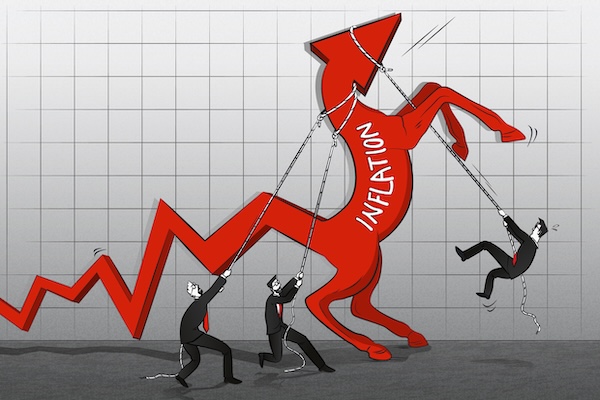
The unanimous decision came with a shorter and more forceful statement that described economic activity as solid, inflation as elevated and the labour market as broadly stable. More significantly, the Fed removed language that had previously signalled the possibility of further easing and declared that it would “deliver price stability”. The rate stayed unchanged; the policy bias did not.
The June projections did most of the signalling. The Fed raised its 2026 headline personal consumption expenditure inflation forecast to 3.6% from 2.7% in March and its core inflation forecast to 3.3% from 2.7%. Growth was marked down to 2.2% from 2.4%, while the unemployment projection was lowered slightly to 4.3%. The median projected policy rate rose to 3.8% at end-2026 from 3.4% in March.
Nine of the 18 policymakers who submitted rate projections saw at least one increase this year, eight expected no change and only one projected a cut. Six of the nine officials favouring higher rates envisaged more than one quarter-point increase. Fed Chair Kevin Warsh did not submit a dot, leaving his own preferred rate path deliberately unstated.
What makes the shift more consequential is that it came as the immediate energy threat was receding. Brent crude fell below $79 a barrel after the US and Iran signed an interim agreement to end the war, reopen the Strait of Hormuz and restore full traffic through the waterway within 30 days.
The Fed is asking whether the earlier shock has already moved into inflation expectations, wages, services and broader pricing behaviour. That distinction will shape today’s crowded slate of central-bank decisions.
Today’s Board
On Constitution Avenue: A Hold That Repriced The Cycle
Markets read the Fed’s decision as a tightening signal.
The two-year Treasury yield, the maturity most sensitive to monetary-policy expectations, jumped 16 basis points to 4.207%, its highest level in 16 months. The 10-year yield rose to 4.461%, and rate markets placed a 72% probability on an increase by October. Early Thursday, the dollar remained near a two-month high, while the US 10-year yield was around 4.47%.
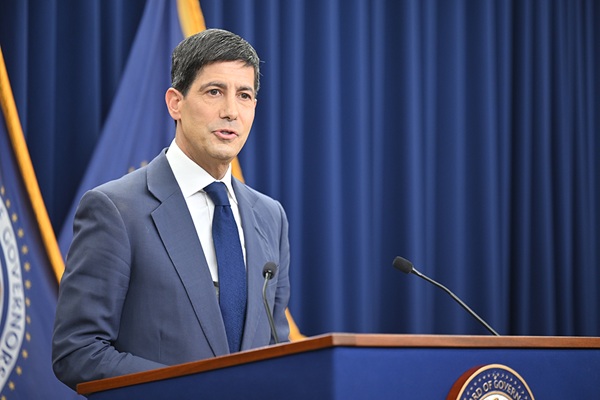
The most unusual feature was Warsh’s refusal to provide a dot. The hawkish rate distribution therefore belongs to the rest of the committee, while the chair’s own reaction function must be inferred from the statement and his press conference.
Warsh also announced a review of the Fed’s communications framework, including the dot plot, along with four other task forces examining the institution’s operations. He said a new communications framework could be in place by the end of the year. Bloomberg’s account of his debut captured the asymmetry: Warsh promised institutional change and a firm commitment to inflation control but offered little direct guidance on the next rate move.
That may be intentional. Warsh has long argued that forward guidance can create false precision and bind policymakers to a path that economic data may quickly invalidate.
But less guidance does not mean less policy risk. The practical message from the meeting is that cuts are no longer the default next move. Falling oil may allow the Fed to wait, but inflation will now have to slow materially to remove the possibility of a hike.
Brazil Cuts, But Not Comfortably
Brazil’s central bank cut the Selic rate by 25 basis points to 14.25%, its third consecutive reduction, but paired the move with a more difficult inflation assessment.
Copom raised its 2026 inflation projection to 5.2% and its forecast for late 2027 to 3.7%, still above the 3% target. It also highlighted risks from fiscal stimulus, energy costs, El Niño and measures that could lift household consumption ahead of the presidential election.
Brazil is therefore continuing to ease while acknowledging that the inflation outlook has deteriorated. The combination suggests that any further cuts will be limited, cautious and increasingly dependent on global financial conditions.
Threadneedle Street: Softer Inflation Buys Time
The Bank of England is expected to keep Bank Rate unchanged at 3.75% today after UK inflation proved less severe than feared.
Headline inflation held at 2.8% in May, below expectations of a rise to 3.0%. Core inflation was 2.6%, although services inflation edged up to 3.7%. Higher transport costs were offset by slower food-price increases and lower domestic heating-oil inflation.
All 65 economists in a Reuters poll expected the BOE to hold. The decline in global oil prices strengthens the case for waiting, but it does not restore an easing bias. Inflation remains above target, services pressures persist, and the Monetary Policy Committee must still assess July’s regulated energy-price increase.
The decision may therefore be uneventful. The vote split and the language on inflation persistence will not be.
Europe’s Policy Split
The Swiss National Bank has more room than almost any major peer to remain patient. All economists polled by Reuters expected the policy rate to stay at 0%, with Swiss inflation at only 0.6% and the stronger franc cushioning imported energy costs.
Norges Bank is also expected to hold, but for different reasons. It unexpectedly raised its policy rate to 4.25% in May, and core inflation subsequently accelerated to 3.4%. Today’s new policy-rate path will show whether the May increase was sufficient or merely the first stage of renewed tightening.
The Czech National Bank faces a more finely balanced decision. Markets have priced a 25-basis-point increase from the current 3.50%, while one board member described the choice between a hike and no change as “50-50”.
Asia: The Fed Raises the Bar for Patience
Asian central banks enter the Fed’s decision with a stronger dollar and higher US short-term yields.
Bank Indonesia must decide whether to follow its surprise off-cycle increase to 5.50% with another move. The June 9 hike helped attract foreign inflows and stabilise the rupiah, but pausing immediately after an emergency increase risks testing whether those gains are durable.
The Bangko Sentral ng Pilipinas raised its policy rate to 4.50% in April and has maintained a tightening bias as inflation remains above target. Another increase is live, although lower oil prices reduce the case for an outsized response.
Taiwan’s central bank is expected to hold its benchmark rate at 2%. Strong AI-related exports support activity, but inflation rose to 2.2% in May, above the central bank’s warning threshold and its highest rate in more than a year.
Beijing: China Focuses On Transmission
The People's Bank of China left rates unchanged but announced a series of measures aimed at strengthening the transmission of monetary policy. Governor Pan Gongsheng narrowed the interest-rate corridor around the seven-day reverse-repo rate, expanded liquidity operations and introduced a yuan repo facility for foreign official institutions. The package reflects Beijing's preference for targeted operational adjustments. At a time when most major central banks are debating inflation and policy rates, China is concentrating on improving the effectiveness of its monetary framework and deepening the international use of the yuan.
Policy Themes
The easing bias has gone: The Fed did not commit to tightening, but it ended the presumption that the next move must be a cut.
Oil relief is not policy relief: Brent below $79 reduces the first-round inflation impulse. It does not establish that the earlier shock has not spread into underlying prices.
Communication is becoming policy: Warsh’s missing dot and proposed overhaul of the Fed’s communications framework are part of the signal, not an institutional footnote.
The dollar matters again: A stronger dollar and higher US short-term yields increase the policy cost of waiting for central banks already defending currencies or attracting foreign capital.
The IMF’s assessment provides the broader frame. It said the global economy had so far endured the war shock, but energy-importing emerging markets remained particularly exposed to currency depreciation, higher bond yields and capital outflows. It also argued that the key issue was not headline inflation alone, but whether households and businesses expected a persistent loss of purchasing power.
Today’s Docket
|
Date |
Institution |
Key Focus |
|
Jun 18 |
Bank of England |
Hold expected at 3.75%; vote split and services-inflation language matter. |
|
Jun 18 |
Swiss National Bank |
Hold expected at 0%; franc strength continues to offset imported inflation. |
|
Jun 18 |
Norges Bank |
Hold expected at 4.25%; updated rate path will indicate whether another hike is likely. |
|
Jun 18 |
Czech National Bank |
Live choice between a 25-basis-point hike and no change. |
|
Jun 18 |
Bangko Sentral ng Pilipinas |
Whether April’s hike is followed by another move to restrain inflation and support the peso. |
|
Jun 18 |
Taiwan central bank |
Hold expected at 2%; inflation forecast and policy tone are the focus. |
|
Jun 18 |
Bank Indonesia |
Whether the off-cycle hike is reinforced or judged sufficient for now. |
Mint Street Notes
For India, the overnight developments pull in opposite directions.
The US-Iran agreement and Brent below $79 improve India’s inflation, current-account and rupee outlook. The Fed’s hawkish repricing, stronger dollar and rise in short-term Treasury yields work through the opposite channel by increasing the relative attraction of dollar assets and tightening global financial conditions.
The RBI’s decision on Wednesday to temporarily remove interest-rate ceilings on fresh three-to-five-year FCNR(B) deposits and NRE deposits of three years and above should be seen in that context. The relaxation, available until September 30, gives banks more flexibility to offer competitive returns and attract overseas funds.
The measure is not a sign of immediate stress. It is an attempt to build external-sector insurance before global financial conditions become more difficult.
The RBI is effectively using the breathing room created by lower oil prices to strengthen the capital account.
The Signal
The Federal Reserve did not raise interest rates. It did something more important for the global policy debate: it made rate increases a credible next move again.
Oil is below $79, the Strait of Hormuz is expected to reopen, and the immediate energy shock is receding. Yet the Fed sharply raised its inflation forecasts, removed its residual easing language and produced a dot plot in which half the participants favour higher rates.
That suggests the concern has migrated from the initial oil shock to its persistence.
Today’s central banks will decide how much of that reaction function they need to import. The SNB can afford to wait. The BOE and Norges Bank probably can too, although neither is likely to close the door to tightening. The Czech central bank, BSP and Bank Indonesia have less room because domestic inflation and currency dynamics are more pressing.
For India, lower crude buys the RBI time. The Fed’s shift explains why the central bank is using that time to reinforce the external balance rather than declare the risk over.
Sources: Federal Reserve, Reuters, Bloomberg, IMF, Trading Economics, Bank of England, Office for National Statistics, Swiss National Bank, Norges Bank, Czech National Bank, Bangko Sentral ng Pilipinas, Bank Indonesia, Central Bank of the Republic of China (Taiwan), Reserve Bank of India, Banco Central do Brasil, Scotiabank Economics.
More From BasisPoint