.png)


Dev Chandrasekhar advises corporates on big picture narratives relating to strategy, markets, and policy.
June 22, 2026 at 8:12 AM IST
For Indian Big IT, the sovereign-AI question is increasingly literal: which Indian foundation model is in your stack, and how strong is your claim on it? HCLTech's $150 million Sarvam stake, closed this week at a $1.5 billion post-money, answered that for one of the four majors; and it put the same question, more sharply, to TCS, Wipro and Infosys.
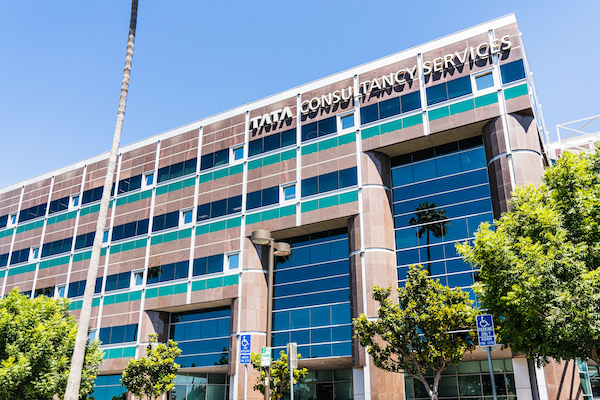
Start with the data moat. TCS BaNCS is the core banking platform behind a meaningful share of the world's banks, and Diligenta, the UK life and pensions arm, processes business for 22 million customers. Customer-level data is fenced off by GDPR, the DPDP Act and FCA conduct rules, and no foundation model can be trained on it directly.
What is trainable, and exclusively TCS's, is the operational layer above it: BaNCS code, workflow schemas, claims and underwriting logic, fraud patterns, anonymised tabular flows and the synthetic distributions that can be generated from them.
The wider Tata Group extends that corpus across almost every sector of the Indian economy, from JLR and Tata Motors in telematics to Trent in retail and Tata Capital in lending. Routed to TCS with appropriate consent and licensing, this is a training corpus no other builder, Indian or foreign, can assemble.
Tata Sons Chairman N Chandrasekaran has consistently positioned TCS as the Group's designated AI vehicle, with the TCS HyperVault build scaling to 1 gigawatt, the April 2026 Tata-OpenAI partnership routed through it, and the Anthropic deal he fronted personally all of one piece. The agentic services TCS launched this year for BFSI and manufacturing workflows ride on frontier-model APIs the firm does not own; owning the base layer is the missing piece.
The training capex need not strain TCS's near-80% payout discipline either. HyperVault sits in Group books, and a sovereign-model run can be funded off the Tata Sons balance sheet rather than the listed entity's, in the pattern of Tata Electronics, Air India and JLR.
Wipro and Infosys are relatively constrained, and differently. At roughly $11 billion in revenue against TCS's $30 billion-plus, Wipro would feel the same spend much harder. Its mix is more Americas-skewed, Wipro Intelligence is layered on hyperscaler partnerships rather than a BaNCS-and-Diligenta-scale data engine, and the Azim Premji Trust's controlling posture is optimised for philanthropic stability rather than long-cycle industrial bets.
Infosys's constraint is partly cultural. Vishal Sikka, as CEO from 2014 to 2017, reportedly committed Infosys to a $1 billion OpenAI investment before it was reversed amid the boardroom dispute that cost him his job. Topaz, sold as a model-agnostic platform brokering access to OpenAI, Anthropic and Google Gemini, would lose strategic coherence with a proprietary Infosys-trained model at its centre.
A 2026 announcement from TCS is unlikely; the Anthropic partnership has to bed in first. A 2027 signal is plausible, in the form of a Tata-level capital commitment, a GPU buildout at TCS Research, or a quiet hire of foundation-model talent above lab-research scale. The underlying math makes the bet rational.
A frontier-scale training run on the GPT or Claude curve would cost the Group several billion dollars, and is not what is on the table. A sub-frontier enterprise model in the 100-to-200-billion parameter range, with English and Indic coverage tuned to BFSI, manufacturing and retail workloads, is a different cost shape. With HyperVault already under construction as a Group asset, the marginal compute cost of one training run rides on infrastructure being built for inference in any case.
A capex of $500 million to $1 billion, spent against the Group balance sheet, would buy a foundation model trained on the Tata data corpus, owned outright, with no third-party brand or grant condition attached. The trained-from-scratch route would be the much stronger enterprise sovereign-AI flag.
More From BasisPoint