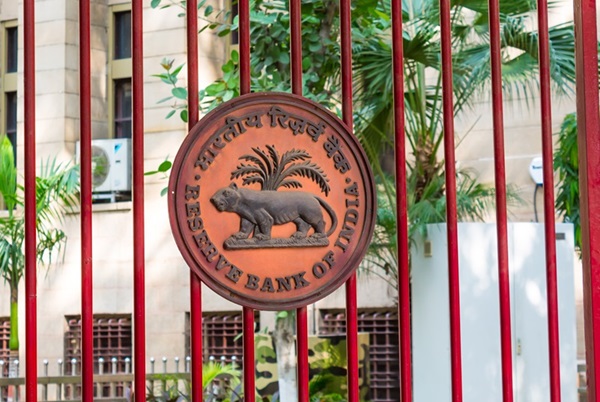
The Reserve Bank of India (RBI) last month issued revised corporate governance directions for urban and rural cooperative banks, under which directors of urban cooperative banks (UCBs)[1] will have to take a three-year break after serving continuously for ten years before becoming eligible for reappointment.
Corporate governance, especially in cooperative banks, has been a contentious issue for years. One welcome aspect of the recent RBI direction is that, while issuing the amendment, the RBI has also published the feedback received on the draft directions and explained why certain suggestions have been accepted and others rejected. This brings greater transparency to the RBI’s thinking (a corporate governance issue for the central bank?) and perhaps also reveals the self-interest of some directors.
The RBI directive was issued while the discussion paper on allowing new cooperative banks is still under consideration. The RBI put out a discussion paper on allowing new cooperative banks in January this year. The RBI had noted at that time that it stopped issuing licences in 2004 because “a large number of newly licensed UCBs became financially unsound within a short period”. Simultaneously, it had also observed that both the operating environment and cooperative banks themselves had changed significantly since then. The discussion paper made the suggestion for the entry of new cooperative banks against this backdrop.
A Pandora's Box?
Many a committee in the past has examined the issue, but none has recommended issuing fresh licences. There are valid reasons behind the RBI not granting any new licences for more than two decades.
As of March 2025, there were 1,457 urban cooperative banks which held ₹7.38 trillion of assets and ₹5.84 trillion of deposits. Of the total, 84 banks, or 6% of the total number of UCBs, accounted for more than half the deposits, advances and total assets[2].
Historically, these banks have played a useful role in giving last-mile access to banking services. Many of them have also been unsound, mainly due to risk concentration, inadequate technology, operational inefficiencies and, at times, political interference, while dual control by states and the RBI made corrective action difficult.
The dual-control issue was more or less sorted out in 2006 when the RBI started signing memoranda of understanding with state governments. States that signed the MoU with the RBI got a committee comprising high-level officials from the state government, central government and the RBI, which took decisions across the table relating to weak cooperative banks to maintain the health of the sector.
As many as 15 states have signed the MoU, and decisions on cooperative banks are taken reasonably quickly in these states. The sector today is on a reasonably sound footing, technologically and health-wise, barring some stray episodes.
But is it sound enough to start getting fresh licences?
Cooperative banks have played a useful role in the Indian economy, providing banking services to small customers at a time when technology had not pervaded the financial system. Today, with technology playing the lead role in providing last-mile access, it is worth considering whether we need so many kinds of banks merely to provide banking access to all.
Regional rural banks, cooperative banks and small finance banks, along with technology, have taken over the role of providing access to small customers. Then there are also small private sector banks which are community-focused, such as South Indian Bank or Catholic Syrian Bank. On top of these sits the UPI, which provides three basic banking services in a jiffy: deposits, loans and remittances.
Is there, then, a case for issuing new licences in the cooperative or any other sector or rationalising the number of banks and having larger and stronger banks with technology reaching the last mile?
The government has already taken the initiative to rationalise public sector banks, reducing their number to 12 from the earlier 27. Just as public sector banks have been consolidated, can we think of merging smaller banks in the cooperative and private sectors to make them a formidable force?
It could be a multi-state cooperative bank with a legacy private bank, or a small finance bank hoping to become a universal bank, taking over a cooperative bank. There is already an example of PMC Cooperative Bank getting amalgamated with Unity Small Finance Bank. With a larger capital base and a more diversified ownership structure and loan portfolio, depositors would have less reason to worry about their money.
The government may find it difficult to give up cooperative banks. Even the RBI may find it inconvenient to take on the government on this issue and may surrender to the pressure to issue more licences in the sector. But sometimes, a discussion paper is a convenient way to park the issue for the time being, assuring stakeholders that serious thinking is underway.
I am not saying the current discussion paper is in the same vein. But the question to seriously think about is this: Do we need more banks? That too in the cooperative sector? Or better banks? As the expert committee on urban cooperative banks, chaired by former deputy governor N. S. Viswanathan in 2021, said, “… proliferation of the number of UCBs (read banks) is not by itself an instrumentality of strengthening the sector.”
Reaching the last mile justified the existence of UCBs. Technology has more or less resolved that issue. Bank balance sheets are stronger than ever before. And that gives us space to think differently.
.png)