.png)

RBI is Forward-Looking About Growth, Not Inflation
Growth gets preventive care; inflation must first materialise, spread and bring witnesses. The June minutes preserve the case for rate cuts while making hikes clear a far higher bar.
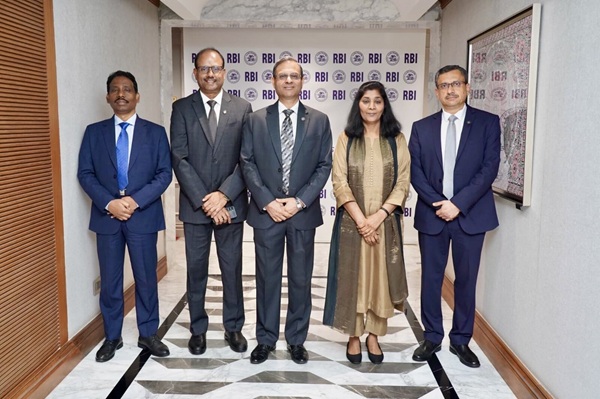

Kalyan Ram, a financial journalist, co-founded Cogencis and now leads BasisPoint Insight.
June 19, 2026 at 2:39 PM IST
India’s Monetary Policy Committee did not need to raise rates in June to prove its inflation-fighting credentials. It merely needed to sound as though inflation still ran the meeting.
Instead, the minutes read like a growth committee wearing an inflation-targeting lanyard.
The RBI cut its 2026-27 growth forecast by 30 basis points, to 6.6%, and raised its inflation forecast by 50 basis points, to 5.1%. Inflation is expected to peak at 5.9% in the third quarter, one decimal point below the upper tolerance limit. Yet projected weakness in growth is treated as an approaching accident; projected inflation is treated as an interesting modelling possibility.
Deputy Governor Poonam Gupta supplies the clearest policy map. If the West Asia conflict persists, tightening would deepen the economic pain. If it ends, the outlook could improve rapidly, and policy should be reassessed for growth-inflation dynamics. And if inflation becomes entrenched, perhaps the MPC will consider taking action.
Bad news argues against a hike because growth is fragile. Good news keeps alive the possibility of renewed growth support. Inflation must first become a squatter before the central bank discusses eviction.
Gupta even speaks of waiting before deciding “whether and when to reverse the policy cycle.” Tightening is cast as the reversal; easing remains the natural direction of travel. The MPC is not promising a cut. It is simply keeping the runway clear for one while asking any prospective rate hike to circle overhead.
The theme appears elsewhere in the minutes.
Ram Singh states openly that his “long-term policy preference remains growth-supportive”. More revealing is what follows. If food inflation remains stable, oil prices fall below $80 a barrel and the Federal Reserve avoids a hawkish turn, he argues, the MPC will have room to “continue to be growth-supportive”.
That is an extraordinary formulation, as inflation-targeting committees usually discuss the conditions under which inflation can be brought back to target. Here, the discussion is about the conditions under which support for growth can continue.
The inflation remains in the room, but it is not steering the meeting.
Governor Sanjay Malhotra performs the same manoeuvre more delicately. He concedes that inflation averaging 5.1%, and reaching 5.9%, might suggest monetary action. He then begins cross-examining the RBI’s own forecast.
The assumptions are uncertain. Core inflation is lower. Food and fuel explain most of the increase. April inflation was still within target.
Each point is respectable, and together they produce a curious doctrine: forecasts are reliable enough to insure growth, but too speculative to defend the inflation target. The RBI is forward-looking when activity may slow and strictly evidence-based when prices may rise.
Core inflation, meanwhile, has become a particularly useful chaperone. India targets headline CPI, but whenever headline inflation becomes awkward, core is invited to explain that nothing serious is happening. When the core itself rises, precious metals are shown the door. Statistical housekeeping can be wonderfully calming.
The “supply shock” label does more work still.
Of course, a repo-rate increase cannot produce crude oil, rainfall or container capacity. But identifying the source of inflation does not settle the policy response. The question is whether the shock will spread into expectations, wages and price-setting before the central bank arrives with its clipboard.
Other central banks are also facing the same oil shock and the same growth-inflation trade-off. Their signalling is rather less bashful. The European Central Bank raised rates by 25 basis points even while cutting its 2026 growth forecast to 0.8%, saying its decision was robust across scenarios for the Middle East shock.
The Bank of England held, but two members voted to hike. Its statement said policy must lean against material second-round effects and keep inflation on course for 2%. That is a hold with an inflation target attached, rather than one accompanied by a doctor’s note for growth.
Even the Federal Reserve, which actually operates under a dual mandate, sounded more inflation-focused. The FOMC held rates, but Kevin Warsh refused to entertain any rethink of the 2% target, insisting that inflation remains a monetary phenomenon and that price stability must be delivered, not negotiated. Washington is legally required to balance growth and inflation. India’s framework gives primacy to price stability. Yet the Fed’s hold sounded more like inflation targeting than the RBI’s.
India’s “neutral” stance is neutral in much the same way an airport travelator is neutral: one may technically walk in either direction, but the machinery has a preference.
Again, this is not an argument that June demanded a hike. It is an argument that the MPC’s revealed reaction function has become lopsided. Growth risks receive preventive care. Inflation risks must present symptoms, test positive, and preferably deteriorate.
The RBI has an inflation-targeting mandate and, judging from these minutes, increasingly sounds like a growth-targeting one.
And, of course, as always, there was a statutory warning regarding inflation, much like the monetary policy’s version of “mutual fund investments are subject to market risks”: prominently displayed, legally indispensable, and not obviously related to the product being sold.
More From BasisPoint