.png)

My car, a guinea pig?
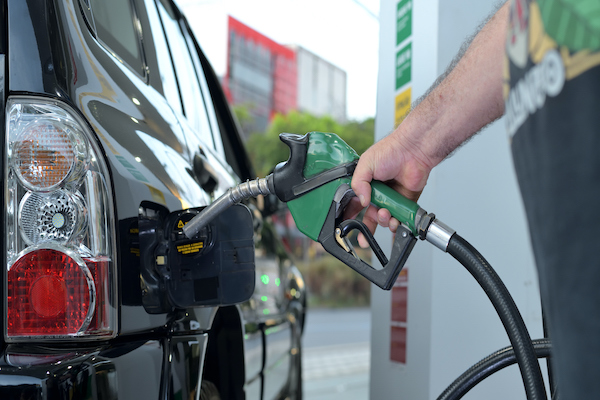
Our cars are running on E20, and reports of lower mileage and damage to vehicle engines are now surfacing. Car owners are often unaware they are getting blended petrol because no one has told them; nor is there any formal intimation available at petrol stations.
Chandrashekhar is an economist, journalist and policy commentator renowned for his expertise in agriculture, commodity markets and economic policy.
July 6, 2026 at 8:20 AM IST
The controversy over blending ethanol with petrol has gone to the Supreme Court, where, on behalf of the government, the Attorney General reportedly asserted that it was an ‘ongoing experiment’ whose results would be known in a year’s time.
The government, in the Lok Sabha, has gone on record stating that it has promoted blending of ethanol in petrol under the Ethanol Blended Petrol (EBP) Programme. The National Policy on Biofuels, 2018, as amended in 2022, inter-alia, advanced the target of 20% blending of ethanol in petrol from 2030 to 2025–26 (November 2025 to October 2026).
The Union Ministry of Petroleum and Natural Gas claimed that the blending target of 20% was achieved in December 2025 due to the government’s concerted efforts, which have led to increased ethanol blending with petrol from 38 crore litres in 2013-14 to over 1,000 crore litres in 2024-25.
All retail outlets of OMCs across India that have petrol selling facilities dispense E20 petrol. At present, the ethanol blending with petrol is at 20%.
All was well until now, when reports of lower mileage and damage to vehicle engines have surfaced. Car owners were unaware they were getting blended petrol because no one told them; nor was any formal intimation available at petrol stations. There were no stakeholder consultation, and simply put, users were taken for granted and denied the choice of fuel – pure or blended. Since 2018, your car and mine have been guinea pigs.
India is simply not in that league. India is not a food surplus country. That we export large quantities of rice and occasionally sugar does not mean we have a genuine production surplus. Far from it. We are yet to meet the genuine food needs of our people.
No doubt, entrepreneurs have made investment to set up distillery capacity for ethanol; but that alone cannot serve as justification for a unilateral policy decision to promote blending. These entrepreneurs know well how fickle government policies can be, yet they took a bet and chose to invest.
In order further boost the ethanol sector, New Delhi is talking about raising the blend to E-25, E-30, E-50 and so on. This is utterly misleading because we do not really know how our agricultural production will pan out year after year, and not just in the current year which is already characterised by El Nino. Again, we also do not know for sure whether our vehicles with internal combustion engines are designed to efficiently run on this planned higher proportion of blending.
Ethanol blending, clearly, demands a national debate.
More From BasisPoint