.png)


Lt Gen Syed Ata Hasnain is a former Commander of India’s Kashmir Corps and Chancellor of the Central University of Kashmir.
February 20, 2026 at 6:04 AM IST
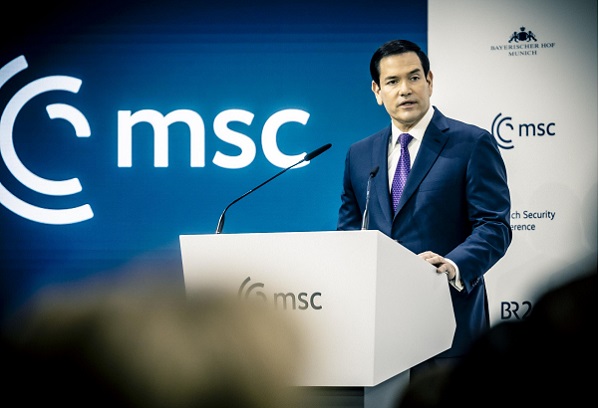
The 62nd Munich Security Conference, held in February 2026, may well be remembered not for a single speech but for a single phrase: “under destruction.” When Munich’s own Security Report describes the US-led international order of 1945 as no longer merely shifting but actively being dismantled, it signals more than anxiety. It signals recognition. For decades, Munich functioned as the annual reaffirmation ceremony of the transatlantic compact. Differences were aired, disagreements dramatised, but the foundation was assumed to be stable. This year felt different. The mood was less about reforming the order and more about surviving its erosion.
The language of “wrecking-ball politics” captured a structural reality. Great power rivalry is no longer contained within a shared institutional framework. The framework itself is being contested. Trade is weaponised. Technology is securitised. Security guarantees are qualified. The very grammar of international cooperation has changed. It’s becoming difficult to determine who is under security pressure, Europe or the US.
The re-election of President Donald Trump has accentuated existing fissures in transatlantic strategic perceptions. A transactional posture toward allies — reflected in tariff negotiations, persistent emphasis on equitable burden-sharing within NATO, and public political debate about the conditions of US security guarantees — has contributed to European governments reassessing the durability of their strategic dependence.
What was once largely theoretical discussion of European strategic autonomy has begun to acquire operational urgency in policy circles. At forums such as the Munich Security Conference in 2026, European leaders discussed not only increased defence spending but concrete pathways toward more autonomous capabilities. The language has shifted from traditional “burden-sharing” to conversations about Europe assuming greater responsibility for its own defence contingencies.
Crucially, this shift does not stem from a diminished perception of Russia as a threat; Moscow’s actions in Ukraine continue to anchor European deterrence planning. Rather, it reflects a broader strategic recalibration in which European states seek to ensure that their security is not contingent on fluctuating political currents in Washington. In this evolving environment, autonomy is no longer an abstract aspiration but a practical response to uncertainty in alliance dynamics, which are becoming so obvious. It is not anti-Americanism on display; it is simply strategic insurance.
Equally striking was the elevation of technology sovereignty to the centre of defence and foreign policy planning. Artificial intelligence, semiconductors, and especially unmanned systems are no longer peripheral modernisation tools; they are determinants of power asymmetry. The experience of Ukraine, West Asia, and other conflict theatres has demonstrated that relatively affordable drone ecosystems can impose disproportionate strategic costs. Warfare has become technologically democratised. No serious power can ignore that lesson.
If Munich reflected Europe’s reckoning, the Raisina Dialogue in New Delhi in March could reflect something different too. India approaches 2026 from a distinct vantage point. Unlike Europe, it never psychologically outsourced its security architecture to the US-led order. Strategic autonomy was not rhetorical nostalgia; it was cultivated as an institutional habit. As the international system fragments, India does not experience disorientation in the same way as those whose prosperity and security were deeply embedded in the post-1945 compact. This is a major advantage for India.
It in no way means that India is insulated from turbulence. On the contrary, pressure on middle and rising powers is intensifying. Strategic competition now extends into markets, supply chains, digital infrastructure, and narrative influence. Alignment is no longer demanded only in military theatres but across economic and technological ecosystems.
The Indo–US relationship exemplifies this complexity. It has matured into a broad-based partnership encompassing defence cooperation, trade, critical technologies, and people-to-people ties. Yet this is not an alliance. It is a partnership deliberately designed to preserve India’s independence. Disagreements are now treated as part of a normal relationship, not as signs of breakdown. The difficulty lies elsewhere. American politics can change tone sharply from one election cycle to the next. One year may bring disruption in rhetoric and policy; the next may attempt reassurance. Partners notice this variation and adjust their expectations accordingly. The lesson many countries are absorbing is clear; security lies in keeping your options open. India has managed this balancing act effectively.
Europe is pursuing greater autonomy not because it rejects the US, but because it cannot afford strategic dependence in a volatile political environment. India, similarly, is expanding partnerships without collapsing into blocs. Engagement with Washington deepens even as ties with Russia endure, outreach to Europe accelerates, and dialogue with the Global South intensifies.
The Indo-Pacific, once framed as a discrete theatre of contestation, is increasingly viewed as part of a wider managed rivalry. Economic interdependence and strategic competition now coexist uneasily. No power wishes to rupture trade flows entirely, yet none trusts unguarded dependence. This tension defines the 2026 landscape.
We may be seeing the quiet end of the way the world has thought since the Cold War ended. For years, it was assumed that trade would keep expanding, institutions would grow stronger, and the US, as the sole universal policeman, would remain the steady anchor of the system. That confidence has faded. Global trade is now selective, technology is guarded, and power is spread across several centres rather than resting with one.
What replaces the old map is not yet clear; things are yet in transition. It is not a return to bipolarity. Nor is it pure fragmentation. It appears instead as competitive multipolarity without a referee — a system where middle powers exercise considerable manoeuvrability but also face greater exposure.
In such a system, restraint becomes an instrument of influence. Strategic patience, when backed by economic scale and credible capability, can create negotiating space. Silence can sometimes signal confidence rather than weakness. But this method demands discipline. It must be institutional rather than personality-driven. It requires calibrated signalling — deterrence without provocation, engagement without dependency.
2026 may thus mark a transitional year. The old order is not gone, but it is no longer the unquestioned organising principle of global politics. The emerging order is not anywhere near consolidated, but its contours are somewhat visible; technological sovereignty, economic leverage, regional self-reliance, and cautious multi-alignment.
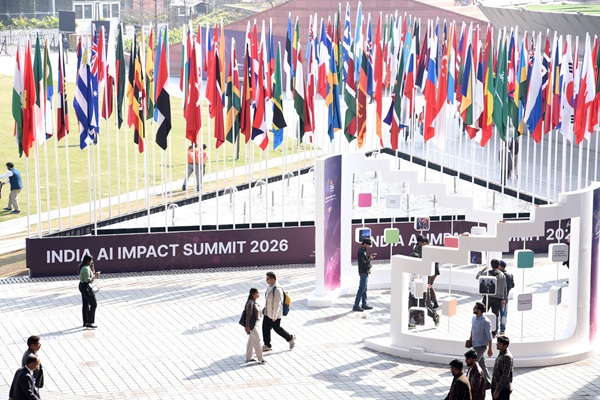
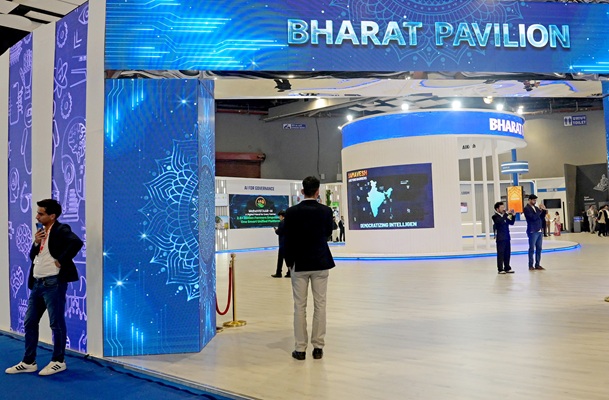
For India, the moment is both opportunity and test. As expectations of its leadership grow — in the Indo-Pacific, in the Global South, and within emerging technology regimes — the challenge will be to convert expanding capability into sustained influence without overextension. The AI Impact Summit 2026 in New Delhi illustrates how a technological event can carry great strategic connotations. India has been proactive in seizing an opportune moment.
The Munich Security Conference has openly acknowledged the weakening of the post-1945 US-led order — the system that rested on American leadership, expanding trade, and strong Western alliances. India, too, is debating how to function in the unsettled space that is emerging in its place.
Munich reflects a European outlook shaped by decades of relative comfort. Since the end of the Cold War, much of Europe operated in a stable security environment, benefited from expanding trade, secure energy flows, and the assurance of American military backing. That long period of predictability naturally makes today’s disruptions feel dramatic and destabilising. Adjustment, for such systems, takes time. India’s experience has been very different. It has lived with contested borders, persistent security threats, and an often-turbulent neighbourhood. Stability was never assumed; it had to be managed. That long exposure to uncertainty has produced a strategic culture built on resilience, restraint, and patience. In a world now rediscovering volatility, those habits may prove to be strengths.
The course of 2026 will not be shaped only by the actions of the major powers, but by how well rising powers — particularly those like India seasoned by adversity — convert steadiness into influence.
More From BasisPoint