.png)


February 11, 2026 at 5:09 AM IST
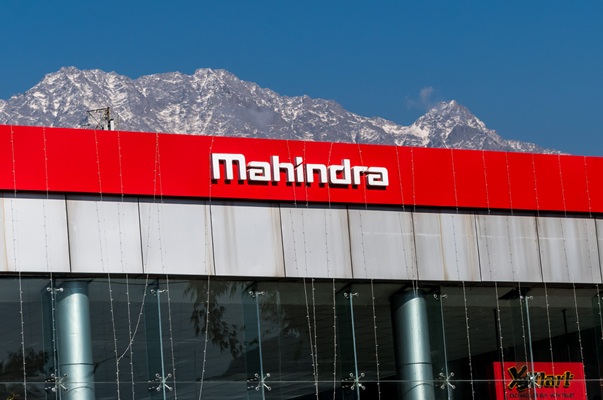
Mahindra & Mahindra recently announced a ₹150 billion investment in Maharashtra. The headline figure, though, obscured a structural shift in manufacturing strategy. India's oldest automotive conglomerate is abandoning the fragmented manufacturing model that built its empire in favour of mega-integrated hubs that blur the lines between tractors, SUVs, and electric vehicles.
The 10-year commitment spans over 2,000 acres: a 1,500-acre Nagpur plant, a 150-acre supplier park in Sambhajinagar, and engine capacity expansion near Nashik. It represents roughly 14% of the company's average annual capital expenditure during its current three-year investment cycle.
M&M faces a straightforward imperative. Deliver 23 new vehicle launches by 2030 while defending a 41.6% market share in tractors and clawing back electric vehicle leadership from Tata Motors. The ₹320 billion allocated for fiscal years 2024-25 to 2026-27 funds product development across SUV platforms, commercial vehicles, and electric subsidiary MEAL.
The Nagpur facility solves the production equation by providing annual capacity for 500,000 vehicles and 100,000 tractors starting in 2028. Rather than dedicating separate capex to automotives and tractors, Nagpur integrates both under one roof, enabling shared infrastructure and fungible capacity allocation. Volume players like Maruti Suzuki and Hyundai enjoy structural cost advantages through amortisation of fixed investments across millions of units. Mahindra has struggled with this math. The Nagpur hub attempts to bridge that gap by achieving tractor-like production volumes for passenger vehicles.
The facility's design around Mahindra's NU_IQ architecture addresses a critical strategic challenge. This modular platform accommodates internal combustion engines, battery-electric powertrains, and undefined future technologies. Building multi-energy capability into greenfield infrastructure costs far less than retrofitting existing plants.
For Mahindra, this flexibility hedges against India's uncertain regulatory timeline. While the government pushes electric mobility, rural tractor buyers and commercial vehicle operators remain wedded to the logic of diesel. The platform lets production shift between powertrains without stranding assets. A 500,000-unit EV line can become a 400,000-unit EV and 100,000-unit ICE facility within the same footprint. The ₹120 billion investment in MEAL makes this flexibility operationally critical. Unlike Tata Motors, which bet heavily on dedicated EV platforms, Mahindra's multi-energy approach reduces existential risk if adoption curves disappoint.
The 150-acre Sambhajinagar supplier park represents significant strategic commitment. Dedicating 150 acres of the over 2,000 acres being acquired to suppliers indicates a shift toward vertical integration. This matters because Mahindra's product complexity far exceeds typical manufacturers. Producing turbocharged petrol SUVs, electric crossovers, and diesel tractors requires drastically different component sets. By co-locating suppliers, Mahindra enables just-in-time delivery for high-value components while maintaining buffer stocks for commodity parts. The model mimics Toyota's supplier city strategy, which delivered exceptional inventory turnover ratios.
Regional clustering also addresses infrastructure constraints. Indian highways impose meaningful time and cost penalties for long-distance freight. Positioning final assembly, suppliers, and engine production within Maharashtra creates a self-contained ecosystem less vulnerable to bottlenecks.
With ₹370 billion in operating cash and a ₹200 billion surplus, Mahindra enters the 2025-2027 cycle with strong finances, negating immediate debt needs. Unlike software businesses with predictable margins, automotive profitability swings on commodity prices and regulations. The strategic priority is to establish product leadership through 2026-2027, then leverage Nagpur's scale economics with a year or so afterwards. The ₹150 billion investment annualises to ₹15 billion, manageable against current capex.
The integrated hub strategy assumes Mahindra can achieve Toyota-like manufacturing excellence. This will be no small feat for a company whose production systems historically emphasised ruggedness over precision. The farm-auto integration poses cultural challenges. Tractor manufacturing operates on different cycles and quality standards from premium SUVs. Harmonising these businesses will be a considerable challenge.
Mahindra's Maharashtra investment represents a coherent response to India's automotive evolution. By committing capital to integrated infrastructure, the company positions itself for a future where operational excellence and scale determine industry leadership. Yet success hinges on flawless execution across multiple dimensions.
Mahindra’s commitment signals management confidence in India's automotive growth story. Whether that proves justified depends on capabilities the balance sheet can't capture. The strategy appears sound. The execution will tell.
More From BasisPoint