.png)

Is India’s Energy Shock the Same as the Pandemic Shock?
The RBI appears willing to look through the oil shock, but inflation risks are structurally different from the COVID-era disruptions that justified prolonged accommodation.
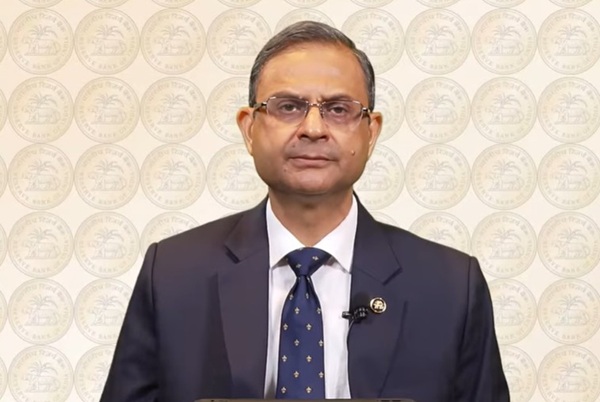

Kalyan Ram, a financial journalist, co-founded Cogencis and now leads BasisPoint Insight.
May 19, 2026 at 3:01 AM IST
Reserve Bank of India Governor Sanjay Malhotra’s May 12 remarks at the Swiss National Bank-International Monetary Fund conference are being interpreted as a signal that the central bank was in no hurry to tighten monetary policy despite the latest energy shock. That interpretation is broadly correct, but it misses the more important institutional argument embedded within the speech.
Malhotra was not merely defending the current policy stance. He was defending the logic of India’s flexible inflation-targeting framework itself.
The repeated references to gradualism, the Brainard principle of attenuation, flexible policy responses, and the RBI’s willingness to “look through” temporary supply shocks were not accidental. Nor was the lengthy emphasis on India’s unusually wide inflation tolerance band of 2 percentage points around the 4% target, or the flexibility offered by the nine-month policy horizon. Together, they amounted to a coherent defence of the RBI's view that it does not need to react mechanically to every commodity shock with immediate rate increases.
That framework worked reasonably well during the pandemic period, when policymakers across the world were confronting a simultaneous collapse in growth, mobility, trade and demand. Inflation overshoots during that phase were uncomfortable, but they emerged alongside deep economic slack and extraordinary uncertainty. Central banks eased together, fiscal authorities spent aggressively, and commodity demand initially weakened before recovering sharply later.
The present shock may yet prove materially different from the pandemic-era disruption, although the comparison is not straightforward.
During the pandemic, the world was dealing with a synchronised collapse in growth, mobility and demand, which allowed central banks globally to prioritise growth support even amid temporary inflation overshoots. The current shock is emerging in a far more fragmented geopolitical environment, where the economic consequences are unlikely to be distributed evenly.
Energy exporters, commodity producers and reserve-currency economies may possess greater resilience against prolonged oil shocks. Large energy importers such as India do not enjoy the same insulation.
For India, a sustained rise in crude oil prices is not merely a short-term inflation problem. It simultaneously affects the current account deficit, the rupee, imported inflation, fiscal arithmetic and domestic inflation expectations. The transmission channels are broader and potentially more persistent than the pandemic-era disruptions that central banks were initially willing to overlook.
The RBI’s current strategy still appears rooted in the assumption that supply shocks should first be treated as transient unless proven otherwise.
Malhotra repeatedly emphasised the dangers of pre-emptive tightening and argued that central banks should avoid overreacting to temporary price spikes. Yet the governor also inserted an important caveat. The RBI, he said, is closely monitoring whether the energy shock begins feeding into wages, transportation costs, production expenses and broader inflation expectations. Once inflation becomes “generalised”, the logic of looking through the shock no longer holds.
The current oil shock carries a stronger risk of persistence than the pandemic inflation surge did in its initial phase.
The pandemic eventually evolved into a broad supply-chain and demand recovery story.
The present environment is increasingly geopolitical. Shipping routes, sanctions, energy access and strategic alignments are becoming key variables. India’s vulnerability is amplified by its position as a major energy importer operating in a world where capital flows are also becoming more selective and geopolitically filtered.
The RBI, therefore, finds itself balancing two competing risks. Tightening policy too early risks choking domestic growth during an externally driven supply shock that monetary policy alone cannot solve. Delaying action for too long risks allowing imported inflation to seep into the broader economy and destabilise inflation expectations.
Malhotra’s speech suggests the RBI still believes the balance currently favours patience. Yet the speech also revealed a central bank that is becoming increasingly aware that today’s energy shock may not resemble the pandemic disruptions that earlier justified prolonged accommodation.
The framework may permit the RBI to initially look through the shock. The harder question is whether the shock itself will cooperate with that assumption. End
Postscript
There is also a question beneath the repeated emphasis on flexibility within India’s inflation-targeting framework. Nearly a decade after the Monetary Policy Committee was established, does a wide tolerance band of 2 percentage points and a nine-month target horizon set too low a bar for one of the world’s largest economies? After ten years of institutional learning, markets may eventually begin to ask whether constantly invoking the framework's generous flexibility dilutes its inflation discipline.
More From BasisPoint