.png)

Iran’s Victory Resets West Asia, Diminishes Israel, Offers India Opportunities
The Anglo-American Empire’s Iran setback should prompt the BJP-led ruling establishment to rethink its reflexive support for Israel. India must view West Asia with new power possibilities.

Rajesh Ramachandran is a former Editor-in-Chief of The Tribune group of newspapers and Outlook magazine.
June 19, 2026 at 9:20 AM IST
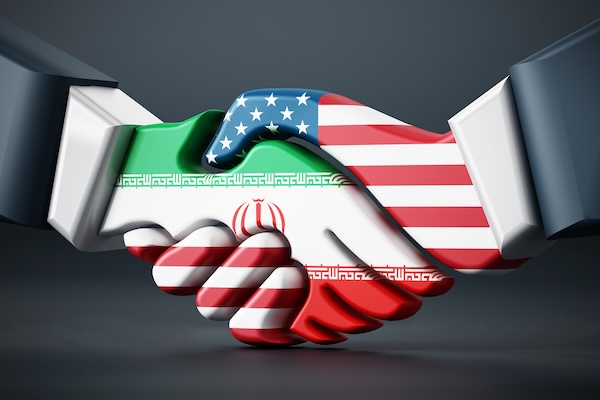
It is strange for a former Israeli government spokesperson and pro-West strategic affairs experts to frame the US-Iran deal as India’s loss ––– of prestige, a seat at the high table and the leadership of the global south. By any stretch of the imagination, India is not the loser. Of course, it is not the winner either because India sat out this game of greed and gore. Just because the White House calls the deal the “Islamabad Memorandum of Understanding” between the US and Iran, India does not lose its global standing.
Pakistan got to do the bidding of its American masters, playing host to US and Iranian negotiators, passing messages personally by a liveried Field Marshal and finally to sign an already-signed deal for the cameras. So, what?
What affects India immediately is the killing of three innocent, unarmed sailors of a merchant vessel, the lack of remorse of the killers, the US refusal to acknowledge the Indian right to carry out its legitimate maritime business and the renaming of the USINDOPACOM or the US Indo-Pacific Command back to USPACOM or just the Pacific Command as it existed from 1947 to 2018. The renaming happened on Tuesday, a day prior to the meeting of PM Narendra Modi and US President Donald Trump on the sidelines of the G7 summit in France.
It is very clear that the US is pressing the reset button on its relationship with India and China. From 2018 onwards, the US was wooing India to contain and confront China. That is when it renamed the Pacific Command as Indo-Pacific Command, making India central to its hostile wargaming against China, linking up the Pacific Ocean powers ––– US, Japan and Australia ––– with India as its biggest Indian Ocean ally. The Quad, thus, was an attempt to create an Asian NATO against China. Now, the renaming points towards the quiet burial of Quad because the Indo-Pacific and India as its fulcrum were the foundational principles behind the military alliance.
The US realised that India would not play the proxy role to contain China when, with Vladimir Putin’s mediation, Modi met Chinese President Xi Jinping at Kazan in Russia in 2024 to de-escalate bilateral tensions and walk back from the Himalayan brink.
Since then, the downward spiral in the US’ relationship with India has gained speed, signalling a disengagement. In May 2025, during Operation Sindoor, India found out that the US had suddenly become Pakistan’s security guarantor, protecting its nuclear arsenal pointedly solely at India. Despite Modi’s best efforts, Trump has been insulting in his assertions and hurtful in slapping trade tariffs. In such a context, not to be Trump’s messenger in West Asia is actually a matter of privilege, a celebration of India’s strategic autonomy. Unfortunately, the West is conditioned to view independent foreign policy choices only as attempts to invite the Empire’s displeasure.
But that does not make India a losing party in a war, where the real losers are the US and its closest ally (or proxy?) Israel. India’s mistake was in Modi making a hasty visit to Israel when war was imminent. At that point in time, Israel was the biggest regional power. No longer. That honour now belongs to Iran, even without nuclear weapons. After a century of colonial occupation, oil extraction and complete military control, Iran has broken free and is now a big power capable of checkmating the world’s superpower.
All 14 points of the deal are celebratory markers of Iran’s success in this war that has created a new, post-colonial West Asia. The US has accepted and undertaken to respect Iran’s sovereign and territorial integrity, which means it has to at least officially disown regime-change operations. The war and the naval blockade end; all sanctions are terminated; Iran can sell as much crude oil and refined products to whoever it wants; the US will immediately release $24 billion of Iran’s frozen assets with waivers for banking, transportation and insurance; also, Iran won war reparations worth $300 billion for economic development and reconstruction.
If all these weren’t big enough gains, here is the biggest: the ownership of the Strait of Hormuz. According to paragraph no. 5 of the deal reported by the American media, “Iran will conduct dialogue with the Sultanate of Oman to define the future administration and maritime services in the Strait of Hormuz, in discussion with other Persian Gulf littoral states…” And the free traffic of vessels through the strait is only for 60 days, which means Iran can charge tolls afterwards. This is an acknowledgement of Iran gaining territory and maritime control of one of the most precious chokepoints of the global oil trade.
Whereas Israel lost its pre-eminent position as the West’s guardians of the oil wealth of the Persian Gulf. Its maximalist strategy to gain complete supremacy over the region lies in tatters. Iran has risen with its allies who defy the US diktat, and by bringing Lebanon into the first paragraph of the MOU, the Persians have virtually underwritten the security of its proxies in the neighbourhood.
The Anglo-American Empire’s setback in Asia should make India’s ruling establishment rethink its blind love for Israel and its hostility towards Pakistan, two nations created by the British Empire to safeguard its strategic interests. Despite complete American support, Israel failed in achieving any of its objectives in this war, which were to effect regime change, destroy missile and drone capacities or grab enriched uranium.
In fact, the war exposed Israel’s hollow claims about the Iron Dome, Mossad’s penetration in Tehran, its armed forces’ war-fighting capacity or cyber capabilities. Israeli military-intelligence infrastructure’s failure validates Iran’s rise as the regional hegemon.
Hence, India should not allow the communal binaries of domestic politics to shape its diplomatic choices in West Asia. Iran has oil, gas and a solid defence alliance to offer, whereas even the US Vice President is losing his patience with Israel. As India hosts Chinese foreign minister Wang Yi next week and the BRICS summit later in September, its foreign policy should move beyond domestic identity politics and view West Asia through the prism of new power possibilities.
More From BasisPoint