.png)

Inflation Targeting and the Contract of Trust
From time inconsistency to flexible mandates, Michael Patra explains how inflation targeting became the world’s most durable monetary policy regime.

Michael Patra is an economist, a career central banker, and a former RBI Deputy Governor who led monetary policy and helped shape India’s inflation targeting framework.
July 15, 2026 at 5:34 AM IST
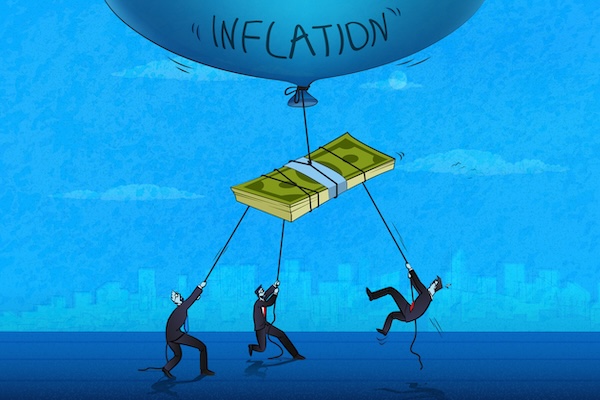
Monetary policy is essentially a contract between the people and the sovereign through its delegated agent, the central bank. The people relinquish to the sovereign the right over the value of the goods and services they produce. In exchange, the sovereign undertakes to give to the people a money they can trust, a money that does not lose value over time in terms of the purchasing power it commands internally and externally. Inflation is the metric by which this contract can be evaluated.
Rising inflation erodes the purchasing power of money domestically and externally as well, by causing the exchange rate to depreciate against currencies of other countries that maintain a relatively lower rate of inflation.
On the other hand, the inflation rate is also the rate of return on the production of goods and services. Too low a rate will disincentivise people from producing goods and services, thereby undermining the contract of trust. The challenge before the sovereign is to give the people an appropriate inflation rate that balances these conflicting pulls and maximises social welfare.
History has demonstrated that a breakdown of this contract has severe repercussions, including the debasement of currencies, even the overthrow of sovereigns and the fall of empires. In India, this is even starker because there is a societal intolerance of high inflation.
In fact, as the popular saying goes, governments have been voted out of power for the price of the lowly onion! In this fundamental sense, inflation is an index of governance.
The Origins of an Idea: Time Inconsistency
This is the concept of time inconsistency. Imagine that a political party promises in its election manifesto that it will make policies to ensure that inflation stays at, say, 5%, and on that basis, it forms the government.
As the year progresses, however, it feels that in order to get votes and stay in power, it wants to give the people free food, electricity, or even money. In order to achieve these short-term gains in popularity, it gives up or postpones its goal of 5% inflation. Eventually, inflation rises above 5% and erodes people’s purchasing power.
They see the government as having broken the electoral promise, however noble its intention might have been, and vote it out of power. It happens all the time and all around us. For this seminal work, Kydland and Prescott were awarded the Nobel Prize in Economic Sciences in 2004.
Solving for Time Inconsistency
In its wake followed a long period of low and stable inflation accompanied by high growth, known as the Great Moderation, which was interrupted by the global financial crisis of 2008. He has been regarded as the GOAT among central bankers. Yet another solution is to write a contract with the governor prior to his appointment: his job and its tenure is contingent upon inflation staying at the target.
New Zealand, the first country to adopt inflation targeting, implemented a variant of this approach. The fourth solution is to follow an assignment rule – if you have one instrument like the interest rate, then the central bank should be given only one objective – price stability. This is practised in some form or other among several advanced economies.
The fifth is a rule-based framework. Inflation targeting (IT) is a framework that is centred around a numerical target for inflation, like 4% in India. Everywhere in the world, however, the actual conduct of IT is marked by a fair amount of flexibility or what is called constrained discretion, with many countries, if not all, adopting economic growth and/or employment as a concurrent objective.
The Practice of Inflation Targeting Worldwide
Most emerging economies prefer a point target with a tolerance band like India. Some prefer a range rather than a point target, and the numbers are almost evenly distributed among advanced and emerging economies. Almost all of them target headline inflation.
The level of the inflation target is almost unanimously 2% among advanced economies. India must get there if it wants to be a developed country. Among emerging economies, the choice is largely in the 3-5% range. Ghana is the outlier with 8 +/- 2%. The main point is: if you want to practice inflation targeting, don’t feel shy! Just do it.
To date, there has not been a single instance of a country dropping out of its IT regime, barring one. The Central Bank of Argentina (BCRA) originally adopted an inflation-targeting framework in September 2016. It was abandoned in 2018 in favour of a monetary base growth control regime that was part of an IMF stabilisation programme. More recently from 2024, President Milei and his government adopted aggressive fiscal consolidation and engineered spending cuts to curb hyperinflation. Many see this as preparing the ground for a return to IT.
Lessons Learned from Experience
As revealed in recent framework reviews, practitioner countries have been ‘learning by doing’ and have brought innovations into IT’s operational format that have enhanced its efficacy. For instance, following a framework review in 2019, New Zealand, the first country to adopt IT, redefined its monetary policy objective from the single objective of price stability to a dual mandate of price stability and supporting maximum sustainable employment. The US Fed brought in the concept of achieving inflation that averages 2% over time. Emerging market economies (EMEs), are embracing IT wholeheartedly and bringing in innovations, including the happy marriage of foreign exchange interventions with IT frameworks.
Several of them have recently lowered their targets and narrowed the bands around them to anchor inflation expectations better while seeking to provide monetary policy sufficient flexibility to respond to shocks. India has reviewed its framework twice since its inception and decided that it is unwise to fix what ain't broke.
IT and Intellectual Underpinnings
Flexible inflation targeting is an optimal monetary policy that minimises the loss of society’s welfare by attaching a penalty to output gap fluctuations that show up as inflation or deflation. Welfare is gained if the central bank is credible in its anti-inflationary/deflationary stance.
This is Part 6 of the Masterclass with Michael Patra. In Part 5, Patra traced India’s monetary policy journey from exchange-rate anchoring and credit allocation to the taper tantrum and the breakdown of the multiple-indicator approach. Read Part 5 here. Part 7, on how India built flexible inflation targeting, follows.
Masterclass with Michael Patra: Upcoming Sessions
In Part 7, Patra traces how India designed, legislated and launched flexible inflation targeting from the Urjit Patel committee to the first MPC.
In Part 8, Patra distils four lessons from India’s flexible inflation-targeting framework after the trials and tribulations of war and the pandemic.
Masterclass with Michael Patra: Previous Sessions
Part 1
Origins, Ideas and Institutions
Michael Patra begins the masterclass by tracing how central banks evolved from fragile monetary experiments into institutions entrusted with preserving trust, stability and confidence.
Part 2
RBI and the Safeguarding of Confidence
The series then turns to the RBI’s evolution, its expanding institutional role, and the balance between autonomy, growth and price stability.
Part 3
The Rise and Fall of Monetary Policy Regimes
From Bretton Woods to monetary targeting, the masterclass examines how central banks repeatedly reinvented monetary policy frameworks when old anchors collapsed.
Part 4
When Monetary Anchors Collapse
As monetary targeting broke down globally, central banks were pushed again into uncertainty, instability and regime change.
Part 5
Central Banking and Monetary Policy Regimes: The Indian Experience
How India’s trysts with crises, policy responses and changing gears in the development strategy imposed monetary policy regime shifts upon the RBI.
More From BasisPoint