.png)

Rajesh Ramachandran is a former Editor-in-Chief of The Tribune group of newspapers and Outlook magazine.
March 13, 2026 at 11:05 AM IST
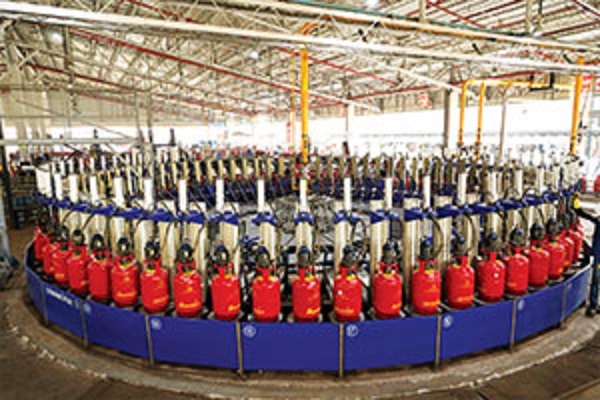
India is in a quandary, economically and strategically. The cooking gas shortage that has forced eateries to shut and left household consumers facing long waiting periods is but a trailer for the difficulties ahead. It is almost as if everything that could go wrong is going wrong simultaneously. The question of why the US didn’t wargame the attack on its bases in the Gulf Cooperation Council countries is echoing in the corridors of power in Delhi, albeit in a domestic context ––– why didn’t India foresee the closure of the Strait of Hormuz or disruptions to oil exports?
After all, the current lot of Indian policy planners could not have forgotten the country’s challenges during the oil shock of 1973 and the previous Gulf Wars.
In fact, despite the inherent volatility in West Asia, Indian dependence on GCC oil and gas has only increased over the years, to the extent that a dip in imports could severely affect agriculture, the chemical industry, manufacturing, transportation, power generation, and almost every other sector, including defence. All this is unfolding amid slowing FDI inflows, weakening market indicators, and FPI outflows. The knee-jerk responses to increase domestic production, divert resources to keep kitchen stoves burning, and madly scramble for more imports ––– all in just 10 days ––– suggest that planners failed to devise an emergency switchover from the Gulf to alternative sources.
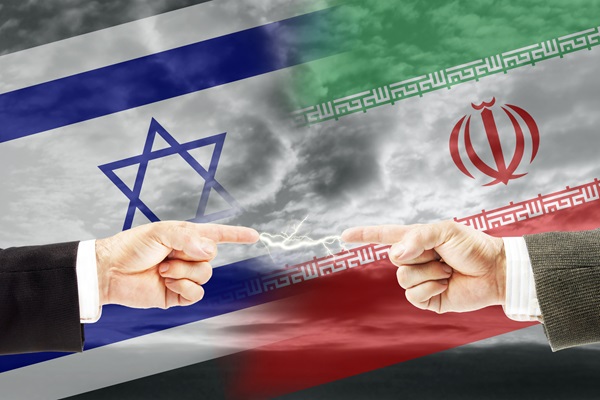
The Persian Gulf is not just about energy, but also a source of prosperity for millions of families across the country, as nine million expats send home over $45 billion each year. India cannot afford to take sides or chances when it comes to this region just across the Arabian Sea. For India, the West Asian conflict can never be reduced to a simple debate over the morality of US-Israel aggression against Iran. This conflict has been festering for over a century, since the WWI Sykes-Picot Agreement carved up the region for the British and French colonial powers. India had to devise its own workaround, but it didn’t.
The Israeli government’s invitation to the Indian Prime Minister was not merely ill-timed, but also appears disingenuous, making the visit also more politically sensitive than it otherwise needed to be. By accepting the invitation on the eve of the war’s eruption, India inadvertently walked into an active minefield, seemingly taking sides. As a result, India’s famed fairness, its stature of non-aligned neutrality, and its leadership of the Global South were affected. International diplomacy cannot be viewed through the reading glasses of domestic communal politics. Iran is not merely a Muslim state being bombarded by Israel and the US, but is also a symbol of resistance against Western dominance.
It is still being debated even in the West whether this war was engineered solely by Israeli Prime Minister Benjamin Netanyahu, whether it marks the beginning of the West’s recolonisation thrust announced by US Secretary of State Marco Rubio in Munich last month, or whether it is a long-term game to contain China. It could well be all three rolled into one. For Iran’s capitulation would result in the US controlling the second-largest gas and third-largest oil reserves in the world, which would mean that, apart from Russian energy, almost all the world’s fossil fuels would be under the direct surveillance of US military bases worldwide.
This brings to the fore the second aspect of India’s loss, however temporary, of prestige and strategic autonomy. India seemingly agreed to slash imports of Russian oil for a trade deal with US administration. If only India had stalled the trade deal by three more weeks, it would not have had to suffer the ignominy of the US “permission” to buy Russian oil. The trade tariff bullying has now turned out to be vacuous threats in the context of an energy exigency.
“Our allies in India have been good actors and have previously stopped sanctioned Russian oil. As we work to ease the temporary gap of oil supply around the world, we have temporarily permitted them to accept Russian oil that is already on the water,” is how Treasury Secretary Scott Bessent framed the US’ “authorisation” of oil stranded at sea. Indian trade negotiators, obviously, did not anticipate the looming war clouds in West Asia that have rendered trade assurances infructuous within weeks.
Worse, a couple of days earlier, US Deputy Secretary of State Christopher Landau, while speaking at the Raisina Dialogue in New Delhi, made it clear to all those who harbour hopes of a US-propelled rise of India that it would never happen ––– that the US would never make the “same mistakes” it made in helping China rise. No statement could have been clearer in elaborating the unequal India-US relationship than this.
That was not all. India always took pride in being the regional security provider, even provoking some neighbours to attack it, at times, over a sort of perceived “big brother” condescension. Last week, when the US torpedoed a ship that had left Indian shores after a fleet review exercise, it was an affront to Indian sovereignty. Though India offered sanctuary to another Iranian vessel that participated in the MILAN Fleet Review, the torpedoing of an unarmed Indian guest in the Indian Ocean was a message loud enough for all to hear.
What is said cannot be unsaid, but politics offers opportunities for sharp U-turns ––– particularly during a geopolitical crisis. And here is an opportunity to reassess India’s strategic partnerships with the rest of the world. The amendment to Press Note 3 is a step in the right direction, not merely to shore up FDI inflows. In these uncertain times, Indian planners cannot afford instability or supply chain disruption in the neighbourhood.
The only silver lining is that there are still people like US strategic affairs expert Col. Douglas Macgregor who believe that India can mediate and bring the US-Iran war to an end.
More From BasisPoint