Prime Minister Narendra Modi’s visit to the United Arab Emirates and the signing of six MoUs on Friday are a clear sign of India emerging more directly as a strategic player in West Asia’s active mine field. Days after the Iranian missile and drone attack on the UAE amidst the tenuous ceasefire, India has moved to sign a framework for a strategic defence partnership that entails maritime security, cyber defence, secure communications, information exchange, training and defence technology. Maritime security is the key takeaway, particularly in the context of the US attack on Iran that has led to the closure of the Strait of Hormuz, choking the UAE’s maritime commerce.
Secure communications and information exchange are widely understood to imply real-time intelligence sharing between the two countries. Collaboration in maritime security, intelligence sharing, exercises, training, defence technology and production points towards India potentially assuming a broader strategic-security role beyond that of a conventional defence partner, particularly at a time when one of the signatories is confronting heightened regional security threats. India and the UAE are, clearly, engaging in a far deeper strategic partnership.
The seven emirates that gained independence in 1971 to form the UAE were British protectorates for more than a century and a half and were known as the Trucial States after signing truce agreements with the British Empire in the 1820s. Even after independence, the UAE has remained within the broader Western security architecture, particularly that of the US, which operates military bases in the emirates.
In fact, Iran’s primary objection to and justification for attacking the UAE has been the presence of American military bases. On the very day Modi met UAE President Sheikh Mohamed bin Zayed Al Nahyan, praised his restraint and assured him that India stands shoulder to shoulder with the UAE, the Iranian foreign minister was in India. At a press conference at the Iranian embassy in New Delhi, Seyed Abbas Araghchi criticised the UAE for allowing the US and Israel to use bases linked to operations against Iran. Araghchi was in New Delhi to attend the BRICS foreign ministers’ meeting. India holds the rotational BRICS chair this year.
Araghchi’s statement reflected Iran’s broader critique of the US security presence in West Asia. He argued that Gulf states would ultimately have to rely on regional arrangements for long-term stability rather than external military guarantees, adding that the American and Israeli military presence had become a source of insecurity rather than protection. Iran’s effort to regionalise the conflict and amplify the oil shock has centred on portraying the war as a consequence of continued external intervention in West Asia. During the current conflict, Tehran has also sought to frame the crisis as part of a wider contest over strategic influence, energy routes and control over regional supply chains.
Now, the India-UAE framework for strategic defence partnership should be read alongside Araghchi’s remarks about the insecurity arising from the US presence in West Asia. Read together, the defence pact can be seen as a step towards the UAE diversifying its security partnerships beyond the Western powers. It does not mean that the UAE is immediately stepping out of the Western security umbrella; in fact, among the Gulf countries, it remains the closest to Israel.
In return for deeper strategic cooperation, India stands to expand its strategic oil reserves to 30 million barrels, secure greater LPG supplies, develop a ship-repair cluster in Vadinar, Gujarat, and attract $5 billion of investment into various projects, including RBL Bank and Samman Capital. India sources around 11% of its crude oil and 40% of its LPG requirements from the UAE. The UAE is also India’s third-largest trading partner, with bilateral trade crossing the $100 billion mark last year. Indians constitute the largest expatriate community in the UAE, numbering around 4.3 million people, or roughly 35% of the country’s population. The UAE is also the second-largest source of remittances into India. Against this backdrop, India has strong strategic and economic reasons to deepen coordination with the UAE during a period of regional instability.
However, Iran’s public messaging towards India has remained notably accommodative.
Araghchi, who met Modi, described the Chabahar port as India’s gateway to Central Asia while seeking continued investment support. He also characterised India as a friend of all countries in the Persian Gulf. There was little sign of dissonance in Iran’s public posture, despite Modi simultaneously engaging with the UAE leadership. Even after targeting US military installations in the UAE, Iran has avoided conflating India’s ties with Abu Dhabi and Washington, leaving space for diplomacy and continued engagement.
Araghchi described India as a country that maintains constructive relations across the Persian Gulf and welcomed any positive diplomatic role New Delhi could play in the crisis. Iran was not alone in seeking a larger Indian role. Russia also called for India to help mediate between Iran and the UAE, both BRICS members, while arguing that maritime commerce through the Strait of Hormuz had remained uninterrupted until the US attack on Iran on February 28.
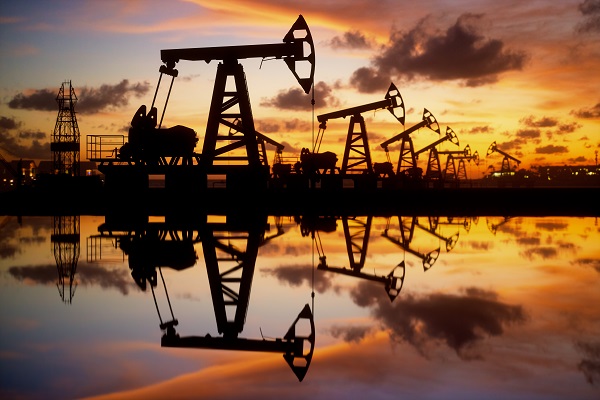
The US waiver for sanctions on imports of Russian oil expired on Saturday morning, placing significant pressure on India’s energy security calculations. With Indian vessels awaiting Iranian clearance at Hormuz, there is limited room for manoeuvre for Indian energy planners attempting to diversify supply chains. India is increasingly being pushed towards purchasing oil within parameters shaped by US sanctions policy, testing its longstanding emphasis on strategic autonomy. Increased strategic storage at Fujairah offers limited protection if India cannot transport oil across the Arabian Sea during periods of acute disruption.
The UAE is now outside OPEC and can ramp up oil production more aggressively if required. Yet India’s energy security still depends, to a considerable extent, on uninterrupted passage through the Strait of Hormuz and continued Iranian restraint towards eastbound oil shipments. Notably, Araghchi’s public remarks avoided direct criticism of Modi’s visit to Israel shortly before the conflict escalated. That leaves space for India to navigate the current crisis, though doing so will require careful assertion of strategic autonomy rather than reliance on rhetorical claims of global leadership.
No major economy can afford prolonged disruption to its energy supply chains at a time of heightened geopolitical fragmentation and volatile commodity markets. For India, continued access to discounted Russian oil may remain one of the more viable near-term options for preserving energy security and limiting external-sector stress during the current crisis.
.png)